


More news on this day
As World Cup fans begin pouring into Los Angeles this summer, the long‑awaited elevated train that was meant to whisk them between LAX terminals, the new rental car hub and Metro rail is still not carrying passengers, extending years of delays for one of the city’s most high‑profile infrastructure projects.
Get the latest news straight to your inbox!
A showcase project that missed its World Cup moment
The LAX Automated People Mover, also branded SkyLink, was conceived as the centerpiece of a multibillion‑dollar airport modernization program, with early timelines pointing to completion by 2023 and full operations before the 2026 FIFA World Cup. Contract amendments later reset construction completion to late 2025, with service projections in early 2026.
Publicly available project updates and oversight reports now indicate that the system is functionally near completion, with trains running empty in testing on the 2.25‑mile elevated guideway looping around the central terminal area. Yet despite years of planning around a global tournament calendar, the train is not expected to open in time for the World Cup matches at SoFi Stadium.
Los Angeles World Airports board documents and advisory committee minutes reviewed in recent months describe a combination of factors behind the latest schedule slips. These include lingering technical issues identified during testing, outstanding construction punch‑list items around stations and access areas, and ongoing regulatory approvals required before any passenger service can begin.
The result is that what was meant to be a marquee example of Los Angeles’ readiness for mega‑events has, instead, become a visible reminder of the region’s struggles to deliver major transit infrastructure on the promised timetable.
Fans arrive to an airport still reliant on shuttles and traffic
With the train offline, arriving World Cup supporters are encountering a ground transportation network that still leans heavily on buses, ride‑hail vehicles and private cars. The LAX Metro Transit Center station on the C and K lines is open and operating, but passengers must transfer to shuttle buses to reach the terminals, replicating a pattern that Angelenos have known for decades.
Airport construction bulletins and ground transportation advisories show that multiple shuttle routes are being scaled up for the tournament period, connecting the Metro station, the recently opened consolidated rental car center, the economy parking facility and each terminal curb. Additional signage, temporary loading zones and traffic officers are being deployed around World Way to direct the surge of visitors.
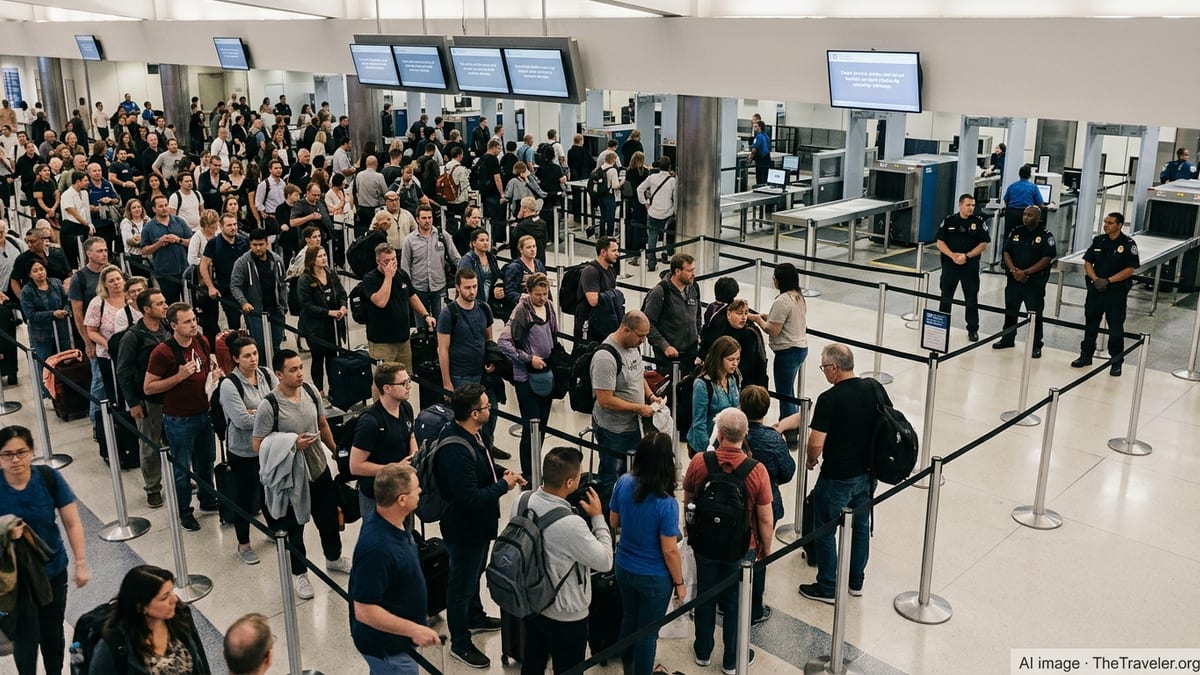
Even with those measures, traffic congestion remains a persistent concern. LAX handled more than 76 million passengers in 2024, and the World Cup is expected to push daily volumes even higher as international supporters connect through one of the country’s busiest hubs. Without the frequent, high‑capacity people mover trains absorbing those movements, pressure falls back on roadways that are already constrained by ongoing construction and lane closures.
Travel advisories circulating ahead of the first matches are urging fans to build in significant extra time for airport transfers, warning that shuttle wait times and vehicle queues could lengthen during peak arrival and departure waves tied to game days.
Years of disputes, overruns and shifting opening dates
The LAX people mover’s troubled path to opening has been well documented in public records and media coverage. When the public‑private partnership contract with the LINXS consortium was signed in 2018, the project was promoted as a fixed‑price, on‑time solution that would be ready years ahead of the global events now underway.
Subsequent board actions and arbitration decisions reveal a more complicated story. The project has been described in oversight summaries as roughly 880 million dollars over its original budget, with an independent arbitrator finding that the airport operator bore responsibility for nearly two years of delay due to access, coordination and technical interface issues. A Los Angeles County civil grand jury report cited a strained relationship between the airport agency and its contractor, highlighting shortcomings in dispute‑resolution procedures and political pressure to accelerate milestones.
Official estimates for opening have shifted repeatedly. Targets moved from 2023 to early 2024, then to January 2026, then to a hoped‑for June 2026 debut aligned with the World Cup. More recent status reports point to the second half of 2026, with some documentation noting that the system is more than 99 percent complete but still awaiting resolution of relatively small, yet essential, items such as systems integration sign‑offs, exterior works and safety certifications.
Advisory meetings this spring acknowledged that the people mover will not be in service during the World Cup period, while expressing confidence that the line will be operational in time to support future events including the 2028 Olympic and Paralympic Games.
Transit agencies race to fill the gap for match days
Across World Cup host cities in the United States, public transit agencies have announced expanded service plans designed to move millions of fans between airports, stadiums and downtown districts. A national association of transit providers recently reported that 26 agencies are coordinating special routes, longer operating hours and added security during the tournament.
In the Los Angeles region, Metro has already opened the LAX/Metro Transit Center station as the rail anchor for airport access. Tournament‑period plans include additional train frequency on key lines serving the airport and SoFi Stadium, as well as special bus shuttles linking the stadium with LAX, Union Station and park‑and‑ride locations. Local travel guides aimed at supporters describe these shuttle links as essential replacements for the not‑yet‑operational people mover.
For many fans, this means an extra transfer or two between rail, shuttle and possibly ride‑hail to complete their journeys, particularly late at night after matches. Regional planners argue that the investments in new stations, bus lanes and wayfinding will still deliver long‑term benefits after the tournament, but acknowledge that the missing rail link inside the airport limits how seamless the network can feel during its first real global stress test.
Some transit observers note that Los Angeles has at least partially avoided a worst‑case scenario by completing the new Metro station and consolidating rental cars into a single facility before the World Cup. Even so, they point out that a system conceived as a fully integrated, train‑to‑plane connection will debut to the world with its central element still behind construction fencing.
What delayed passengers can expect in the months ahead
For travelers passing through LAX during the World Cup period, the practical advice is straightforward: expect crowds, plan for shuttles and allow more time. Airport notices encourage passengers to consider using the Metro rail connection where feasible, especially for trips to downtown Los Angeles and key transfer hubs, while also emphasizing that current airport access remains primarily road based.
Looking beyond the tournament, publicly available schedules suggest that testing and regulatory approvals for the people mover will continue through the remainder of 2026. Once open, the system is designed to operate 24 hours a day, with trains arriving every few minutes and linking all terminals to the Metro station, rental car center and parking facilities in a loop that is expected to handle tens of millions of riders annually.
By then, today’s shuttle bus queues and game‑day traffic bottlenecks may feel like a temporary, if frustrating, chapter in the transformation of one of the world’s busiest airports. For now, however, the sight of empty driverless trains gliding past packed curbs and idling buses underlines the gap between Los Angeles’ ambitions as a host city and the reality confronting World Cup fans on the ground.