


More news on this day
An expedition cruise ship sailing in Alaska waters has reported its second suspected norovirus outbreak in about a month, with 20 people on the latest voyage suffering gastrointestinal illness, according to recent public health updates and published coverage.
Get the latest news straight to your inbox!
Second gastrointestinal outbreak on same Alaska vessel
Publicly available information indicates that the latest cluster of illness occurred aboard the National Geographic Sea Bird, a U.S.-flagged expedition vessel that operates nature-focused itineraries along the Alaska coast. Reports describe a total of 20 people falling sick on the most recent sailing, including both passengers and crew members. Symptoms reported match those typically associated with norovirus, a highly contagious virus that causes acute gastroenteritis.
The new cases follow an earlier outbreak on the same ship roughly a month earlier, when a similar gastrointestinal illness affected a smaller number of travelers during another Alaska voyage. Cruise health logs and media coverage suggest the pattern is consistent with norovirus transmission in a closed environment, where the virus can move quickly between people sharing dining rooms, lounges and shore excursions.
In both incidents, the ship continued its scheduled coastal itinerary, with additional cleaning and onboard health protocols introduced after the onset of symptoms. Available reports do not indicate any need for emergency diversion to port, and the number of people affected has remained a small fraction of those on board.
While the vessel has a far lower capacity than mainstream mega-ships, repeated outbreaks in such a short window are drawing attention because they highlight how even small, expedition-style cruises are vulnerable to highly transmissible stomach viruses.
Norovirus risk remains a persistent challenge for cruise travel
Norovirus is often labeled the classic “cruise ship bug” because outbreaks are relatively easy to detect and track at sea. The virus spreads through direct contact with infected individuals, contaminated food or water, or contaminated surfaces. It can survive on cabin fixtures, handrails and shared touch points, making cruise ships particularly susceptible once a case is introduced.
Health data compiled by the U.S. Centers for Disease Control and Prevention show that norovirus continues to be the leading cause of acute gastroenteritis outbreaks on cruise ships serving U.S. ports. While only a small percentage of all cruise travelers are affected in any given year, the tightly controlled reporting environment at sea means clusters are quickly documented and can appear more prominent than comparable outbreaks on land.
Typical symptoms include sudden onset of vomiting, diarrhea, stomach cramps and nausea, with illness usually lasting one to three days for otherwise healthy adults. Vulnerable travelers, including older adults and people with underlying health conditions, may face a higher risk of dehydration and complications, which is why cruise lines routinely emphasize prompt reporting to the medical center if symptoms appear.
Experts cited in previous public health analyses emphasize that basic hygiene plays a major role in limiting spread. Thorough handwashing with soap and water, particularly after using the bathroom and before eating, is considered more effective against norovirus than alcohol-based hand sanitizers alone.
Response measures and cleaning protocols on board
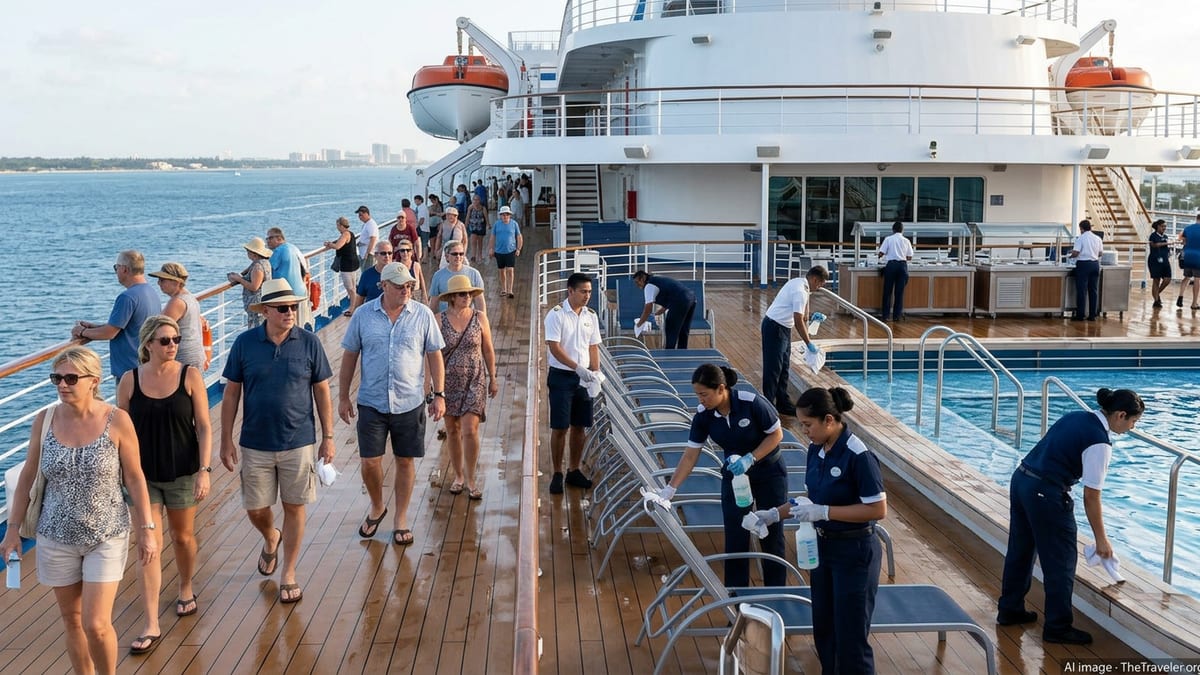
According to published reports, crew members on the National Geographic Sea Bird implemented enhanced sanitation measures after the first outbreak and again following the more recent cluster. These steps typically include increasing the frequency of cleaning in public spaces, focusing on high-touch surfaces such as railings, elevator buttons and buffet areas, and temporarily adjusting food service practices to reduce contact.
Standard norovirus response protocols in the cruise industry often involve isolating symptomatic passengers and crew in their cabins until at least 48 hours after symptoms subside, in order to break chains of transmission. Public health summaries suggest that similar isolation efforts took place aboard the Alaska sailings, with ill guests encouraged to remain in their cabins and use in-room dining as needed.
Some ships also introduce temporary changes such as staff-served buffets, additional reminders about hand hygiene at dining venues, and suspension of certain self-service amenities. Expedition vessels, which often have fewer venues and smaller passenger loads, may be able to adjust operations quickly, but they also have limited medical facilities, making early containment particularly important.
After the latest incident, available cruise-tracking information and port schedules indicate that the ship has continued operating its seasonal Alaska program while maintaining elevated cleaning and surveillance for further cases.
What travelers should know about health risks at sea
For travelers considering an Alaska cruise or other expedition voyages, the recent outbreaks underscore the importance of understanding health risks and preventive steps before boarding. Norovirus outbreaks at sea, while disruptive, typically affect a minority of passengers and rarely lead to trip cancellations for the wider group. However, for those who fall ill, even a short bout of vomiting and diarrhea can derail an experience built around wildlife watching and shore landings.
Public health agencies recommend that prospective passengers review recent outbreak summaries, if available, and consider their personal risk factors when choosing a sailing. Travel insurance policies that cover medical visits, missed excursions and, in some cases, trip interruption can provide added protection when illness strikes in remote areas with limited access to shore-based clinics.
Once on board, travelers are encouraged to adhere closely to posted hygiene guidance, such as washing hands thoroughly before meals and after shore excursions, avoiding shared restroom use when possible, and promptly reporting any stomach symptoms to the onboard medical team. Simple behaviors, including using a tissue to touch elevator buttons or opening doors with a sleeve, can help reduce exposure to virus particles on surfaces.
For expedition cruises that rely heavily on community visits and small-boat landings, operators may also adjust excursion protocols if they detect gastrointestinal illness on board, in order to limit potential spread to remote coastal communities that have limited health resources.
Continued scrutiny of cruise health practices
The two outbreaks on a single vessel within roughly a month are likely to add to ongoing scrutiny of sanitation practices across the cruise sector, particularly in regions where ships visit small ports and environmentally sensitive areas. Environmental and passenger-advocacy groups have previously called for greater transparency around onboard outbreaks, arguing that detailed reporting helps travelers make informed choices about when and how to cruise.
Industry observers note that norovirus is widespread in the general population and can be brought on board by passengers or crew before symptoms appear. As a result, even lines with robust sanitation programs can experience outbreaks when conditions allow person-to-person spread. The recent events in Alaska are being viewed in that broader context of managing, rather than completely eliminating, gastrointestinal risks at sea.
As the Alaska cruise season continues, public health updates and media coverage are expected to monitor whether additional cases arise on the National Geographic Sea Bird or on other ships in the region. For now, the latest reports highlight a familiar message for cruise travelers: norovirus remains an ever-present, if usually short-lived, hazard of sailing in close quarters with fellow passengers.