


Backed by soft cliffs and opening onto a long, golden sweep of sand, Yaverland Beach sits at the quieter end of Sandown Bay on the Isle of Wight. It is a rare mix of family-friendly swimming beach and world-class fossil-hunting site, with a big car park, toilets, and a small café just steps from the sand. This guide walks you through how to enjoy Yaverland in a practical, real-world way, from timing your fossil hunt with the tides to choosing the best spot to lay your towel.
Getting to Know Yaverland Beach
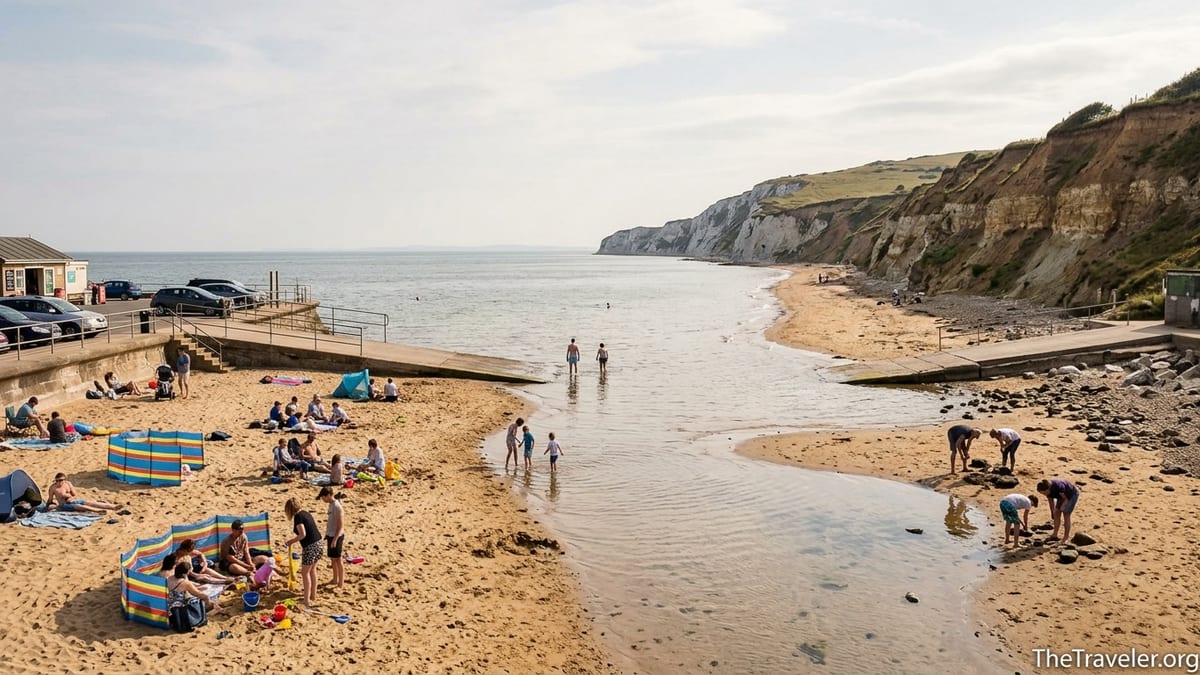
Yaverland Beach lies at the south-eastern end of Sandown Bay, just beyond the main Sandown seafront on the Isle of Wight’s east coast. The beach blends into Sandown’s busy resort area to the west, but as you walk towards Yaverland the atmosphere quickly becomes quieter and more spacious. High cliffs rise behind the sand, and at low tide the shoreline opens into a broad, gently shelving beach that feels a world away from amusement arcades and traffic.
The beach is predominantly fine, golden sand with some shingle patches, particularly closer to the cliffs and at the higher tide line. For most visitors, the practical effect is simple: it is easy to walk barefoot, build sandcastles and launch bodyboards, while still finding areas of pebbles and rockier ground that are ideal for fossil searching. The sea here tends to be comparatively calm on many summer days, especially when the wind is from the west and the bay is sheltered.
Views from Yaverland sweep across the whole curve of the bay towards Shanklin and, on clear days, across the Solent towards the mainland. On a typical August afternoon, you might see paddleboarders launching in front of the main car park, children digging vast moats near the waterline, and local fossil enthusiasts making their way along the base of the cliffs armed with small rucksacks and geologist’s hammers. It feels relaxed and unfussy, more like a local favourite than a heavily packaged resort beach.
The beach also has an environmentally minded side. Public toilets next to the car park are powered using on-site renewable energy, including solar and a small wind turbine, a detail that locals often mention with pride. While you may not notice the technology directly when you arrive, it reflects the broader focus on conserving this stretch of coastline, which is of national geological importance.
Sand, Swimming, and Classic Beach Time
For a straightforward beach day with a towel, bucket, and spade, Yaverland works well for most ages. The sandy section in front of the main car park is the most convenient spot for families, as it is closest to the toilets and café and offers the shortest walk with coolers and beach toys. At mid to low tide, a wide apron of sand appears, leaving room for ball games and sand sculptures even on warm weekend days in July and August.
The shoreline shelves gradually, which generally makes paddling and swimming feel accessible to cautious adults and younger children, though parents should always stay close and follow local safety advice. On calm summer mornings, you will often see people wading out until the water reaches their waist and then gently swimming parallel to the shore. Locals sometimes bring small inflatable rings for children, but life jackets or buoyancy aids are the safer option if you plan to go any distance from shore.
Stand-up paddleboarding and kayaking are increasingly popular here. The easy beach access from the north side of the car park makes it simple to carry boards down a short ramp to the sand. Regular visitors often time their paddle sessions for early morning or late afternoon when the sea is typically quieter and the sun less intense. If you own an inflatable paddleboard, you can inflate it by your car, carry it down, and be on the water within minutes.
As with any UK beach, conditions change with the weather and tides. Offshore winds, choppier seas, and reduced beach space at high tide can quickly alter how suitable the water feels for swimming or paddling. Before setting out, many visitors check local forecasts and swimming guidance for Sandown and Yaverland to understand expected wind, wave height, and UV levels for that specific day. On very hot days, shade along the back of the beach is limited, so a compact beach shelter or small pop-up tent can be worthwhile, especially for families with younger children.
Fossil Hunting: Where to Look and What to Expect
Yaverland is one of the Isle of Wight’s best-known fossil-hunting beaches, part of a coastline famous for Early Cretaceous dinosaur remains. The cliffs and shore here expose layers from formations such as the Wessex and Vectis formations, which have yielded dinosaur bones, fossilised wood, and the remains of ancient reptiles and fish. For most casual visitors, though, fossil hunting at Yaverland usually means searching for small, loose finds like bits of bone, shell impressions, and worn fragments that have been washed out of the cliffs and onto the beach.
The key principle is simple: do not dig into the cliffs. The cliffs are unstable and prone to rockfalls, and local guidance stresses that collecting should focus on loose material on the beach, especially at the base of recent slips and in shingle and gravel patches along the lower foreshore. Regular collectors often walk a route starting near the slipway by the car park and heading along the beach towards the headland at Culver, scanning the ground for anything that looks different from the surrounding stones.
Timing your visit with the tides helps. Many experienced fossil hunters arrive as the tide is dropping or shortly after high tide, when freshly washed-out material can be left along new tide lines. Low tide exposes more ground and makes it easier to move safely along the beach and around rockier sections, but you should always keep an eye on both the time and the sea. A small hand trowel and a sturdy bag or box for finds can be useful, but most beginners do very well with just their eyes and a bit of patience.
If you are hoping for a structured introduction rather than going it alone, look for fossil walks and guided trips based in Sandown and across the island. These are typically led by local experts or organisations that know the current conditions, productive areas, and safety considerations, and they provide simple tools and examples of what to look for. A typical family walk might last two to three hours, starting near Dinosaur Isle and heading along Yaverland or nearby beaches, with plenty of time for questions. Prices change from season to season, but families can expect to pay a moderate fee that reflects specialist guiding, rather than a mass tourist excursion.
Safety, Tides, and Cliff Awareness
Because Yaverland is both a swimming beach and a fossil site below soft cliffs, understanding tides and cliff safety is essential. The tide range can be significant, meaning that sections of sand accessible at low tide may become cut off or much narrower as the tide rises. At busy times of year, you can often spot the changing waterline easily by watching how quickly waves creep towards towels left close to the sea. A sensible baseline is to check a tide table for Sandown or Yaverland for your chosen day, plan to explore furthest from the slipway in the middle of a falling tide, and always leave yourself plenty of time to walk back before the water turns.
Cliff safety is equally important. The cliffs behind Yaverland are made of relatively soft materials, and recent rockfalls are visible as fresh, lighter-coloured scarps and heaps of debris. You should avoid walking or sitting directly beneath overhangs or obviously cracked sections, and never attempt to climb the cliffs. In winter or after heavy rain, slip risk increases, and the base of the cliffs can become muddy and unstable. Families fossil hunting with children often agree simple rules beforehand, such as keeping at least a few body lengths away from the cliff face and not touching or dislodging large blocks.
Standard beach precautions apply in the water. Conditions can vary from gently lapping waves suitable for small inflatables to choppier seas that feel more appropriate for confident swimmers only. There may or may not be lifeguard cover on specific days or weeks; before swimming far from shore, check what level of supervision is currently provided. Many visitors adopt a cautious approach: they stay relatively close to the beach, swim with a buddy where possible, and pay attention to any local safety signage at the car park or access points.
Sun exposure also deserves attention at Yaverland, because the cliffs to the rear give way to open sky across the bay and reflected light from the sea can intensify UV. On clear July or August days, practical steps such as high-factor sunscreen, wide-brimmed hats for children, and lightweight cover-ups make a tangible difference by mid-afternoon. Drinking water can be bought at the beach café, but on hot days it is sensible to arrive with full refillable bottles, particularly as drinking fountains may not always be operational.
Facilities, Parking, and Accessibility
One of Yaverland’s advantages over more remote fossil beaches is the availability of straightforward facilities close to the sand. A sizeable pay-and-display car park sits directly behind the beach, within a short, mostly level walk of the slipway and access ramp. On sunny Saturdays in school holidays, this car park can fill up by late morning, so visitors who prefer to park close to the beach often try to arrive by mid-morning or consider walking in from Sandown if they are staying nearby.
Next to the car park you will find public toilets and usually a free outdoor shower or tap suitable for rinsing sand off feet and bodyboards. The toilet block is a relatively modern facility that draws its power from renewable sources such as solar panels and a small wind turbine, which tends to mean electric hand dryers and lighting are in use even outside the peak season. As with any public convenience, occasional closures for cleaning or maintenance are possible, so families with very young children often treat the café as a backup option for toilets when making day plans.
A compact beach café and shop sits at the southern end of the car park. In high season it typically offers hot and cold drinks, ice creams, basic hot food like chips and simple sandwiches, and beach essentials such as buckets, spades, and inflatable toys. Prices are in line with a popular UK seaside spot: more than a supermarket but not out of scale with other Isle of Wight beaches. Many visitors grab bacon sandwiches or simple breakfasts here before a morning fossil hunt, or stop for tea and cake in the mid-afternoon before heading back to accommodation.
Accessibility is comparatively good for a natural beach. There are accessible parking bays alongside standard spaces and a broad ramp down to the sand, which many wheelchair users and those with limited mobility find easier than steps. The sand near the top of the beach can still be challenging for standard wheelchairs, and there is no permanent beach matting, so visitors sometimes choose to hire dedicated beach wheelchairs from nearby Sandown rather than relying solely on their own equipment. For those on foot, the walk from Sandown along the promenade to Yaverland is level and scenic, making it a pleasant 15 to 25 minute stroll depending on pace.
Nearby Attractions and Easy Add-ons
Yaverland’s location makes it simple to combine a beach visit with other attractions in Sandown and the surrounding countryside. Just a short walk from the car park stands Dinosaur Isle, a purpose-built dinosaur museum and visitor attraction that showcases Isle of Wight fossils, including large mounted skeletons, interactive exhibits, and displays on the island’s prehistoric environments. For families with children fascinated by the fossils they have just searched for on the beach, a visit to the museum the same day can help connect their finds to the bigger picture.
Sandham Gardens, a family-oriented recreation area a little further along the seafront, offers play areas, adventure golf, and seasonal rides. Combining a relaxed morning on Yaverland’s quieter sands with an afternoon of more energetic activities at Sandham Gardens or on Sandown’s main esplanade suits families with mixed-age groups, where some want simple beach time while others crave something more structured.
Walkers might prefer to look up towards Culver Down and the chalk headland at the northern end of the bay. From Yaverland you can follow paths inland and uphill to reach open downland with sweeping coastal views. On days with stable weather and good visibility, this can be one of the most rewarding short hikes in the area, offering a bird’s-eye view back over Yaverland’s beach and the line of cliffs you may have been exploring for fossils earlier in the day.
For travelers touring the Isle of Wight by car or public transport, Yaverland fits neatly into a broader east-coast itinerary. A practical day plan might pair a morning fossil hunt and swim at Yaverland with an afternoon visit to Shanklin Old Village and its thatched cottages, or a circular route taking in Brading, Bembridge, and other coastal viewpoints. Because Yaverland has reliable parking and basic services, it also works well as a flexible stop on a multi-day exploration of the island’s beaches.
When to Visit and What to Bring
Yaverland is technically accessible year-round, but the experience changes markedly with the season. In high summer, roughly late June through August, you can expect busier weekends, warmer sea temperatures, and a greater likelihood that the café, toilets, and nearby attractions such as Dinosaur Isle will be operating on extended opening hours. This is the period when families most commonly settle in for full-day beach visits, arriving mid-morning and staying until early evening, particularly during UK school holidays.
Spring and early autumn can be excellent for fossil hunting and coastal walks, with cooler air temperatures and often clearer light. On a bright March or October day, it is common to see a mix of dog walkers, local fossil enthusiasts, and a few hardy swimmers in wetsuits, while the main car park remains far from full. Winter brings quieter, sometimes dramatic conditions, with strong winds and heavy seas occasionally stripping and then rebuilding sections of the beach. Serious fossil hunters often value this season for the fresh material it can reveal, though they also pay careful attention to safety and weather forecasts.
What you bring depends on your priorities. For a classic summer beach day, most visitors pack towels, swimwear, sunscreen, hats, plenty of drinking water, and simple picnic food, topping up with ice creams or hot drinks from the café. Families with children often add buckets and spades, a small pop-up shelter, and perhaps a compact bodyboard or inflatable. For fossil hunting, a small backpack containing a reusable water bottle, snacks, gloves, and a sturdy container or padded wrap for any fragile finds is practical. If you own basic eye protection, it can be sensible to wear it when examining or gently tapping loose rocks.
Footwear is worth some thought. While you can comfortably walk the main sandy area barefoot in summer, sturdier shoes or well-fitting sandals make it easier to move across mixed shingle and uneven ground further along the beach, especially on cooler days. For those staying nearby in Sandown and planning to walk to Yaverland, a light jacket or windproof layer is useful even in summer, as the breeze can feel significantly stronger once you step out from behind buildings and onto the open bay.
FAQ
Q1. Is Yaverland Beach suitable for young children?
Yes, Yaverland is popular with families, thanks to its gently shelving sand, large open beach at low tide, nearby toilets, and a café close to the car park. Parents should still supervise children closely around the sea and keep them away from the base of the cliffs.
Q2. Can I go fossil hunting on my own at Yaverland?
Many visitors fossil hunt independently by looking for loose material on the beach, especially around low tide. If you are new to fossil hunting, consider joining a local guided walk so you can learn what to look for and understand the latest safety advice and collecting guidelines.
Q3. Do I need special equipment for fossil hunting at Yaverland?
You do not need specialist gear for a first visit. Most people simply bring comfortable footwear, gloves, and a small bag or box for finds. Basic eye protection and a small hand trowel or geologist’s hammer can be useful, but are optional for casual beachcombing.
Q4. Is there parking close to the beach?
Yes, there is a large pay-and-display car park directly behind Yaverland Beach, only a short walk from the sand via a ramp and slipway. On busy summer days the car park can fill, so arriving earlier in the day usually makes parking easier.
Q5. Are there toilets and showers at Yaverland?
Public toilets sit next to the main car park, and there is usually an outdoor tap or shower for rinsing off sand and seawater. Facilities can sometimes close temporarily for cleaning or maintenance, so it is sensible to treat the beach café as a backup option.
Q6. Is Yaverland Beach accessible for wheelchair users?
Yaverland offers accessible parking bays and a wide ramp down to the sand, which many visitors with limited mobility find helpful. However, the soft sand itself can be challenging for standard wheelchairs, so some visitors choose to arrange a beach wheelchair from nearby Sandown for easier movement on the beach.
Q7. Can I swim safely at Yaverland?
The gently shelving sand and generally calm conditions on settled days make Yaverland a popular place to swim and paddle. Safety still depends on daily conditions, your swimming ability, and whether lifeguard cover is provided at the time of your visit, so always check local guidance and avoid swimming alone or far from shore.
Q8. Are dogs allowed on Yaverland Beach?
Yaverland typically includes both dog-friendly stretches and sections where restrictions apply at certain times of year. Because rules can change, especially in peak season, it is best to check the latest local signage near the car park or consult current council information before bringing a dog.
Q9. What is the best time of year to visit Yaverland for fossils?
Fossil hunting can be rewarding year-round, but many enthusiasts favour the cooler months and periods after winter storms, when fresh material is more likely to have fallen or been washed out. Whatever the season, timing your search around a falling or low tide is usually most productive and safest.
Q10. Can I combine a visit to Yaverland with other attractions nearby?
Yes, Yaverland is within walking distance of Dinosaur Isle museum and the wider Sandown seafront, including Sandham Gardens and traditional seaside amenities. Many visitors plan a day that begins with a fossil hunt and beach time at Yaverland, followed by an afternoon at the museum or exploring Sandown and nearby coastal viewpoints.