


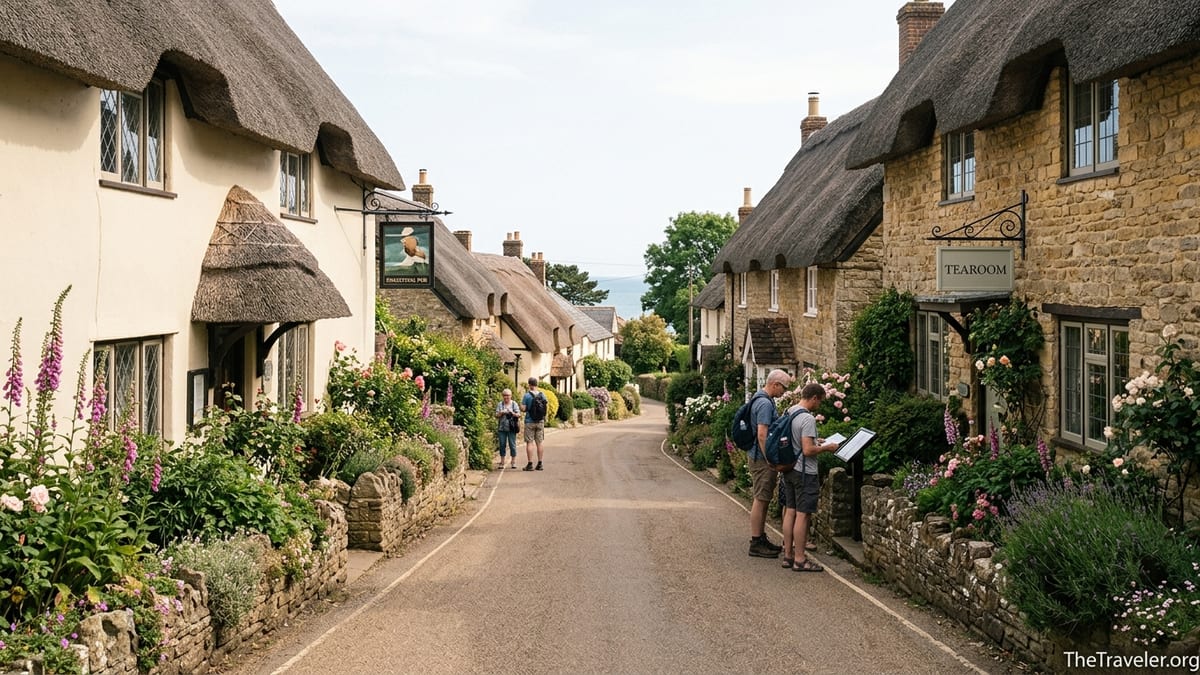
Shanklin Old Village on the Isle of Wight is one of those rare places that look almost exactly like the postcards. A tight cluster of thatched cottages, flower-filled pub gardens and crooked lanes sits just above the sea, with a wooded ravine, Shanklin Chine, cutting a green swathe down to the beach. For first-time visitors it can feel compact yet surprisingly layered, with viewpoints, gardens and coastal paths all within a short walk. This guide sets out a practical walking tour you can follow in half a day at an easy pace, with real-world suggestions on where to stop, what to look for and how to make the most of your first visit.
Getting Oriented: How to Start Your Walk
Most first-time visitors arrive in Shanklin either by bus from Ryde or Newport, or by train from Ryde via the Island Line. If you come by train, Shanklin station is a sensible starting point for this walking tour. From the station it is roughly a 10 to 12 minute walk to the heart of the Old Village, gently uphill along Regent Street and then Church Road. The route is well signposted and you will usually find a small town map outside the station showing the Old Village and Shanklin Chine.
If you are arriving by bus, look for services that stop at Shanklin bus station or along Victoria Avenue. From there, you can cut through the compact town centre, passing everyday shops and supermarkets before the scenery suddenly shifts into honey-coloured stone cottages and thatch. That contrast is part of Shanklin’s appeal: you can pick up picnic basics at a chain supermarket, then be sipping tea in a 17th century cottage garden ten minutes later.
For a relaxed first visit, aim to start your walk by late morning. Many tea rooms in Shanklin Old Village open around mid-morning and serve food through the afternoon. In high season, particularly during school holidays, the lanes can become busy from about noon onwards. Arriving before the peak gives you time to photograph the cottages and browse shop windows without feeling rushed, while still leaving the afternoon free for the beach or nearby coastal paths.
You do not need special walking gear for this route. Comfortable shoes with some grip are useful, because the old lanes around the Chine can be steep and occasionally damp under the trees. A lightweight waterproof jacket is sensible even in summer, as sea mist and quick showers are common along this coast. Everything described here is within easy walking distance for most reasonably fit visitors, though there are a few short but steep sections.
First Impressions: Entering the Old Village
From the station, follow signs to “Old Village” and you will soon reach the junction of High Street and Church Road, where the character of Shanklin changes. Look around and you will see some of the Isle of Wight’s best-known thatched buildings clustered together. Many of these former cottages are now home to tea rooms, small restaurants and gift shops, so even on a short visit you can experience the area as both historic setting and living village.
One landmark that many visitors recognise instantly is Vernon Cottage, a whitewashed cottage orné with deep thatch, climbing plants and a sizable front garden that functions as a restaurant terrace in warmer months. The garden is usually set with tables and parasols, and in summer it is a popular place for lunch or an early dinner. Menus focus on familiar dishes using local produce, such as fish from island waters and seasonal vegetables. As of 2026, Vernon Cottage typically operates a main season from late May to late September, so early spring and late autumn visitors may find more limited hours.
A little further along, you will encounter several other thatched fronts in quick succession. Many house traditional tea rooms serving cream teas, light lunches and homemade cakes. Prices in 2026 for a classic cream tea in Shanklin Old Village commonly fall in the range of about 7 to 10 pounds per person, which usually includes a pot of tea and two scones with jam and clotted cream. It can be tempting to stop at the first pretty garden you see, but a better strategy is to walk the length of the main Old Village street once, decide which place appeals most, then loop back.
As you wander, pay attention to architectural details. Several cottages show the classic layered thatch ridges decorated with patterns, while others include small dormer windows cutting into the roof line. Many have low front doors and uneven stone floors, a reminder that these were once working homes rather than purpose-built visitor attractions. You may notice small plaques indicating former residents or dates of construction; these are fun to spot, especially if you are visiting with curious children or photography enthusiasts.
Tea Rooms, Pubs and Easy Lunch Stops
Food and drink are a central part of the Shanklin Old Village experience, and your walking tour naturally weaves around them. For a mid-morning stop, consider one of the traditional tea rooms close to the main junction, often housed in deep-thatched cottages with cottage gardens. Many visitors speak warmly of places that combine indoor nooks with outdoor seating hidden behind hedges or under fruit trees, which can feel like private gardens despite being in the middle of a busy village.
Later in your walk, perhaps after exploring the Chine and gardens, you may want something more substantial. For hearty pub food in atmospheric surroundings, the Crab Inn is one of the most prominent options in the Old Village. The building itself looks like something from an illustrated storybook, with thick thatch, low windows and a position right beside the main lane. Inside, you will find a modern pub interior with the usual selection of drinks and a menu of familiar British pub dishes. Expect to pay in the region of 14 to 20 pounds for a main course such as fish and chips, a burger or pie, in line with prices at similar pubs in southern England in 2026.
If you prefer a quieter lunch surrounded by greenery, it is worth planning your walk so that you reach Rylstone Gardens around early afternoon. There, Rylstone Tea Gardens usually offers drinks, cakes and light meals in a relaxed setting among trees and flowerbeds. Tables are often set on the lawn and on a patio area, with views over the gardens and, in places, down towards the sea. Families appreciate the casual feel, while solo travelers often linger here with a book. As with most island venues, opening times can be seasonal and weather-dependent, so it is sensible to check the current day’s times when you pass through the Old Village in the morning.
For visitors on tighter budgets, the Old Village still offers options. You can pick up takeaway sandwiches, pastries or sausage rolls from bakeries or small cafés in the town centre on your way up, then simply buy a drink in a tea garden and eat your own food elsewhere, such as on a bench in Rylstone Gardens or at Big Mead Park. Supermarkets in Shanklin town centre regularly sell meal deals with a drink and snack for under 6 pounds, which can keep costs manageable on a longer stay.
Through the Trees: Shanklin Chine on Foot
Shanklin Chine is the steep wooded ravine that gives the town much of its character. It runs from close to the Old Village down to the seafront, following the course of a stream that drops in small falls and cascades. A pedestrian path and series of walkways allow visitors to descend through the trees, pausing at viewpoints and small interpretive boards that explain the area’s flora, geology and history. For first-time visitors, walking the Chine is one of the most atmospheric ways to move between the Old Village and the sea.
There is an admission charge to enter the Chine, with tickets purchased at the upper or lower entrance kiosks. In recent seasons, adult prices have tended to sit in the low double digits in pounds, with reduced rates for children and family tickets sometimes offering better value. The attraction generally operates a main season from spring through autumn with slightly shorter daily hours in the shoulder months. Exact pricing and opening dates vary from year to year, so it is advisable to check current information at the Old Village tourist information points or at the entrance sign before committing.
Once inside, the path can be steep in parts and can become slippery after rain, so take your time and use handrails where provided. The route is fairly short in pure distance, but many visitors spend 30 to 45 minutes walking down, stopping for photographs of the waterfall, the narrowest parts of the ravine and glimpses of the sea at the lower end. In summer, Shanklin Chine often runs evening illuminations, where colored lights and soft music are used to highlight trees, bridges and water features. If you are staying overnight in Shanklin, an evening return visit can make a memorable contrast with the daytime walk.
At the bottom of the Chine you emerge close to the Esplanade, only a few steps from the beach. Here stands the Fisherman’s Cottage, a low thatched pub right on the seafront. The building dates back to the early 19th century and once offered hot brine baths to visitors. Today it serves drinks, pub meals and cream teas, with seating both indoors and on a terrace that backs directly onto the sand and shingles. In good weather it is an appealing place to pause before continuing your walk along the promenade or taking the cliff lift back up towards the town.
Clifftop Calm: Rylstone Gardens and Sea Views
From the main junction in the Old Village, it is an easy 10 to 15 minute uphill walk to Rylstone Gardens, one of Shanklin’s most pleasant green spaces. To reach it on foot, follow the signs along Popham Road. The lane climbs gently between trees and houses before opening out into a public garden with lawns, flower beds, mature trees and glimpses of the sea below. The gardens occupy what were once the private grounds of Rylstone House, a Victorian cottage orné that now functions as a small hotel.
Rylstone Gardens appeal to visitors who want a quieter complement to the busy Old Village lanes. You will often find people reading on benches, families playing casual games on the grass and, in the summer season, occasional brass band performances at the bandstand operated by the local Shanklin Town Brass Band. The gardens are also home to an Elvis Presley memorial, a small curiosity that tends to catch first-time visitors by surprise amid the otherwise traditional English surroundings.
While you are here, look for the paths that lead to the edge of the gardens where the cliffs drop towards the sea. Several vantage points offer wide views along the coast towards Sandown and beyond on a clear day. Photographers will appreciate the mixture of tree canopy, sea and rooftops, especially in the softer light of late afternoon. Because the gardens are slightly away from the main visitor flow, they can feel cooler and breezier, which is welcome on hot summer days.
Rylstone Gardens also provide access to Rylstone Tea Gardens, an independent café offering refreshments during the main season. It can be a good choice for a simple lunch or afternoon tea after a morning spent in the Old Village and Shanklin Chine. Taken together, the walk from the Old Village up to Rylstone Gardens and back down via different paths gives you a satisfying circular route with varied scenery, and it suits visitors who prefer not to spend the entire day in shops and pubs.
Beyond the Village: Short Extensions and Beach Time
Once you have explored the Old Village, Shanklin Chine and Rylstone Gardens, you will have walked a compact circuit that already feels full. However, if you still have energy and daylight, Shanklin offers several easy extensions on foot that show different sides of the town without requiring a car. One popular option is to continue from the base of the Chine along the Esplanade, heading in the direction of Sandown. This promenade is mostly flat and backed by a mix of seafront hotels, cafés and amusement arcades, with the beach and sea always in view.
Walking this way for 20 to 30 minutes at a gentle pace takes you past ice cream kiosks, small crazy golf courses and children’s play areas. Many visitors pause at seafront cafés for coffee or a cold drink; prices in 2026 typically run to around 3 to 4 pounds for a coffee or soft drink and 3 to 5 pounds for an ice cream sundae, depending on size and toppings. If you prefer a quieter spot, carry on a little further until the buildings thin out and you reach stretches of beach that feel more open, particularly outside school holidays or early in the day.
Another rewarding short extension is to follow the coastal path in the opposite direction towards Luccombe and the Landslip. This walk starts near the top of Shanklin Chine and traces the cliff line through trees and open viewpoints. It is not part of the Old Village circuit itself, and some sections are steeper and more rugged, but even a short taster stretch offers fine sea views and a sense of how close Shanklin is to more dramatic coastal scenery. For first-time visitors staying multiple days, combining an Old Village day with a separate coastal walk day can make a balanced itinerary.
Finally, if you are keen on local history or architecture, you might consider a short bus ride from Shanklin to Godshill, another famously thatched village that includes a model village depicting both Godshill and Shanklin’s Old Village in miniature. This is not strictly part of a walking tour of Shanklin Old Village itself, but many visitors enjoy comparing the full-scale cottages they have just seen with their scaled-down counterparts later.
Practical Tips for First-Time Visitors
Although Shanklin Old Village feels timeless, a few practical details can make your walking tour smoother. First, be aware that the area is popular with coach tours and day trippers, especially from late spring through early autumn and on sunny weekends. If you prefer quieter lanes and shorter queues at tea rooms, start your walk earlier in the day or visit on a weekday outside school holidays. Arriving around 10 in the morning often means you can photograph thatched cottages with fewer people in the frame.
Second, payment habits in the Old Village are similar to the rest of the United Kingdom. Most tea rooms, pubs and attractions accept contactless payments and major card providers, but small independent shops occasionally have minimum card amounts or may prefer cash for low-cost purchases. Carrying a small amount of cash in pounds is still sensible for ice creams, postcards or public toilet facilities, which sometimes charge a small fee. ATMs are available in Shanklin town centre, a short walk from the Old Village, so it is worth withdrawing money before heading up the hill.
Third, be prepared for changeable coastal weather. Even in July and August, mornings can be cool and breezy, and shaded parts of Shanklin Chine hold moisture that makes the air feel cooler than the open streets above. A light layer and comfortable, closed-toe shoes can make the difference between a relaxed stroll and a chilly trudge. Umbrellas are workable in the Old Village itself, but some sections of the Chine and cliff paths are narrow, so a packable waterproof jacket is often more convenient.
Finally, remember that Shanklin Old Village sits on a slope. Routes between the station, Old Village, Rylstone Gardens and the seafront involve several short climbs and descents. Most reasonably fit visitors manage these without difficulty, but anyone with mobility challenges should plan carefully. The Chine paths involve steps and uneven surfaces. If walking steep routes is difficult, it may be better to focus on the relatively level Old Village streets and Rylstone Gardens, using bus routes or taxis to connect with the seafront if needed. Local taxi companies are used to short hops between these points and typically charge modest fares for journeys within Shanklin.
The Takeaway
A first visit to Shanklin Old Village is less about ticking off formal sights and more about moving slowly through a small but richly textured place. Within a compact area you can wander lanes lined with thatched cottages, pause for tea in cottage gardens, descend through a wooded ravine to the sea and then climb back to cliff-top lawns and viewpoints. The walking is varied but never extreme, and you are rarely more than fifteen minutes from a café or pub if the weather turns or your energy dips.
By approaching the Old Village as a half-day walking circuit that loops through Shanklin Chine and Rylstone Gardens, you give yourself enough time to notice details: the patterns in the thatch, the way sunlight filters through beech leaves above the ravine, the mix of locals and visitors on pub terraces. Adding short extensions along the seafront or towards nearby coastal paths can round out the experience if you have the time and stamina.
Whether you come for a single afternoon or base yourself in Shanklin for several nights, this walk offers a clear, practical way to orient yourself. It balances history with simple pleasures like ice cream on the promenade or a quiet bench under mature trees. For many visitors, that combination is what turns Shanklin Old Village from a picturesque photo stop into a place they remember long after the ferry ride home.
FAQ
Q1. How long does a walking tour of Shanklin Old Village usually take?
Most first-time visitors can complete a relaxed circuit including the Old Village, Shanklin Chine and Rylstone Gardens in about three to four hours, allowing for photo stops and a café break.
Q2. Is Shanklin Old Village suitable for visitors with limited mobility?
The main Old Village streets are reasonably level but access to Shanklin Chine and the seafront involves steep paths and steps. Visitors with limited mobility may prefer to focus on the village lanes and Rylstone Gardens and use taxis or buses for steeper sections.
Q3. Do I need to book pubs or tea rooms in advance?
Outside peak summer weekends you can usually walk into pubs and tea rooms without a reservation, though larger groups may wish to call ahead. During busy school holiday periods, advance bookings for popular venues at lunchtime or early evening can be helpful.
Q4. What is the best time of year to visit Shanklin Old Village?
Late spring through early autumn offers the most reliable weather, open gardens and longer daylight hours. April, May, September and early October often provide a good balance of mild temperatures and fewer crowds than the high summer peak.
Q5. How much should I budget for a day in Shanklin Old Village?
A typical visitor might spend in the region of 7 to 10 pounds for a cream tea, 14 to 20 pounds for a pub main course and a similar amount again on drinks and snacks, plus the admission fee for Shanklin Chine. Exact costs vary with personal choices and seasonal pricing.
Q6. Can I visit Shanklin Old Village as a day trip from the mainland?
Yes. Many visitors take a morning ferry from the mainland, connect by bus or train to Shanklin and spend the afternoon exploring the Old Village and Chine before returning on an evening ferry, though timings depend on current transport schedules.
Q7. Are there family-friendly activities in and around the Old Village?
Families often enjoy the novelty of thatched cottages, cream teas in garden settings, the shaded walk through Shanklin Chine and time on the beach at the bottom. Nearby crazy golf and seafront play areas can also be easily added to the day.
Q8. Is Shanklin Old Village still worth visiting in poor weather?
Even on damp or blustery days the Old Village has appeal, with sheltered tea rooms, pubs and small shops. However, parts of Shanklin Chine and the cliff paths can become slippery, so waterproof clothing and sensible footwear are important.
Q9. Can I combine Shanklin Old Village with other Isle of Wight attractions in one day?
It is possible to combine a half-day walking tour of the Old Village with a visit to another nearby attraction such as Godshill or a short coastal walk, provided you keep an eye on transport times and do not try to cover too much ground.
Q10. Are there guided walking tours available in Shanklin Old Village?
Guided walks are occasionally offered by local organisations or as part of broader Isle of Wight walking festivals. Outside these events, most visitors explore independently using printed maps, online resources or simple wayfinding signs in the village.