


The NatWest Travel Reward Credit Card is marketed as a sunny solution for holidays: no foreign transaction fees on purchases, rewards on travel spending and no annual fee. Yet many cardholders still get stung by unnecessary charges or miss out on easy rewards because they do not quite understand how the card really works in the wild. Used carelessly, it becomes just another expensive piece of plastic. Used well, it can quietly shave pounds off every trip you take.
Get the latest updates straight to your inbox!
What the NatWest Travel Reward Credit Card Actually Does Well
Before looking at how people misuse it, it helps to be clear about what the NatWest Travel Reward Credit Card is designed to do. According to NatWest’s own product information, the card has no foreign transaction fees on purchases made abroad and no annual fee. That immediately sets it apart from many mainstream UK credit cards that typically add around 2.75 percent to 2.99 percent on every non sterling transaction.
The card also earns Rewards on your spending. NatWest explains that you earn around 1 percent back in Rewards on eligible travel purchases such as flights, trains, car hire, hotels, cruises and campsites, plus 0.1 percent on other day to day card spending. At selected partner retailers you can earn higher rates, typically between 1 percent and 15 percent in promotions. These Rewards can then be converted into cash paid into your NatWest current or savings account or used to reduce your Reward credit card balance.
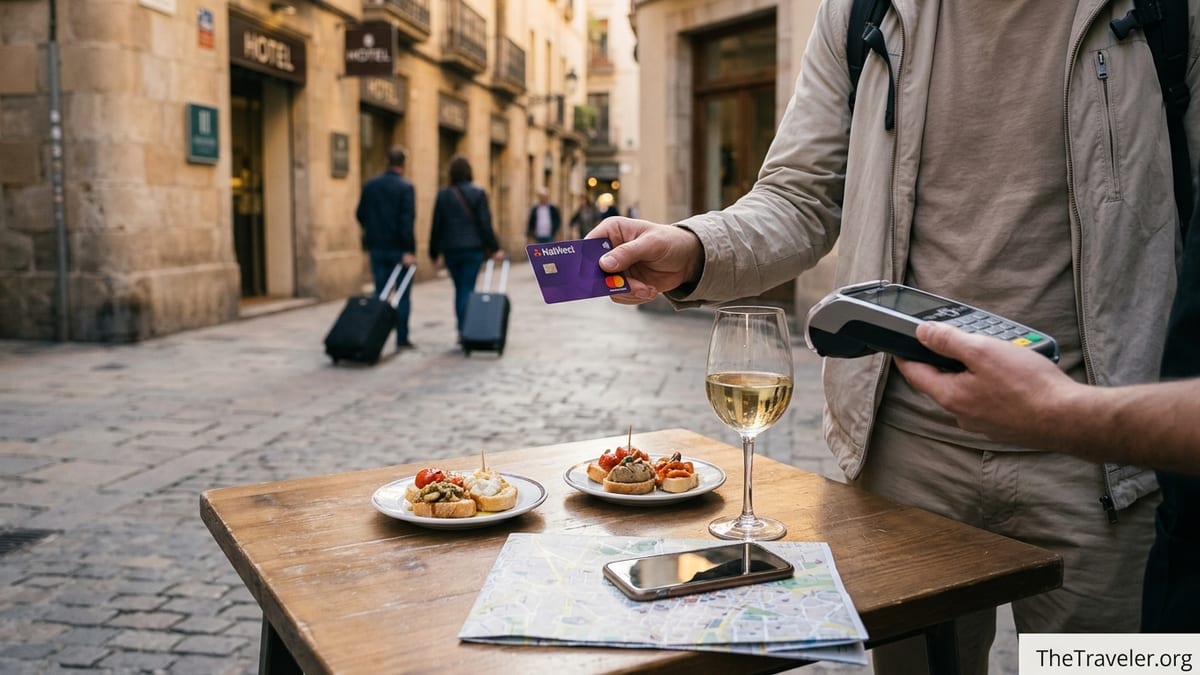
To see why this matters, imagine a long weekend in Barcelona where you put £900 of spend on the card for flights, hotel and restaurants. On a typical UK card with a 2.75 percent foreign transaction fee, you would quietly lose about £25 in fees on top of the Mastercard or Visa exchange rate. With the NatWest Travel Reward Credit Card, there is no foreign transaction fee on those purchases, and you could earn roughly £9 in Rewards on the eligible travel spend, which you can later cash out into your account.
The combination of no foreign transaction fee on purchases and modest cashback style Rewards makes this a useful everyday travel card. The problem is that many customers assume that “travel card” means “fee free for everything abroad” and that its Rewards work like a traditional air miles card. That is where mistakes begin.
Mistake 1: Treating It Like a Fee Free Cash Card
One of the costliest errors is using the NatWest Travel Reward Credit Card at foreign cash machines as if there were no consequences. NatWest’s general credit card fee information shows that while the Travel Reward Credit Card has a 0 percent non sterling transaction fee on purchases, cash withdrawals count as “money advances” and attract a separate fee of around 3 percent, plus interest that usually starts accruing immediately.
In practice, that means taking out €200 from an ATM in Lisbon could trigger a money advance fee of roughly €6 equivalent, and interest from day one until you clear the cash balance in full. Unlike with a domestic purchase, there is usually no interest free grace period on cash, so even a short delay in repayment makes the real cost higher than it looks on the statement. Local ATM operators in tourist areas may also layer on their own withdrawal fees.
A typical scenario looks like this. A couple arrives in Bali and needs cash for a small guesthouse that only accepts notes. They put their room and restaurant bills on the Travel Reward Credit Card, which is sensible. But they also withdraw the equivalent of £300 in cash on the same card, assuming there are no extra fees. By the time they get home, they discover that the withdrawal triggered a money advance fee and interest that wiped out a good portion of the Rewards they earned on the trip.
If you need cash abroad, the smarter move is usually to use a debit card specifically designed for travel, or a separate credit card that explicitly allows fee free cash withdrawals, then reserve the NatWest Travel Reward Credit Card for card purchases only. At a minimum, if you do use it for cash in an emergency, log in to the app and repay that cash balance immediately to limit interest.
Mistake 2: Ignoring Dynamic Currency Conversion at Shops and ATMs
Another common way people undo the benefit of a 0 percent foreign transaction fee card is by accepting dynamic currency conversion at checkout. In many shops, restaurants and cash machines abroad, you will be asked whether you want to pay in sterling or in the local currency. It is often presented as a convenience, with the sterling amount shown on screen.
When you choose to pay in sterling, the retailer or ATM operator, not your card network, sets the exchange rate. Their rate is usually significantly worse than the Mastercard or Visa wholesale rate that would apply if you paid in euros, dollars or another local currency. NatWest’s own travel guidance notes that choosing local currency is usually better value, because the bank then converts the transaction at the card scheme’s exchange rate without adding a foreign transaction fee on this card.
Take a dinner bill in Rome for €120. The terminal may offer to charge you £110 if you pay in sterling, while the actual market rate that day might convert €120 to about £102 on your NatWest Travel Reward Credit Card. On paper it looks like you are getting a clear sterling figure, but in reality you are overpaying roughly £8 just for the privilege. Over a week of hotel bills, restaurant meals and attraction tickets, that quiet mark up can run to £40 or more.
To use the Travel Reward Credit Card correctly, always ask to pay in the local currency of the country you are in. When a waiter in Madrid taps the terminal and says “GBP or EUR,” say “EUR, please.” At cash machines, carefully decline any offer to “lock in” a rate or view the charge in sterling. This simple habit lets your 0 percent foreign transaction fee genuinely work for you.
Mistake 3: Misunderstanding the Rewards and Redeeming Poorly
Because the NatWest Travel Reward Credit Card sits in the same ecosystem as NatWest’s Reward current accounts and MyRewards platform, it is easy to assume that the points behave like air miles or hotel points. In reality, they are closer to a flexible cashback balance that you can convert into money or partner offers. Misunderstanding that structure can mean you never quite see the value you are earning.
According to NatWest’s MyRewards information, Rewards from the Travel Reward Credit Card can usually be turned into cash paid into a NatWest current or savings account or used to reduce your Reward credit card balance. They can also sometimes be exchanged for retailer vouchers or charity donations. There is no complicated chart of miles per pound or distance based redemptions.
Consider a traveller who spends £4,000 a year in eligible travel categories on the card, mostly on flights to Europe, UK hotel stays and train tickets. At roughly 1 percent, they might earn around £40 in Rewards, plus a small amount of extra Rewards from partner retailers. If they ignore those Rewards for several years, letting a modest balance sit unused, the benefit is invisible. But if, each autumn, they convert their Rewards into cash and sweep it into a savings pot marked “next trip,” it becomes a tangible contribution toward flights or a hotel night.
Another subtle mistake is chasing minor bonus categories at partner retailers and then carrying a balance at the card’s standard purchase rate, which is currently around the high twenties percent APR. On a balance of £800 that you do not clear, the interest can quickly exceed the extra few pounds in Rewards you earned by routing a big purchase through a particular partner. The smart strategy is to treat Rewards as a bonus on top of a bill you would have paid anyway, not a reason to overspend.
Mistake 4: Forgetting It Is Still a High Interest Credit Card
The NatWest Travel Reward Credit Card is marketed around travel, not cheap borrowing. The representative purchase APR published by NatWest sits in the high twenties percent range, and your personal rate could be higher depending on credit assessment. That means it is expensive if you use it to roll over holiday expenses over several months.
Imagine you book a family trip to Florida and spend £2,000 on flights, park tickets and accommodation on the Travel Reward Credit Card. You plan to pay it off quickly, but after returning home you only manage to pay £200 a month. At a purchase rate around the high twenties percent APR, you could still be paying for that holiday well into the following year and giving back far more in interest than you ever gained in foreign fee savings and Rewards.
The card works best if you can clear the balance in full every month, using the interest free period on purchases. That way, your net gain is the elimination of foreign transaction fees on purchases, plus the Rewards you earn. If you know that a trip will take time to repay, a low rate or 0 percent purchase card used alongside a separate fee free travel card may be cheaper overall, even if the second card earns no rewards.
One practical approach is to ring fence the Travel Reward Credit Card mentally as a “travel wallet.” Use it for flights, hotels, trains and some overseas everyday spending, but move the equivalent cash into a savings pot in your current account as soon as you book. When the statement arrives, pay it off in full from that pot. This discipline keeps the card in its intended lane and reduces the temptation to revolve a balance at a high rate.
Mistake 5: Not Coordinating With NatWest Current Accounts and Other Cards
NatWest’s wider product line up includes Reward current accounts that earn monthly Rewards, packaged accounts with travel insurance and fee free debit card purchases abroad, and other credit cards such as the Reward Black card. It is easy to miss opportunities by not looking at how your Travel Reward Credit Card fits into that broader picture.
For example, some NatWest packaged accounts charge a monthly fee but include benefits such as worldwide family travel insurance and no non sterling transaction fees on debit card purchases. If you already hold one of these accounts, it might make sense to use the debit card for low value everyday spends and cash withdrawals abroad, while reserving the Travel Reward Credit Card for larger hotel, flight and car hire transactions that benefit from the extra section 75 protection offered on credit card purchases between £100 and £30,000.
Another real world pattern is travellers holding multiple cards but using the wrong one in the wrong place. A frequent city breaker might have a specialist card with fee free cash withdrawals and a separate air miles card that charges foreign transaction fees. If they automatically default to the air miles card for every foreign purchase, they may be losing around 3 percent to fees that could have been avoided by using the NatWest Travel Reward Credit Card for the purchase and the other card solely for ATM withdrawals.
Before your next trip, lay all your cards on the table and write a simple rule on a sticky note in your wallet. For instance: “NatWest Travel Reward Credit Card for all foreign purchases in shops, hotels and online. Travel debit card for ATMs. Miles card for UK only.” This small exercise forces you to deliberately take advantage of the fee structure of each product instead of relying on old habits.
Mistake 6: Overlooking Consumer Protection and Booking Strategy
Travel is unpredictable, and one of the underused advantages of paying with a UK credit card is the extra protection you may have when things go wrong. For qualifying purchases between £100 and £30,000, paying with a credit card can give you statutory protection alongside any travel insurance. That is particularly relevant for package holidays, flights and accommodation booked directly with providers.
Many travellers scatter their holiday payments across various cards and bank transfers without thinking about where they would most want that protection. For instance, they might pay a £900 villa deposit by bank transfer to avoid a small merchant fee, while happily putting local restaurant bills on the Travel Reward Credit Card. If the villa company later fails, it is the transfer, not the restaurant meals, that they wish had been on the card.
A smarter approach is to prioritise the NatWest Travel Reward Credit Card for core, high value travel bookings within its coverage limits, especially when paying foreign suppliers online. Use it to pay for flights with a Spanish airline, a hotel in New York booked direct, or a Greek island ferry pass. Meanwhile, smaller on trip purchases that would be inconvenient to dispute can still go on debit if you prefer, provided you are not sacrificing foreign fee savings.
Coordinating your card choice with a solid standalone travel insurance policy and any insurance attached to your NatWest current account means you are not only minimising fees but also building layers of protection. That matters more and more as airlines, tour operators and small travel businesses operate on tight margins and sometimes fail suddenly.
The Takeaway
The NatWest Travel Reward Credit Card is not a magic holiday pass, but it is more powerful than many of its holders realise. Structurally, it combines no foreign transaction fees on purchases, simple cash like Rewards and no annual fee. Those ingredients can make overseas trips and even domestic rail or hotel bookings slightly cheaper every year.
The people who get poor value from the card are usually the ones who use it for cash withdrawals, accept dynamic currency conversion, carry balances for months at a high interest rate or ignore the Rewards they quietly earn. They also often fail to coordinate it with the rest of their wallet, either duplicating cover they already have through a NatWest packaged account or missing opportunities for better protection on big bookings.
If you treat the NatWest Travel Reward Credit Card as a specialist tool for foreign and travel related purchases, always pay in the local currency, clear the statement in full and regularly cash out your Rewards, it can become a lean, effective part of your travel finance setup. Before your next trip, check the latest NatWest terms, run through a typical holiday budget and decide in advance which card you will use where. A few minutes of planning at home could save you the equivalent of a good dinner on your next city break.
FAQ
Q1. Does the NatWest Travel Reward Credit Card charge fees for purchases abroad?
For card purchases in a foreign currency, NatWest states that the Travel Reward Credit Card does not charge a non sterling transaction fee, so you avoid the typical 2 to 3 percent surcharge many standard cards apply. Local merchants or ATM operators can still add their own charges.
Q2. Is it free to withdraw cash from ATMs abroad with this card?
No. Cash withdrawals are treated as money advances and usually attract a separate fee, around a few percent of the amount withdrawn, plus interest from the date of the transaction. It is best reserved for emergencies rather than routine cash access.
Q3. How do Rewards on the NatWest Travel Reward Credit Card work?
You earn Rewards on most card spending, with a higher rate on eligible travel purchases and at selected partner retailers and a lower rate on other everyday spending. These Rewards can typically be converted into cash paid into a NatWest account or used to reduce your Reward credit card balance.
Q4. Can I use the Travel Reward Credit Card for everyday spending in the UK?
Yes. The card works like a normal credit card in the UK and still earns Rewards on domestic purchases, although at a lower rate for non travel categories. Just remember that the main advantage over other cards is its treatment of foreign currency purchases.
Q5. Should I pay in sterling or local currency when using the card abroad?
It is generally better value to pay in the local currency of the country you are in. That way, the transaction is converted by the card network at its wholesale rate and, on this card, without a foreign transaction fee on purchases.
Q6. Is there an annual fee for the NatWest Travel Reward Credit Card?
NatWest’s current product details indicate there is no annual fee for the Travel Reward Credit Card. As with any financial product, it is wise to check the latest terms before applying in case this changes.
Q7. Does the Travel Reward Credit Card come with travel insurance or lounge access?
The Travel Reward Credit Card itself is focused on Rewards and fee free foreign purchases rather than bundled insurance or lounge access. Some NatWest packaged current accounts and premium credit cards offer those extras separately, so check your wider NatWest relationship to see what you already have.
Q8. What credit score or income do I need to get the card?
NatWest states that applicants must usually be UK residents, at least 18 years old and have a minimum level of income, often around five figures. Approval and the credit limit offered depend on NatWest’s assessment of your overall credit profile.
Q9. How can I maximise the value of this card on a trip?
Use it for flights, hotels, trains and everyday card purchases abroad, always pay in the local currency, avoid cash withdrawals, clear the balance in full each month and periodically convert your Rewards into cash for future travel.
Q10. Is the NatWest Travel Reward Credit Card the best option for every traveller?
Not necessarily. It is a strong choice if you value fee free foreign purchases and simple Rewards without an annual fee, especially if you already bank with NatWest. Heavy travellers, or those who need features like airport lounge access or enhanced insurance, might prefer a more premium product, while people who regularly carry a balance may be better served by a lower interest rate credit card.