


More news on this day
American Airlines is preparing a sweeping redesign of its domestic cabins, with plans to add more premium seats across hundreds of narrowbody jets in a multiyear shift that will change the onboard experience for many U.S. travelers.
Get the latest news straight to your inbox!
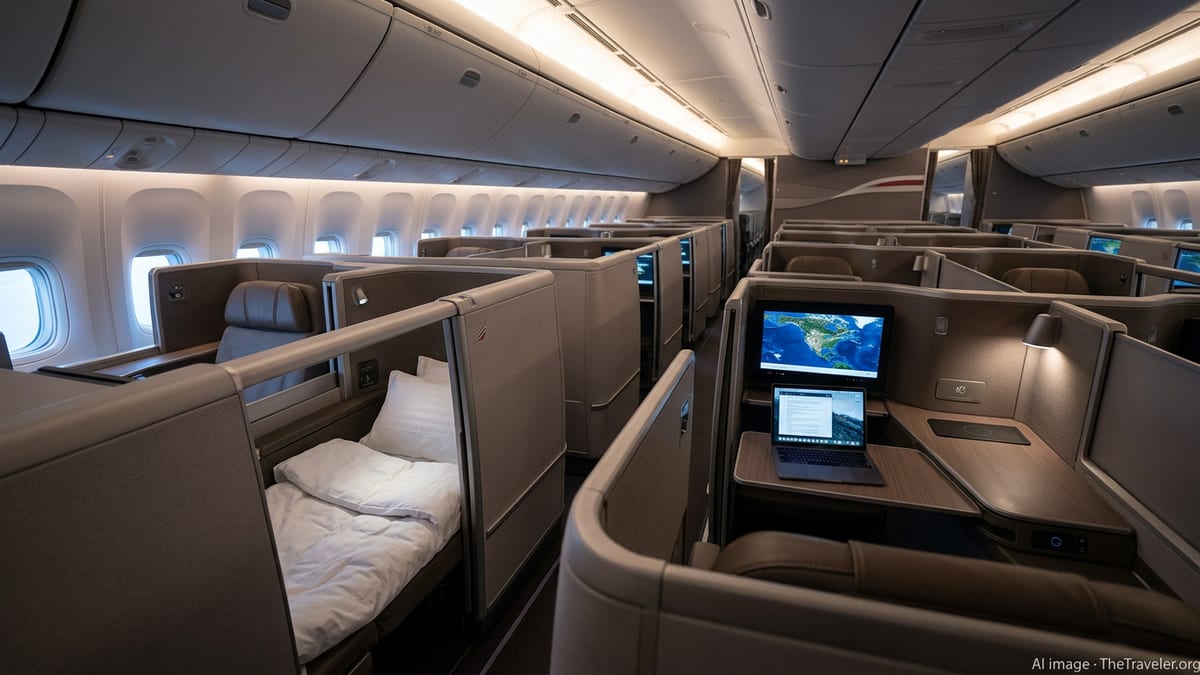
Airline targets surge in demand for premium seating
Published coverage in recent days indicates that American Airlines is moving to significantly increase the share of premium seats on its narrowbody fleet. Market reports describe the initiative as one of the most substantial onboard investments the carrier has made in years, reflecting a strategy that prioritizes higher-paying customers on busy domestic and short-haul international routes.
According to financial and aviation industry reporting, American plans to retrofit large portions of its Airbus A319 and A320 fleets, adding an extra row of First Class and increasing the overall proportion of premium seating. The move is designed to push premium capacity on narrowbody departures from roughly one quarter of seats to about 40 percent over the coming years, touching hundreds of daily flights across the network.
Analysts note that this type of reconfiguration typically rolls out in phases, beginning with aircraft serving key business and hub-to-hub routes before spreading more widely. As more jets complete interior modifications, travelers can expect a noticeable shift in the cabin layout and seat mix on many American Airlines flights within the United States.
The focus on premium products follows a broader trend among major carriers that are betting on steady demand from business travelers, frequent flyers and leisure passengers willing to pay extra for more space and amenities. For American, the decision to reallocate cabin space toward higher-yield seating is also seen as a way to bolster revenue resilience in an environment of volatile fuel costs and competitive pressures.
What will change onboard for travelers
The planned cabin overhaul centers on rebalancing how space is used inside each aircraft. Reports on the retrofit program indicate that American intends to increase the number of First Class seats in the front cabin on A319 and A320 jets, while also expanding other forms of extra-legroom and premium economy-style seating on select aircraft types.
For passengers, this is likely to translate into a greater chance of finding multiple tiers of comfort on the same flight, particularly on routes that previously offered a smaller First Class cabin or limited extra-legroom options. Travelers who book premium fares or hold elite status could see more availability for upgrades and preferred seating, although the exact impact will depend on how American adjusts its upgrade and seating policies alongside the hardware changes.
The reconfiguration is also expected to touch seat pitch and overall cabin density. Industry observers point out that airlines frequently balance premium expansion with tighter layouts in standard economy, either by re-spacing rows, adopting slimmer seats, or modestly increasing the total seat count. While American has not publicly detailed every aspect of the new interior design, travelers may notice subtle differences in legroom, seat width, storage space and in-flight power arrangements as the refreshed cabins enter service.
Another open question is how in-flight entertainment and connectivity will evolve alongside the seat changes. American has already shifted much of its narrowbody fleet toward a bring-your-own-device approach using onboard Wi-Fi and streaming, after removing many seatback screens in earlier cabin updates. Industry coverage suggests the airline will continue to lean on connectivity, with the premium cabin expansion aimed primarily at comfort and revenue mix rather than a wholesale technology refresh.
Network-wide impact across hubs and key routes
Because the retrofit program concentrates on widely used narrowbody aircraft, the changes are poised to ripple across American’s U.S. hubs and high-frequency routes. The Airbus A319 and A320 families serve a broad mix of domestic markets, from short hops between major business centers to longer flights connecting hubs and popular leisure destinations.
Travel industry analysis suggests that early waves of modified aircraft are likely to appear first at large hubs where premium demand is strongest, such as Dallas Fort Worth, Charlotte, Miami, Phoenix and other major stations in the American network. Over time, as more jets cycle through maintenance and reconfiguration lines, the updated cabins are expected to spread to additional routes, including some that traditionally relied on a more uniform economy-heavy configuration.
For frequent flyers, this could mean greater variation in the onboard experience while the transition is underway, with some aircraft on a given route featuring the new premium-heavy cabin and others still flying older layouts. Travelers who closely track aircraft types and tail numbers may have opportunities to select flights more likely to offer expanded premium seating as the program progresses.
From a network planning standpoint, shifting more seats into premium categories allows American to better align capacity with the types of fares it seeks to attract. Aviation analysts report that the airline and its competitors are increasingly tailoring fleets not only by aircraft size but also by seat mix, matching cabin configurations to the revenue potential of each route and time of day.
How the move fits into a broader competitive strategy
American’s decision to recalibrate its cabins around premium seating is unfolding against a backdrop of intense competition among U.S. carriers. Over the past several years, major airlines have steadily moved to differentiate their onboard products, with expanded business-class offerings, new premium economy cabins on long-haul flights and a growing array of branded fare bundles.
Industry coverage portrays American’s narrowbody retrofit program as part of this wider race to capture high-yield travelers who value extra space and preferential service. By increasing the number of seats that can be sold at premium price points, the airline is positioning itself to generate more revenue from the same number of daily departures, while also giving corporate travel buyers and frequent flyers more options within the American network.
The strategy carries potential trade-offs. Adding premium seats may require careful management of expectations among economy passengers if overall density rises or if complimentary upgrades become more competitive. At the same time, a larger premium cabin could provide more flexibility during irregular operations or peak travel periods, when airlines sometimes use higher-fare seating to re-accommodate disrupted customers.
Financial analysts following the airline sector note that cabin reconfigurations are capital-intensive projects that typically roll out over several years. The payoff depends on consistent demand for premium products and the ability to keep aircraft utilization high while jets rotate through modification lines. For American Airlines, the scale of the investment suggests confidence that premium-focused travel trends will endure, and that reshaping the onboard experience across hundreds of flights is central to its long-term competitive plan.