


More news on this day
China’s coastal province of Zhejiang is experiencing a sharp upswing in visitor numbers as a new high-speed railway connection brings the once-remote city of Yuhuan into fast, direct reach of major tourism and business hubs across the Yangtze River Delta.
Get the latest news straight to your inbox!
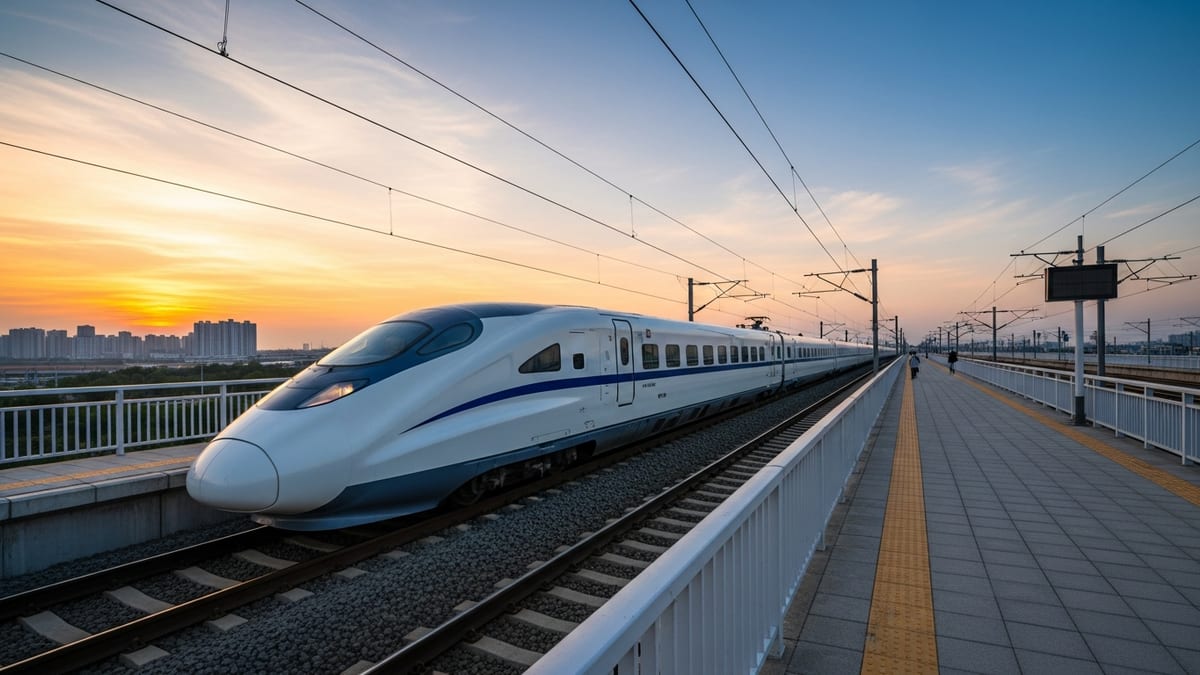
High-Speed Link Brings Yuhuan Onto the Tourist Map
Recent rail expansions in Zhejiang have extended high-speed services along the Taizhou coast, effectively plugging Yuhuan into the dense passenger network that already links Hangzhou, Ningbo and Wenzhou. Publicly available planning documents and regional transport briefings show that the new segment ties into the Hangzhou–Wenzhou high-speed corridor, allowing travelers from core cities such as Shanghai and Hangzhou to reach Yuhuan with one high-speed journey or a single, short transfer.
The upgraded access marks a turning point for Yuhuan, which historically relied on longer highway journeys and slower conventional rail via nearby hubs. Travel times from Hangzhou and Ningbo have been significantly reduced, and journey planning data from regional operators indicates that what was once a multi-leg trip can now be completed in roughly two to three hours, depending on departure point and connection.
Tourism analysts note that the change positions Yuhuan alongside better-known Zhejiang coastal destinations, particularly for weekend visitors from the Yangtze River Delta’s major metropolitan areas. The new link is also expected to increase business travel, adding further demand for hotels, restaurants and transport services in and around the city.
Zhejiang’s Rail Push Accelerates Post-Pandemic Travel Boom
The connection into Yuhuan comes as Zhejiang pushes ahead with a broader program of high-speed rail investment. In 2024, the Hangzhou–Wenzhou high-speed railway entered service, forming a north–south spine across the province and sharply cutting journey times between the provincial capital and the southern city of Wenzhou. Transport updates from provincial authorities describe the line as a key element of a “one-hour transportation circle” linking major urban clusters.
This spine integrates with the wider Yangtze River Delta high-speed rail loop that has been rolling out in stages around Shanghai, Suzhou, Nanjing and Hefei. The result is a dense mesh of high-speed options that allows travelers to pair inland cultural destinations, such as Huangshan and Jiuhua Mountain in neighboring Anhui and Jiangxi, with Zhejiang’s coastal resorts in a single multi-stop itinerary.
Tourism data released after recent national holidays already shows strong rebounds in domestic travel across the region, with coastal Zhejiang among the main beneficiaries. Observers point to high-speed rail as a primary driver, lowering the time and cost of short-haul trips and encouraging visitors to look beyond traditional big-city breaks.
From Industrial Port to Coastal Getaway
Yuhuan has long been known within China for its manufacturing base and port facilities on the East China Sea, but its tourism profile has been comparatively low. The new high-speed link is beginning to change that perception, highlighting coastal scenery, island landscapes and emerging leisure developments around Taizhou Bay.
Local planning materials outline a strategy that pairs industrial upgrading with the growth of a service and tourism economy, including waterfront promenades, boutique hotels and marine leisure projects. Easier rail access is regarded as central to this shift, making it realistic for residents of Shanghai, Hangzhou and Nanjing to visit Yuhuan for short coastal stays or to combine it with better-known sites such as the Nanxi River and the islands off Wenzhou.
Early signs of this repositioning have appeared in domestic travel marketing, where Yuhuan is increasingly packaged with other Zhejiang coastal stops on themed routes focused on seafood, maritime heritage and island hopping. The high-speed rail link allows tour operators to design fixed-time itineraries that are less vulnerable to road congestion and seasonal weather disruptions.
Tourism Flows Redirected Across the Yangtze River Delta
The expanded rail access is also redistributing tourism flows across the Yangtze River Delta, one of China’s most densely populated and economically advanced regions. New scheduling patterns show more services connecting Shanghai and inland cities to Zhejiang’s coastal corridor, bringing secondary destinations like Yuhuan, Xianju and other county-level cities into the orbit of major urban travelers.
According to published coverage of recent rail openings, the Hangzhou–Wenzhou line and related projects have already driven spikes in visitor numbers to scenic areas along the route, including river valleys and mountain parks that previously required long bus transfers. Yuhuan is positioned to benefit from a similar effect, as the coastal segment serving the city is promoted as part of broader “rail + tourism” products aimed at younger travelers and families.
Industry observers say this shift may help ease pressure on heavily visited hotspots such as West Lake in Hangzhou by offering attractive alternatives reachable within comparable travel times. As more visitors opt for multi-stop journeys, spending is likely to spread to smaller cities and rural areas, supporting homestays, local gastronomy and cultural experiences.
Infrastructure Upgrades Spur New Investment
The new high-speed connection is already feeding into a wider wave of investment around Yuhuan. Public procurement announcements and local economic reports highlight upgrades to station areas, connecting bus routes and urban roads designed to handle higher passenger volumes. Commercial developers are moving to secure land near key transport nodes for hotels, shopping centers and logistics facilities.
Regional planners frame these investments as part of Zhejiang’s long-term effort to deepen integration within the Yangtze River Delta and to balance development between core cities and coastal or inland counties. Improved accessibility for Yuhuan is expected to accelerate that process, particularly in tourism-related sectors that can respond quickly to changing travel patterns.
Looking ahead, transport experts anticipate further timetable adjustments and additional services as demand grows, with seasonal trains and through-services during peak holidays likely to play a larger role. For travelers, the practical impact is straightforward: more frequent, faster options to reach Yuhuan and neighboring coastal destinations, reinforcing Zhejiang’s status as one of China’s most accessible and diverse provinces for rail-based tourism.