


Zurich Airport is one of Europe’s most efficient hubs, but arriving for the first time can still feel overwhelming. This guide walks you step by step through how the airport is laid out, how to move between terminals and gates, what to expect at arrivals and departures, and how to reach the city, find hotels, lounges and parking. It is written for real first-time travelers who want calm, practical instructions rather than airport jargon.
Get the latest updates straight to your inbox!
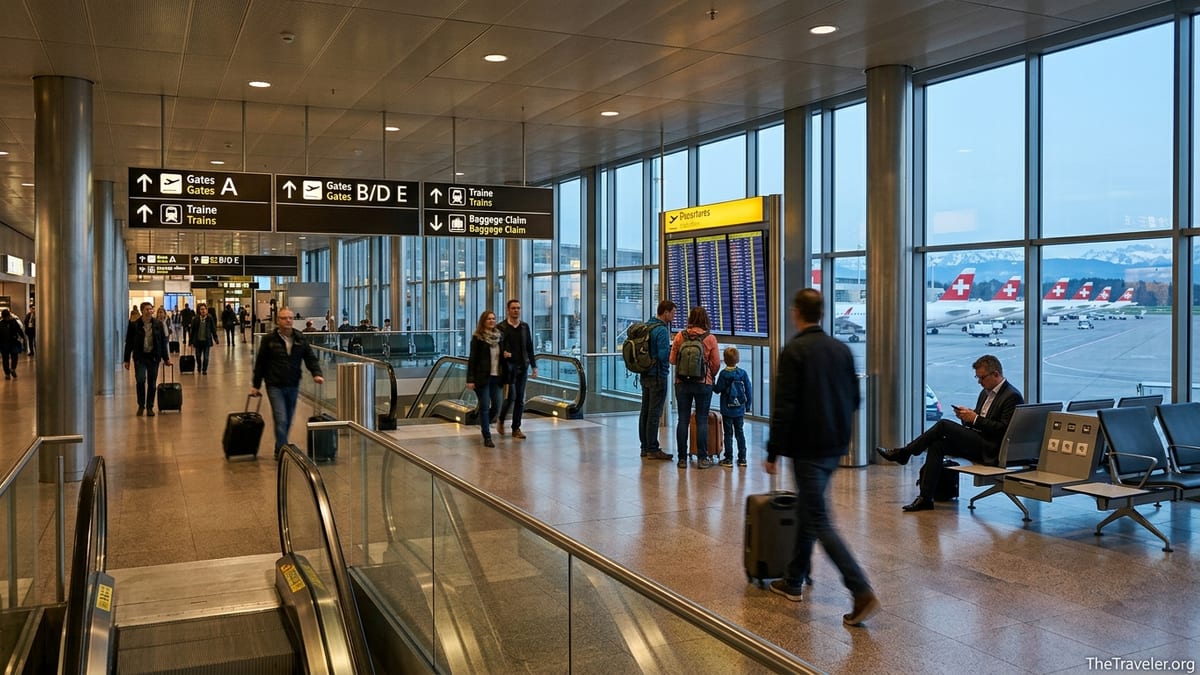
Understanding Zurich Airport’s Layout
Zurich Airport, often called Zurich Kloten, is compact but spread over several levels and buildings. The public side is known as the Airport Centre, where you find the railway station, bus and tram stops, check-in halls, and a shopping mall. Beyond security and passport control is the Airside Center, which connects to three gate areas labeled A, B/D and E. Gates A and most of B/D serve Schengen destinations such as Paris or Rome, while E is the satellite terminal used mainly for long-haul and non-Schengen flights like New York or Dubai.
The airport has three main check-in areas signed as Check-in 1, Check-in 2 and Check-in 3, all connected indoors. Major carriers such as Swiss International Air Lines usually use Check-in 1 and 3, while many other full-service and leisure airlines use Check-in 2. Once you have checked in and passed security, you will follow signs to your gate group: A, B/D, or E. If your boarding pass shows a gate starting with “E,” you will take the underground Skymetro people mover from the Airside Center to the E gates in just a couple of minutes.
For a first-time traveler, the key point is that you do not need to leave the building or catch a bus to change terminals. Everything is connected by clear signage in German and English. Information desks are located in the Airport Centre and airside if you are unsure where to go. Screens listing departures and arrivals are frequent, and walking times between most points in the main building are typically under 10 to 15 minutes, not counting security queues.
If you are transferring between flights, your transit experience depends on whether you are staying within Schengen or moving between Schengen and non-Schengen. A Zurich to Munich connection, for example, usually keeps you in the Schengen area and may simply require a short walk between A and B gates. A flight from London to Zurich connecting onward to Tokyo is likely to involve a passport check and then the Skymetro out to the E pier. Transfer times as low as 40 to 50 minutes are common on tickets issued by airlines, but if this is your first time, aim for at least 90 minutes when you can.
Check-in, Security and Boarding Gates
Most airlines open their check-in counters two to three hours before departure, and Zurich encourages travelers to arrive in that window. At busy times in the morning and early evening, security can back up, so if you are new to the airport and traveling at peak time, aim for the full three hours for intercontinental flights and at least two hours for European services. Many carriers, including Swiss and Lufthansa, support online check-in and mobile boarding passes, which can significantly speed up the process if you only have hand luggage.
Self-service bag drop is common in Zurich. For example, Swiss short-haul passengers with a mobile boarding pass can print a bag tag at a kiosk in Check-in 3, attach it themselves, and then proceed to a dedicated drop belt. This often moves faster than traditional counters, which is useful if you arrive by train at the last practical moment. Oversized baggage such as skis is handled at special desks that are clearly marked with pictograms near the regular check-in rows.
Once you clear security and, where needed, passport control, you will reach the main Airside Center. Here you will find duty-free shops, cafes and directional signs splitting passengers into A, B/D and E flows. Gates A and B/D are reachable on foot along wide corridors. To reach E gates, you descend to the Skymetro platform and board the automatic train. The ride itself takes under two minutes and runs every few minutes. Audio and visual messages confirm you are heading to the correct pier, which is reassuring if this is your first experience with an underground people mover.
Boarding usually begins 30 to 45 minutes before departure for European flights and 45 to 60 minutes for long-haul services. Zurich frequently uses both jet bridges and bus gates. If you see a gate number in the low A0x range on your boarding pass, you may be taken to the aircraft by bus. Factor in the extra time this takes: the gate will close at the same published time whether you need a bus transfer or not, so do not wait until the last call before approaching the boarding area.
Arrivals, Baggage Claim and Customs
On arrival, passengers disembark either directly into the terminal or via bus to the arrivals level. If you are coming from another Schengen country, follow the “Baggage reclaim” signs and bypass passport control. If you are arriving from a non-Schengen country such as the United States, Canada or the United Kingdom, you will pass through immigration before you can reach the baggage belts. Automated passport control is available for eligible biometric passport holders, though staffing and opening patterns can vary through the day.
Baggage claim is split into Arrivals 1 and Arrivals 2, both on the ground side of the terminal complex. Screens show which carousel your flight is using, and walking between the two arrival halls takes roughly five minutes. It is common for families or groups arriving on different flights to designate a meeting point in one of these halls, for instance near the large flight information screens or the main rail ticket machines close to Arrivals 1. Luggage carts are available without coins in the reclaim area and can be taken up to the train platforms and car parks.
Customs checks are usually light, but Switzerland enforces its duty-free limits firmly. Once you have collected your bags, you will see a green channel for travelers with nothing to declare and a red channel if you need to declare goods over the allowances. Many passengers simply walk through the green channel without being stopped, but officers do conduct spot checks, especially on arrivals from long-haul destinations. If you are unsure about items such as high-value electronics or luxury watches, it is safer to use the red lane and ask.
Immediately after exiting customs, you find yourself in the public arrivals area with direct access to rail, bus, tram and taxi options. Currency exchange counters and ATMs are available, but visitors often get better rates by using ATMs rather than exchanging large sums of cash. The airport building is fully covered by mobile data services, so if your phone plan does not include Switzerland, you can purchase a local SIM or eSIM from providers that have counters and vending machines in the arrivals zone.
Getting Between Zurich Airport and the City
One of Zurich Airport’s biggest advantages is how close it is to the city. The rail station is directly under the Airport Centre, connected by escalators and elevators from the arrivals and shopping levels. Frequent S-Bahn and InterCity trains reach Zurich Main Station in roughly 10 minutes, often for a price similar to other Swiss local journeys of the same distance. Trains run from early morning until late evening, and schedules are dense enough that many travelers simply walk down to the platform and board the next service into town without extensive planning.
If you want a slower but more scenic ride, trams connect the airport to different parts of Zurich. Tram route 10 and other lines run along a surface route that passes residential neighborhoods and office districts, taking roughly 30 to 35 minutes to reach central stops near the main station and university area. This option is practical if your hotel is in a northern district or if you simply prefer a street-level view instead of an underground rail journey. Tickets for both trains and trams are sold from the same machines, which have English menus and accept cards.
Regional buses operate from a terminal just outside the arrivals area and serve nearby towns and rural communities. For example, a local bus might be the easiest way to reach small villages that are not directly on the rail network. Buses are integrated into the same regional ticketing system as the trains and trams, so if you are staying in a hotel just outside Zurich’s city limits, you can typically reach it with a single combined ticket.
Taxis and ride services are available on the curbside outside arrivals. Taxis in Zurich are reliable but cost considerably more than public transport, especially if you encounter traffic around rush hour. A typical ride to a central hotel may cost several times the price of a train ticket while saving only a few minutes compared with rail. Many business travelers still choose them for door-to-door convenience, but first-time visitors on a budget usually find the train and tram system more than sufficient and easy to navigate.
Hotels, Transit Options and Sleeping at the Airport
Zurich Airport offers several options if you need to sleep near the terminals. Inside the secure transit area, there is a basic Transit Hotel and dayroom facility that allows you to reserve a room by the night or sometimes by shorter blocks, especially between flights. These rooms are especially useful if you arrive on a late intercontinental service and depart again early the next morning without wanting to formally enter Switzerland. Simple facilities such as beds, showers and Wi-Fi provide a rest stop without having to clear immigration twice.
On the public side, multiple full-service hotels stand within a short walk or shuttle ride from the terminals. Large international brands operate directly opposite the terminal complex in a newly developed area known as The Circle and in neighboring Kloten. These properties are aimed at business travelers and overnight passengers, offering early breakfasts, late checkouts, meeting rooms and soundproofed windows. Prices fluctuate with demand and trade fairs, but can be high by international standards, particularly during major events or at short notice.
For travelers on tighter budgets, there are capsule-style and limited-service hotels in or near the airport zone. These typically offer compact sleeping pods or simple rooms with shared facilities, designed for overnight stops rather than longer holidays. They can be a good choice if you just need a place to rest between an evening arrival and a morning departure. Reviews often mention that booking early is essential to secure the best rates, especially in peak ski season or during large exhibitions in Zurich.
Some passengers choose to sleep in the terminal itself during long layovers. Seating areas in the public zones are generally safe and monitored, but cleaning operations and partial closures can make this uncomfortable. Airside, overnight stays depend on where security controls remain open and whether your boarding pass gives you access to those areas. In practice many travelers find that a dayroom, transit hotel or budget capsule bed offers far better rest, particularly in winter when late-night temperatures outside can be very low.
Parking, Car Rental and Drop-off Areas
If you are arriving by car, Zurich Airport provides several multi-story car parks connected by covered walkways to the terminal complex. Short-term parking is available in lots closest to the terminal, designed for drop-offs, pick-ups and stays of a few hours. These spaces are convenient if you are meeting arriving relatives or bringing someone to check-in and want to accompany them inside. Fees are charged in short increments, and to avoid high costs it is wise to move your vehicle if you expect to stay longer than a couple of hours.
Long-term parking areas are situated slightly farther from the terminal and generally cost less per day. They are suitable for travelers leaving their car at the airport while they are away for several days or weeks. Shuttle services or pedestrian routes connect these car parks with the terminal. Many Swiss residents driving from other cantons pre-book long-term parking, especially during school holidays when spaces closer to the airport can fill. Booking in advance usually provides clearer pricing and sometimes lower daily rates than turning up without a reservation.
Dedicated drop-off and pick-up zones are located in front of the terminal halls. These areas are intended for very short stops while passengers and luggage are unloaded or loaded. To keep traffic flowing, stopping times are often limited and monitored, and drivers who exceed them may incur charges. If you expect a delay, such as waiting for someone whose flight has not yet landed, it is more comfortable and cost-effective to use a short-term car park rather than circling the access roads repeatedly.
Car rental desks for major international brands are grouped together in the Airport Centre. After completing paperwork, vehicles are collected from clearly marked rental parking levels in the adjacent garages. When returning a car, follow the “Rental Car Return” signs as you approach the airport; the route leads you back to the correct garage without needing to pass through the public drop-off lanes. Inspect the car with staff or take your own photos before handing back the keys, especially in winter when snow and road salt can obscure minor damage.
Lounges, Quiet Spaces and Services for Comfort
Zurich Airport offers a wide range of lounges for different passenger groups. Swiss operates several branded lounges in the A, D and E gate areas, including business, senator and first-class facilities. These typically provide hot and cold buffets, self-service drinks, work desks, showers and sometimes outdoor terraces with views of the runways and distant Alps. Access usually depends on your ticket class or frequent flyer status within the Star Alliance network, though some passengers purchase paid access depending on eligibility and availability.
Other lounges at Zurich include independent facilities and airline-specific spaces such as those for Emirates or other long-haul carriers, often located near the relevant departure gates. Many of these lounges are accessible with membership cards from global lounge programs, with walk-up entry available for a fee when capacity allows. For example, a traveler flying economy to London might choose to spend a couple of hours before departure in an independent lounge near the Airside Center, taking advantage of Wi-Fi, quieter seating and complimentary snacks instead of waiting in the main terminal.
For passengers who prefer not to pay for lounge access, Zurich still offers a number of relatively quiet corners. Seating areas near the ends of the A and B piers tend to be calmer outside the main morning and evening banks of flights. The airport also provides dedicated prayer and meditation rooms, which can be welcome for anyone seeking a few minutes of calm before or after a long journey. Power outlets and free Wi-Fi are widely available, though in busy times you may need to look beyond the central restaurants to find free tables and sockets.
Additional comfort services include shower facilities in some lounges and pay-per-use rest zones near the transit hotel area. Shops in both the public and secure parts of the airport sell travel essentials such as universal adapters, noise-cancelling earplugs and neck pillows, which can make a long-haul journey more bearable. If you are traveling with children, look for clearly signed play areas, which provide soft playground equipment and help younger travelers burn off energy before boarding.
Essential Tips for First-Time Travelers
First, pay attention to time at Zurich Airport, particularly for non-Schengen departures from the E gates. From the moment you arrive in the terminal, you may need to clear check-in, security, outbound passport control and then take the Skymetro. None of these steps is complicated, but together they require more time than passengers often expect when they first see how compact the building looks from outside. Keeping an eye on departure screens and listening for announcements in both German and English will help you react quickly if your gate changes.
Second, pack with security in mind. Liquids must be in containers of 100 milliliters or less and fit into a single transparent one-liter bag. Laptops and large electronics are typically removed from bags during screening unless you are in a special lane that allows them to remain inside. Having these items easy to reach not only reduces stress for you but helps keep queues moving for everyone. If you are unsure about an item such as a Swiss Army knife purchased in the city, place it in checked luggage rather than attempting to carry it through security.
Third, make use of Zurich’s efficient public transport. For most first-time visitors, the train is the simplest way to reach the city. Consider buying a day ticket or city pass if you plan to explore multiple neighborhoods, as these often cover both your airport transfer and unlimited local trips. Ticket machines accept major cards and provide language options including English and French, and rail staff on the platforms are accustomed to helping confused visitors who have just stepped off a long flight.
Finally, remember that Zurich Airport staff are used to assisting transit passengers and tourists who are unfamiliar with the layout. If you miss a connection because of a delayed inbound flight on a single ticket, go straight to your airline’s transfer desk inside the secure area, where agents can rebook you. If you have separate tickets, you may need to clear immigration, collect bags and check in again, which takes longer; build generous gaps between such flights. In all cases, keep your boarding passes and identification documents handy, and do not hesitate to ask for information if something is unclear.
FAQ
Q1. How long does it take to get from Zurich Airport to the city center?
In most cases the train takes around 10 minutes from the airport station to Zurich Main Station, while tram services take roughly 30 to 35 minutes.
Q2. How early should I arrive at Zurich Airport before my flight?
Plan to arrive about two hours before European departures and around three hours before long-haul flights, especially at busy morning and evening periods.
Q3. Which gate area will my flight use at Zurich Airport?
Short-haul Schengen flights usually depart from A or B/D gates, while many non-Schengen and long-haul flights, such as to North America or Asia, depart from E gates.
Q4. Is it easy to transfer between flights at Zurich Airport?
Yes, Zurich is designed as a transfer hub with clear signage. Most connections involve walking within the same building, occasionally using the Skymetro to reach E gates.
Q5. Can I sleep at Zurich Airport during a long layover?
Yes, you can use the transit hotel or nearby airport hotels, and some passengers rest in terminal seating, though a proper room is usually more comfortable.
Q6. Are there showers available at Zurich Airport?
Showers are available in several airline and independent lounges, and there are pay-per-use facilities linked to the transit hotel and certain rest areas.
Q7. Is public transport from Zurich Airport included in city passes?
Many regional transport passes and Zurich city tickets include the airport zone, allowing you to ride trains, trams and buses without buying a separate ticket.
Q8. How expensive are taxis from Zurich Airport to downtown?
Taxis are significantly more expensive than trains, often costing several times a rail ticket price for the 10 kilometer trip, but they offer door-to-door convenience.
Q9. What should I do if my luggage is lost at Zurich Airport?
Go to your airline’s baggage service desk in the arrivals area as soon as you realize your bag is missing, and keep your baggage tag for tracking.
Q10. Are there family and child-friendly facilities at Zurich Airport?
Yes, the airport has signed play areas, baby-changing rooms and family-friendly restrooms, and many cafes and lounges welcome children and offer suitable seating.