


More news on this day
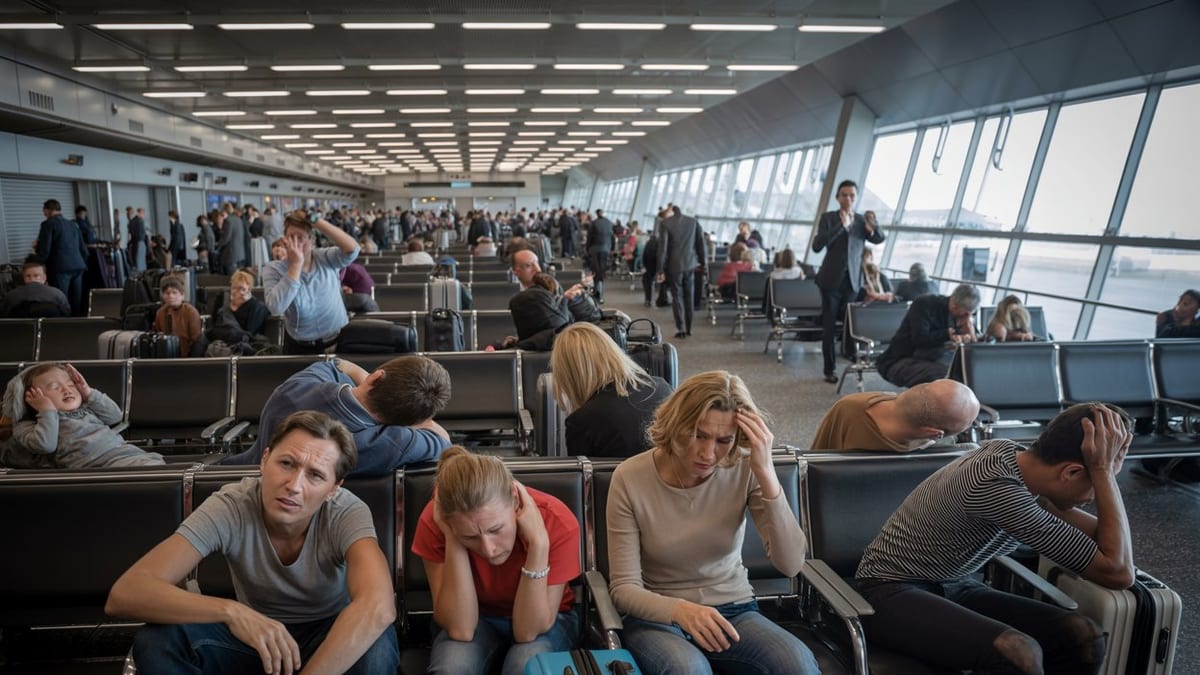
More than 1,000 transit passengers were left stranded at Bangkok’s Suvarnabhumi Airport this week after a wave of flight cancellations and schedule cuts rippled through Southeast Asia’s second largest air hub, triggering missed connections, overnight stays and a scramble for scarce rebooking options.
Get the latest news straight to your inbox!
Flight cancellations trigger cascading disruption
Reports from Thai and regional media indicate that a combination of reduced flight schedules and short-notice cancellations led to the build-up of stranded transit passengers at Suvarnabhumi Airport at the end of September 2026. Around 1,000 people who had planned to connect onward through Bangkok were unable to leave the transit area as their onward services were either cancelled or heavily delayed.
Coverage in Thailand points to deep cuts on certain regional and long haul routes as airlines work to contain costs in a softer demand environment and adjust to operational constraints. In several cases, passengers arrived in Bangkok on time from origin cities but discovered their connecting flights no longer operated that day, leaving them reliant on limited spare seats on subsequent services.
Publicly available information from Airports of Thailand and airline schedules shows that when multiple flights on the same route are removed from the timetable, remaining services quickly reach capacity. As a result, disrupted travelers reported being offered rebooking options one or more days later, or on circuitous routings through other hubs in the region.
The situation was compounded by the role of Bangkok as a major transfer point between South Asia, Europe and the wider Asia Pacific region. Even a modest reduction in frequencies on trunk routes can have an outsized impact on passengers who depend on precise connection times to complete long multi leg journeys.
Why Suvarnabhumi is so exposed to disruption
Suvarnabhumi Airport, which serves Bangkok, is widely described in regional aviation analysis as Southeast Asia’s second largest airport by land area, behind Kuala Lumpur International Airport. The hub spans more than 3,500 hectares, with extensive runway and terminal infrastructure designed to handle tens of millions of passengers each year.
Because of this scale and its network reach, Suvarnabhumi functions as a primary transfer point for travelers moving between secondary cities in the region and major long haul destinations. Many airlines schedule relatively tight connection windows in Bangkok, relying on synchronized banked arrivals and departures to funnel transit traffic efficiently across the network.
When airlines trim schedules or consolidate services, these delicate connection banks can start to fray. Travel industry commentary on Bangkok’s hub role notes that even if total passenger numbers remain within the airport’s design capacity, changes to flight timing or frequency can produce pockets of intense congestion in the transit area at specific times of day.
Airport advisories in recent months have also highlighted other forms of disruption, such as road works affecting access to the terminal complex. While those projects do not directly change flight operations, they add friction for departing and arriving passengers and can make it harder for airlines and ground service providers to reposition staff at short notice during irregular operations.
Transit passengers face limited options in the airside zone
For the roughly 1,000 people caught in Bangkok during the latest round of flight cuts, the biggest immediate challenge was that many were international transit passengers without Thai entry permission or without the necessary visa. Under such circumstances, travelers generally must remain airside in the international transfer area until they can be rebooked on an onward flight.
Publicly available guidance from regional airports shows that transit zones are designed for relatively short stays of a few hours, with seating, retail and dining tailored to passengers moving quickly through the space. When hundreds of people are forced to remain overnight or longer, available rest areas, food options and shower facilities can come under strain.
Social media posts and traveler forums referenced in local coverage describe passengers sleeping across rows of chairs, forming long queues at transfer desks and relying on limited meal vouchers provided by airlines. Others reported uncertainty over baggage handling, as checked luggage had already been tagged to final destinations that they could no longer reach on the original itinerary.
Because transit passengers have not formally entered Thailand, they also face constraints on arranging their own accommodation in the city or transferring to flights from the older Don Mueang Airport. Rebooking therefore typically depends on the original carrier’s ability to secure seats on its own services or on partner airlines, which can be particularly difficult during peak travel periods or when many flights on the same day have already been cancelled.
Operational pressures behind the massive flight cuts
The wave of cancellations feeding into the backlog at Suvarnabhumi is part of a wider pattern of operational strain seen across Asian aviation in recent months. Published reports from neighboring countries describe airlines grappling with staff shortages, aircraft maintenance backlogs and external shocks such as volcanic ash clouds and regional geopolitical tensions that periodically close airspace or force long detours.
Earlier in September, for example, eruptions at Indonesia’s Anak Krakatau volcano triggered thousands of flight disruptions across the region as aviation authorities restricted operations for safety reasons. Such events reduce usable airspace and force airlines to juggle aircraft and crew at short notice, leaving little margin to accommodate additional delays elsewhere in the network.
At the same time, carriers serving Bangkok have been adjusting capacity following a rapid post pandemic recovery that saw some routes restored faster than demand could support sustainably. Industry analysts quoted in regional business media note that airlines have increasingly consolidated lightly booked flights, especially on short haul sectors, into fewer daily frequencies to improve load factors and reduce operating costs.
These cuts can provide financial breathing room for airlines but carry clear trade offs for passengers reliant on flexible connection options. With fewer departures to choose from, a single cancellation or significant delay is more likely to force an overnight stay for transit travelers rather than a simple rerouting a few hours later.
What travelers can learn from Bangkok’s latest bottleneck
The Suvarnabhumi disruption underlines the vulnerability of long haul itineraries that depend on tight connections through regional hubs. Consumer advocates and travel planners responding to the incident have emphasized the value of building in longer layovers on complex journeys and avoiding last flight of the day connections on critical sectors where possible.
Public guidance from several Southeast Asian aviation regulators and airport operators consistently advises passengers to monitor flight status closely through official airline channels, particularly when traveling during peak holiday periods or amid known operational challenges. Many encourage travelers to ensure they have functioning airline mobile apps and up to date contact details so they can receive rebooking notifications quickly.
The episode also highlights the importance of understanding transit rules at major hubs. In Bangkok, as in many regional airports, passengers who remain airside typically cannot collect checked bags or exit to arrange their own alternative transport without immigration clearance. Travelers whose nationality requires a visa for entry may wish to secure one in advance if they are concerned about potential irregular operations.
For now, airlines serving Suvarnabhumi have been gradually normalizing schedules after the worst of the disruption, and passenger numbers are again spreading more evenly across the day. Yet the sight of around 1,000 people stranded in one of Southeast Asia’s flagship airports offers a stark reminder that the global aviation system, even years after reopening, still operates with limited slack when unforeseen problems collide with leaner flight schedules.