


More news on this day
A National Weather Service Red Flag Warning is in effect for parts of Colorado’s Front Range from 8:00 a.m. to 5:00 p.m. on Wednesday, November 18, 2026, prompting automatic Stage 1 fire restrictions in unincorporated Jefferson County and temporarily tightening fire rules for many hikers and campers around the Denver metro area.
Get the latest news straight to your inbox!
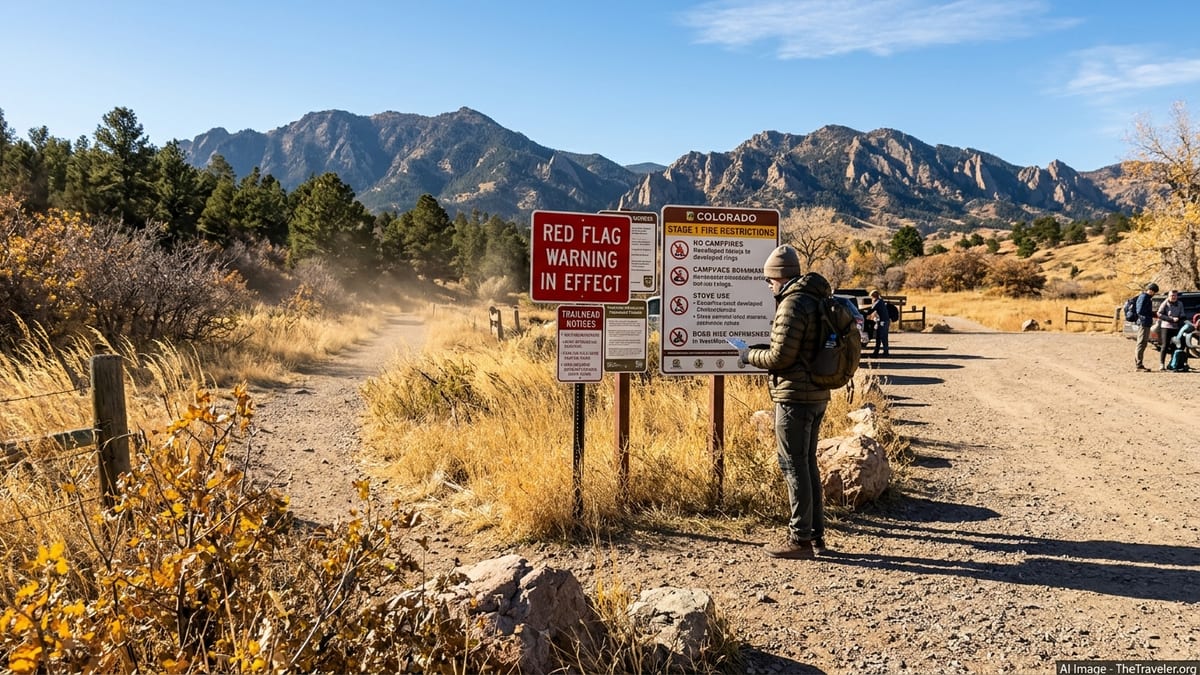
What today’s Red Flag Warning actually means
The Denver/Boulder office of the National Weather Service has issued a Red Flag Warning for portions of northeast and north central Colorado from 8:00 a.m. to 5:00 p.m. Mountain Standard Time on November 18, 2026. The alert covers parts of the northern Front Range mountains and foothills and adjacent plains where forecasters expect strong winds, low humidity and very dry vegetation to align for several hours of critical fire weather conditions.
A Red Flag Warning is a fire weather product, not an evacuation order or a blanket closure of parks and highways. It signals that any new fire could spread quickly and become difficult to control. Travelers should interpret it as a day for heightened caution with any heat or flame outdoors, and as a trigger to recheck local fire regulations before they head to trailheads, picnic areas or campgrounds.
While the core warning period runs until late afternoon, Jefferson County authorities are treating November 18 as a full-day period of elevated risk. The county’s automatic rules mean that fire restrictions extend from early morning through late evening, even though the strictest weather conditions are expected during the 8:00 a.m. to 5:00 p.m. window highlighted by the Weather Service.
Where visitors will feel the impact around the Front Range
The current Red Flag Warning includes Jefferson County and neighboring foothill and plains zones that take in popular recreation areas west and south of Denver. These zones connect directly to well-used open-space trailheads, picnic areas and campgrounds that Front Range visitors often access from Denver, Boulder and Colorado Springs for day hikes or overnight stays.
Travelers booked into campgrounds or lodgings in and around unincorporated Jefferson County, or planning to visit county-managed open spaces on November 18, should expect the landscape to remain open but subject to tighter rules on fire use. Parks, trail systems, scenic byways and major highways are expected to remain open unless a separate safety or wildfire closure is issued, which has not been announced as of the morning of November 18.
Because National Weather Service fire weather zones do not align perfectly with county or park boundaries, restrictions may vary between jurisdictions sitting within the broader Red Flag area. A trail in one county may operate under different fire rules than a similar trail a short drive away. Visitors planning to explore national forest lands, Bureau of Land Management sites or state parks within the affected region should check that agency’s alerts page or social channels the same morning they travel.
Stage 1 fire restrictions: what changes for campfires and stoves
As of November 17 there were no standing fire restrictions in unincorporated Jefferson County. County policy now automatically puts the entire unincorporated area under Stage 1 fire restrictions from 8:00 a.m. through 11:59 p.m. on any day when the National Weather Service issues a Red Flag Warning that covers part of the county, which is the case on November 18, 2026.
Under the county’s Stage 1 framework, most open campfires are temporarily off limits. Typically this means visitors may not build wood or charcoal fires outside of approved, permanently constructed metal or concrete fire rings within developed recreation sites such as designated campgrounds and some picnic areas. Fires on dispersed campsites, in makeshift rock rings or directly on the ground are generally prohibited for the duration of the restriction period.
Jefferson County’s guidance, which is similar to Stage 1 rules used by nearby national forests and federal land managers, usually still allows pressurized gas or liquid-fuel camp stoves and gas grills when they are used according to manufacturer instructions and in areas where the managing agency explicitly permits them. Travelers should read campground postings carefully on arrival, because individual campgrounds or forests can temporarily tighten those rules further if local conditions or firefighting resources warrant.
What travelers should do if they are heading out today
Most visitors with reservations for November 18 can still travel, hike and check into pre-booked campgrounds or lodgings around the Denver metro foothills, but they should be prepared for last-minute changes to how they cook and keep warm outdoors. A campsite that allowed wood fires earlier in the week may only allow gas stoves today, and some picnic areas may prohibit charcoal grilling until after the Stage 1 restrictions expire at 11:59 p.m.
Ignoring fire restrictions during a Red Flag Warning can lead to citations, fines and, in the worst case, liability if a prohibited fire escapes. Travelers should not rely solely on what was permitted when they booked months ago or on third-party guidebooks. Instead, they should check the latest notices from the relevant county, national forest, Bureau of Land Management field office or park authority on the morning of their trip and follow any posted instructions once on site.
Looking ahead, the Red Flag Warning currently in place is scheduled to end at 5:00 p.m. on November 18, with Jefferson County’s automatic Stage 1 restrictions lifting at 11:59 p.m. unless the Weather Service extends or reissues warnings or local authorities enact additional measures. Travelers planning outdoor activities later in the week should revisit official forecasts and fire restriction pages before each new outing, as critical fire weather days and related rules can return with little lead time during dry, windy periods.