


More news on this day
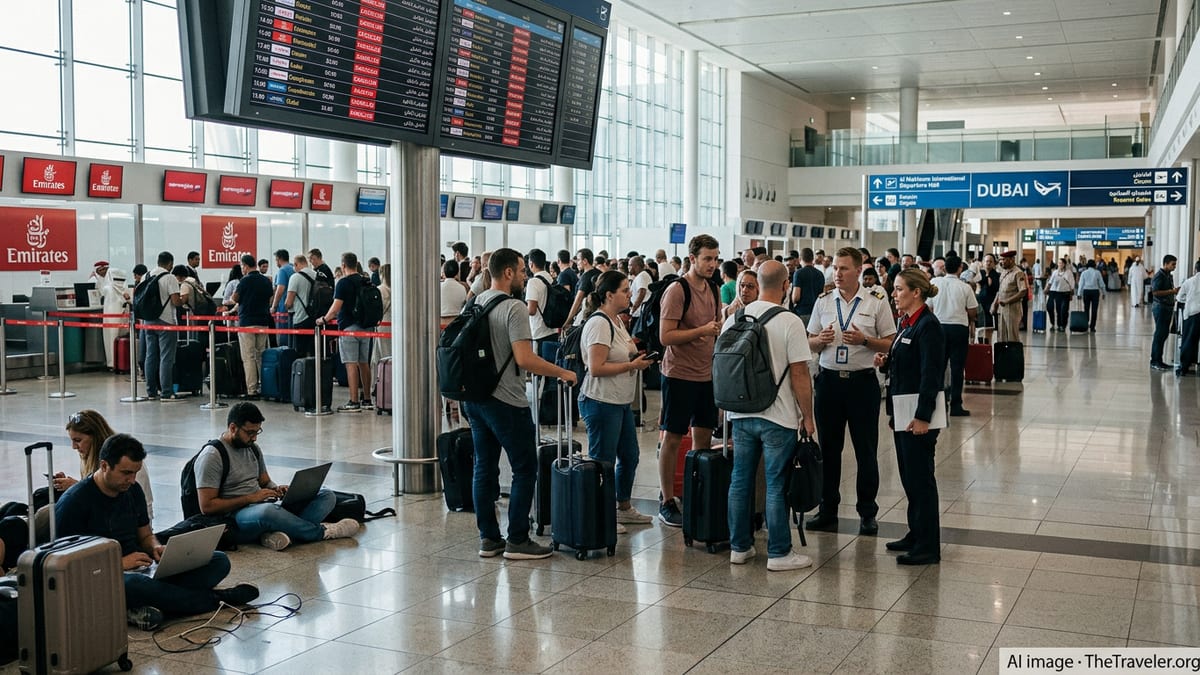
Hundreds of UAE-based travellers are facing fresh disruption after 141 flight delays and 15 cancellations were recorded across Dubai and Sharjah airports, affecting services operated by FlyDubai, Kuwait Airways, Airblue, Air Arabia and several other regional and international carriers.
Get the latest news straight to your inbox!
New Wave of Disruption at Dubai and Sharjah Hubs
Flight-tracking dashboards and airport operations data for May 19 indicate that a concentrated cluster of delays and cancellations has built up across key regional routes into and out of Dubai International and Sharjah International. While the overall number of scheduled movements remains well below the levels seen during the height of recent airspace restrictions, the latest figures show a notable spike in operational strain at both airports.
The 141 delays range from relatively minor schedule slips of 30 to 45 minutes to multi-hour hold-ups for departures bound for South Asia, the Levant and parts of North Africa. The 15 cancellations are spread across low-cost and full-service operators, with knock-on effects reported on connecting itineraries through Dubai’s long-haul network and Sharjah’s busy point-to-point services.
Publicly available information shows that FlyDubai, Kuwait Airways, Airblue and Air Arabia feature prominently among the disrupted services, alongside several other Gulf and South Asian carriers. Routes linking the UAE with Pakistan, India and Kuwait appear particularly exposed, reflecting the importance of these markets for migrant workers and budget-conscious leisure travellers.
Carriers Most Affected and Routes Under Pressure
Among the carriers operating into Dubai International, FlyDubai’s dense schedule across the Gulf, South Asia and East Africa has left it especially vulnerable to cascading knock-on delays. When early-morning departures slip, later rotations can be pushed back for the rest of the day, a pattern that is visible across multiple short-haul city pairs on the airline’s network.
Kuwait Airways has also been impacted as it juggles its own network pressures with continuing regional airspace constraints. Recent disruption at Kuwait International, combined with longer routings to avoid sensitive overflight zones, has left some connections into Dubai out of sync with published timetables, adding to delays on downstream sectors.
In Sharjah, Air Arabia’s role as the anchor carrier means that any operational bottleneck rapidly shows up in the terminal’s departure and arrival boards. Delays on popular labour and family routes to Pakistan and other South Asian destinations have been particularly visible, with some travellers reporting same-day cancellations or significant schedule changes notified only shortly before departure.
Pakistan-based low-cost carrier Airblue and several other regional airlines serving secondary cities in South Asia and the Gulf have reported schedule adjustments as they work within the same congested regional air corridors, contributing to the overall tally of delayed and cancelled flights.
Regional Airspace Turmoil Continues to Cast a Shadow
The latest disruption comes even as the UAE’s General Civil Aviation Authority has declared national airspace fully restored following months of restrictions linked to the conflict involving Iran and regional powers. Official statements describe a return to normal routing options, but traffic data and passenger reports suggest that operations are still in a delicate balancing phase.
In recent weeks, Dubai Airports has emphasised that it is scaling up operations gradually after a period in which arrivals were capped and flight paths had to be elongated to avoid conflict zones. During the heaviest disruption earlier this year, Dubai International handled significantly fewer passengers than in the same period a year earlier, underlining how deeply the regional crisis cut into usual traffic flows.
Even with restrictions formally lifted, carriers remain cautious about routing decisions, and some overflight options continue to involve longer tracks and more complex coordination between air traffic control centres. Analysts following Middle East aviation point out that such conditions can leave schedules more exposed to minor operational issues, which can then snowball into the type of broad-based delay pattern seen today at Dubai and Sharjah.
For airlines with tight turnarounds on narrow-body fleets, particularly low-cost operators focused on maximum aircraft utilisation, these lingering constraints translate into reduced resilience when something goes wrong. A short technical check or crew timing issue that might once have been absorbed can now tip a flight into significant delay or even cancellation.
Impact on Travellers Across the UAE and Wider Region
The disruption has immediate consequences for hundreds of travellers based in the UAE, many of whom rely on frequent, affordable services to maintain family and work ties across the region. Social media posts and traveller forums on May 19 describe passengers in Dubai and Sharjah facing long queues at check-in, rebooking desks and customer service counters as they attempt to salvage onward connections.
Budget travellers and migrant workers appear especially affected, given the prominence of low-cost carriers in the list of disrupted flights. A missed evening departure to South Asia, for example, can mean an unplanned overnight stay in Dubai or Sharjah, along with the risk of forfeited domestic connections or lost working days at the final destination.
The ripple effects also reach beyond the UAE, as delays on inbound services from regional cities can cause knock-on disruption at origin airports. Reports from Islamabad, Faisalabad and several Indian gateways in recent days describe repeated schedule changes on services operated by FlyDubai and Air Arabia, foreshadowing the type of concentrated disruption now visible across UAE hubs.
Travel advisers monitoring the situation note that passengers with onward itineraries that include tight connection windows face the highest risk, particularly when travelling on separate tickets. In such cases, a delay or cancellation on the first leg can leave travellers exposed to additional costs and complex rebooking negotiations.
What Travellers Can Do if Their Flight Is Affected
With conditions still volatile, aviation experts and frequent flyers recommend that passengers booked to travel through Dubai or Sharjah in the coming days monitor their flights closely and prepare contingency plans. Most UAE-based carriers, including FlyDubai and Air Arabia, provide near real-time status updates through their official websites and mobile applications, and these should be checked regularly from 24 hours before departure.
Where delays or cancellations are confirmed, travellers are advised by consumer advocates to initiate rebooking or refund requests as early as possible, since available seats on alternative services can fill quickly during widespread disruption. Passengers starting journeys from Europe may also benefit from specific protections under local passenger rights regulations if their flights are operated from EU airports, even when the airline itself is not European.
Travel insurance policies vary widely in how they treat disruption linked to regional instability, so affected travellers are encouraged to review their coverage documents carefully before incurring additional accommodation or transport expenses. Some policies explicitly exclude events tied to conflict, while others may provide limited compensation for extended delays or missed onward connections.
For now, the pattern of 141 delays and 15 cancellations across Dubai and Sharjah on May 19 underscores how fragile the regional aviation recovery remains, even after the formal reopening of UAE airspace. Travellers planning to pass through the country’s two busiest hubs in the near term may need to allow more time, build extra flexibility into their itineraries and stay prepared for last-minute changes.