


More news on this day
Thousands of travelers across the United States faced hours-long waits, missed connections and scrapped trips as a fresh wave of disruption delayed 4,879 flights and canceled 674 more at major airports from Texas to New York, snarling operations for Southwest, American, SkyWest, Delta, United and other carriers.
Get the latest news straight to your inbox!
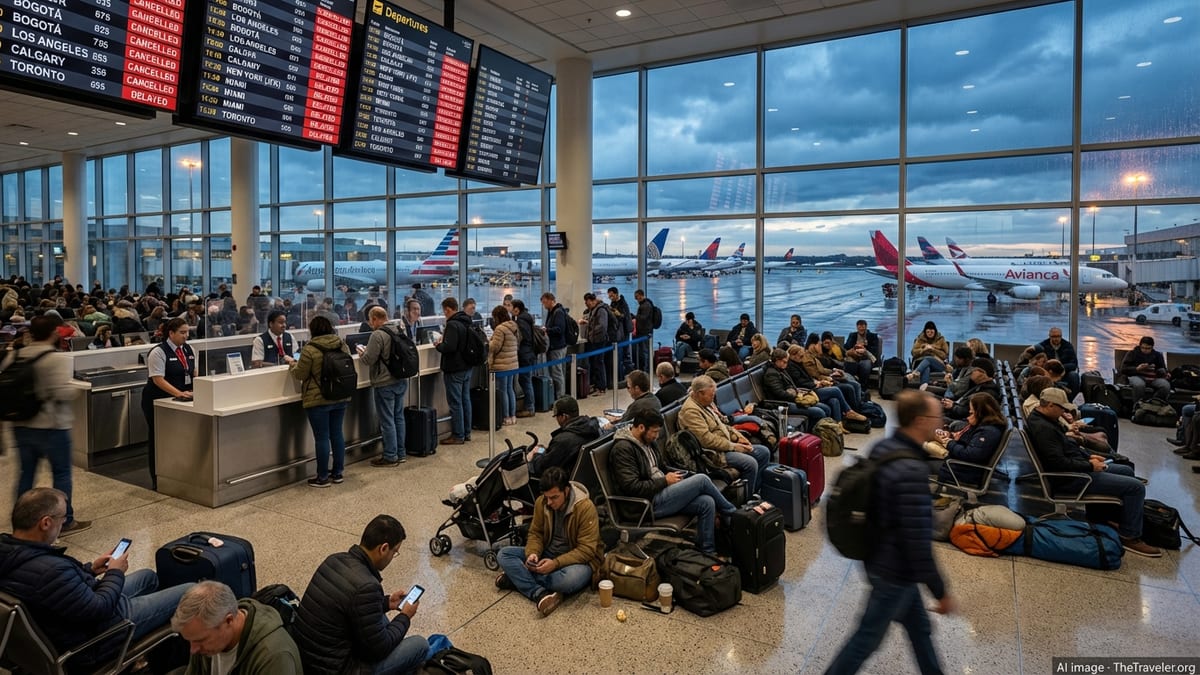
Systemwide Disruptions Hit Major U.S. Hubs
Publicly available tracking data on Tuesday indicated that flight delays climbed into the thousands nationwide, with cancellations in the hundreds, creating another day of widespread disruption for domestic air travel. The heaviest impacts were concentrated at large hubs in Texas and Illinois, as well as major airports serving Denver, Cleveland and the New York metropolitan area.
Operations at airports including Dallas Fort Worth, Chicago O’Hare and Chicago Midway were among the hardest hit, with waves of late departures spreading knock-on delays throughout airline networks. Similar patterns were visible at Denver International, Cleveland Hopkins and New York’s main commercial airports, where backed-up traffic in the morning and early afternoon pushed many flights well behind schedule.
Reports from aviation data platforms showed that the disruption was not limited to a single region, with clusters of late and canceled flights appearing across the country’s central and eastern time zones. As aircraft and crews missed their scheduled rotations, afternoon and evening services in smaller cities began to feel the ripple effects from problems originating at the largest hubs.
The pattern mirrored earlier episodes this year in which a combination of high passenger volumes, unsettled weather and strained airline operations has repeatedly tipped the system into delays numbering in the thousands. Historical data from transportation authorities show that such days have become more frequent in recent travel seasons as carriers operate fuller schedules with less built-in slack.
Southwest, American, SkyWest, Delta and United Bear the Brunt
The disruption fell most heavily on the nation’s largest carriers and their regional partners. Southwest, American Airlines, Delta Air Lines and United Airlines all reported significant numbers of delayed flights, according to flight-tracking dashboards, reflecting their extensive networks through major hubs in Texas, Illinois, Colorado and New York.
Regional operator SkyWest, which flies under the banners of several big airlines, also showed elevated delay and cancellation totals. Because many passengers book through a major carrier without realizing their flight is operated by a regional partner, disruptions on those routes frequently add to the perception that the mainline airline itself is experiencing a broad operational problem.
The day’s figures fit into a wider pattern that federal transportation statistics have been documenting over recent months, with cancellation rates for several large U.S. airlines remaining above pre-pandemic norms. Industry data show that while some carriers have improved on-time performance compared with last year, others continue to struggle when weather or air traffic constraints tighten the system.
Analysts note that concentration among a handful of large airlines means that when even one network falters, the consequences cascade across the country. Because the carriers involved today control a majority share of the domestic market, elevated disruption at those brands can quickly translate into thousands of delayed and canceled flights within a single day.
Weather, Congestion and a Stretched Aviation System
Although precise causes for individual flights vary, publicly available information from aviation authorities and industry reporting points to a familiar blend of contributing factors. Seasonal thunderstorms across parts of Texas and the central United States, low clouds or visibility in pockets of the Midwest and Northeast, and episodic congestion in busy air corridors all appeared to play a part in slowing traffic.
National Airspace System status pages showed periods of ground delays and flow restrictions at several large airports, limiting the rate at which flights could land and depart. When airports in Illinois, Colorado and the Northeast reduce arrival and departure capacity, even temporarily, airlines must hold, reroute or reschedule large numbers of aircraft, quickly compounding knock-on delays.
Longer-term structural pressures are also in focus. Recent policy documents and industry briefings highlight continuing challenges in air traffic controller staffing at some facilities, alongside robust demand for leisure and business travel. With schedules already tightly packed to meet demand, modest disruptions from weather or equipment issues can rapidly escalate into nationwide problems.
Historical reports from the U.S. Department of Transportation classify the primary causes of delays into carrier-controlled issues, extreme and non-extreme weather, and national aviation system constraints. On days like this one, multiple categories tend to overlap, making it difficult to attribute the disruption to a single source and underscoring how interdependent the aviation system has become.
Travelers Face Missed Connections and Overnight Stays
For passengers, the statistical surge in delays and cancellations translated into missed connections, long lines at customer-service desks and, in many cases, unplanned overnight stays in hub cities. Publicly available coverage of similar events this year has described travelers sleeping in terminal seating areas, scrambling to rebook via airline apps and facing challenges finding hotel rooms near busy airports.
The impact was particularly acute for those connecting through Chicago, Denver and New York, where tight layovers left little margin once the day’s first flights slipped behind schedule. Families on the way to vacations, business travelers on time-sensitive trips and individuals heading to weddings, funerals or medical appointments were among those most affected.
Consumer advocates routinely advise travelers to build extra time into itineraries involving large hubs, especially during seasons prone to thunderstorms or winter weather. They also point to transportation department rules that outline when passengers may be eligible for refunds in cases of significant delays or cancellations, depending on whether the cause lies within an airline’s control.
In practice, however, disrupted travelers often face hours-long waits before they can speak with an agent or secure alternative arrangements, especially on days when thousands of other passengers are in the same predicament. As the tally of delayed and canceled flights mounted, social media posts highlighted crowded terminals and departure boards filled with yellow and red notices.
What Today’s Numbers Signal for the Summer Travel Season
The scale of disruption, with 4,879 delays and 674 cancellations recorded in a single day, is being closely watched as a potential preview of the coming summer travel season. Forecasts from airlines and airport operators indicate that passenger volumes are expected to rival or exceed recent records, raising concerns about how the system will cope with peak demand.
Industry observers note that airlines have made some adjustments since earlier operational crises, including trimming certain schedules, adding buffer time and investing in technology to speed rebooking. Even so, recent government data suggest that cancellation and delay rates remain elevated compared with earlier years, particularly when severe weather systems sweep across multiple regions.
For travelers with upcoming trips, publicly available guidance from aviation and consumer agencies emphasizes preparation over prediction. Checking flight status frequently, signing up for airline alerts, considering earlier departures on critical travel days and allowing longer connection times through major hubs can all help reduce the risk of major disruption.
As today’s events demonstrate, however, even well-prepared passengers can still be caught in the crossfire when thousands of flights across airlines such as Southwest, American, SkyWest, Delta and United are affected at once. With the busy summer season approaching, the resilience of the U.S. air travel system is likely to remain under close scrutiny from both travelers and policymakers.