


More news on this day
Thousands of air travelers across the United States faced disrupted plans as a wave of flight cancellations and delays rippled through major hubs including Puerto Rico, Miami, Orlando, Tampa, Fort Lauderdale, and Charlotte, affecting operations at carriers such as Delta Air Lines, Air Canada, PSA Airlines, Alaska Airlines, and several other domestic and international operators.
Get the latest news straight to your inbox!
Widespread Disruptions Across Key Sun and Hub Gateways
Real time tracking data for the United States showed hundreds of cancellations and several thousand delays, with totals reported at roughly 666 flights canceled and more than 4,600 delayed in a single day. The impact was concentrated at busy connecting and leisure airports that link mainland cities with the Caribbean and other domestic destinations.
Major Florida gateways, including Miami, Orlando, Tampa, and Fort Lauderdale, experienced particularly heavy strain. These airports serve as both large domestic hubs and primary departure points for Caribbean and Latin America routes, meaning localized problems quickly translated into missed connections and rolling backups throughout the national network.
In the southeast, Charlotte Douglas International Airport, one of the country’s most important connecting hubs, also reported elevated disruption levels. Irregular operations at a large hub tend to propagate across multiple regions as inbound aircraft and crews arrive late, further compounding the day’s schedule challenges.
Puerto Rico’s main airport, a critical link between the mainland United States and the broader Caribbean, reported knock on effects as flights in and out of Florida and East Coast cities struggled to depart and arrive on time. Travelers bound for island destinations in particular saw long lines at check in and customer service desks as they attempted to rebook.
Carriers From Legacy Networks to Regionals Feel the Strain
The disruption affected a broad mix of airlines, from large network carriers to regional operators. Publicly available flight status boards and tracker services showed Delta Air Lines and Air Canada among the carriers with impacted routes, along with PSA Airlines, a regional operator that flies feeder services under major airline brands, and Alaska Airlines, which runs a wide network of transcontinental and West Coast flights.
When large mainline airlines confront a surge in delays and cancellations, the effects often cascade down to regional partners that operate shorter routes under codeshare agreements. Aircraft and crew rotations are tightly choreographed, and a delay in one direction can quickly ripple through an entire day’s schedule if buffers are consumed early.
Historical data from the United States Department of Transportation indicate that regional carriers such as PSA Airlines typically have higher sensitivity to disruptions due to tight turnarounds and reliance on large hubs for connections. When hub operations slow, regional schedules are among the first to be adjusted, resulting in cancellations of lower demand flights and re accommodation of passengers onto remaining services.
Alaska Airlines and other network carriers can face additional complexity when disruptions touch both coastal hubs and interior connections. West Coast, Midwest, and East Coast operations are often interlinked, so problems in one time zone can reverberate widely, particularly on days with strong leisure or business demand.
Weather, Congestion, and Operational Challenges Combine
Travel data and prior federal performance reports highlight three recurring drivers for days with unusually high cancellation and delay counts: weather, network congestion, and airline specific operational issues. Thunderstorms and low visibility around major hubs remain among the most frequent triggers for large scale schedule changes.
When storms or adverse conditions pass through Florida or the southeastern United States, air traffic control capacity is often reduced to maintain safety margins. That can mean holding aircraft on the ground, rerouting flights, or spacing out takeoffs and landings more than usual, which in turn leads to delayed departures from origin airports across the country.
Operational challenges within airlines, including crew scheduling limits, aircraft maintenance checks, and limited spare capacity, can amplify disruptions once they begin. Federal statistics show that air carrier controlled issues, such as crew or maintenance, are a persistent share of total delay causes and can turn a manageable weather event into a day of system wide headaches when resources are already stretched.
Periods of peak seasonal demand, especially around school holidays, major events, or long weekends, further constrain flexibility for airlines and airports. With flights running near full, there are fewer open seats available for rebooking, leaving some passengers waiting many hours or even into the next day to secure alternative arrangements.
Impact on Travelers and What Passengers Can Expect
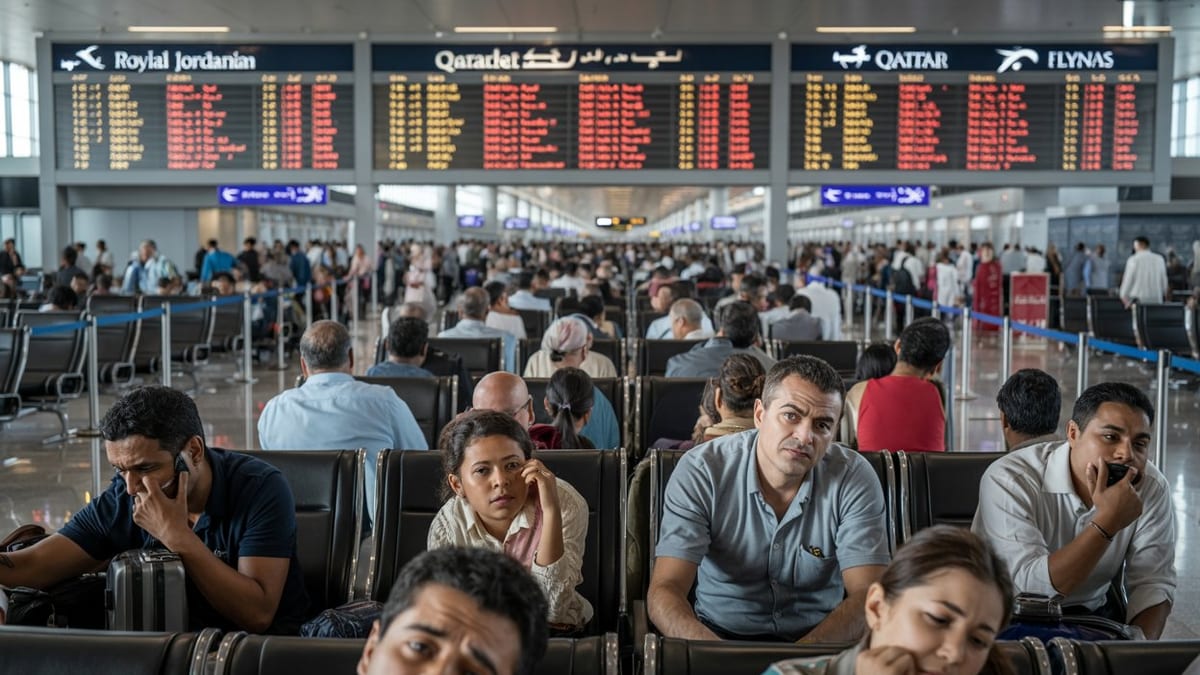
For travelers caught in the disruption across Puerto Rico, Florida, and key hub cities, the immediate impact came in the form of long queues, rolling departure time changes, and uncertainty about missed connections. In airports such as Miami and Orlando, terminal departure boards showed clusters of delayed flights alongside a steady trickle of cancellations, particularly on shorter regional segments.
Passengers with tight connection windows through hubs like Charlotte faced elevated risks of misconnecting, especially if inbound flights arrived later than scheduled. In such scenarios, travelers may find themselves rebooked onto later departures, rerouted through alternative hubs, or in some cases required to overnight if no same day options are available.
Consumer guidance from regulators and airline policies outline that compensation and care provisions can vary depending on whether disruptions are considered within an airline’s control or driven primarily by weather and airspace constraints. Travelers often are encouraged to review their carrier’s contract of carriage and to maintain current contact information in reservations to receive automated rebooking notices or digital boarding passes.
Same day flexibility may be somewhat better for travelers departing from large hubs, where more frequent services provide additional rebooking options. However, for those traveling to or from smaller regional airports, fewer daily flights can translate into longer waits for the next available seat once a cancellation occurs.
Travel Planning Lessons for the Summer Peak
The latest wave of cancellations and delays across Puerto Rico, Florida, and major hubs provides an early reminder of the pressures facing the United States air travel system as the busy summer season approaches. Airlines are scheduling high volumes of flights to match strong demand, while airports continue to manage capacity constraints on runways, at gates, and through security and immigration checkpoints.
Travel industry observers frequently recommend that passengers build additional buffer time into itineraries on days with potential for storms or congestion at major hubs. Early morning departures can sometimes offer more reliability, as they are less exposed to knock on effects from earlier delays that build throughout the day.
Monitoring flight status frequently on the day of travel and considering carry on only packing, when possible, can help passengers pivot quickly if itineraries change. While no strategy fully eliminates the risk of disruption, awareness of how quickly problems can spread through key nodes like Miami, Orlando, Tampa, Fort Lauderdale, Charlotte, and Puerto Rico can help travelers make more informed choices about routing and connection times.
With cancellation and delay figures reaching into the hundreds and thousands on peak disruption days, the experience serves as a timely signal for travelers to remain flexible and prepared as they navigate the evolving conditions of the national air travel network in the months ahead.