


More news on this day
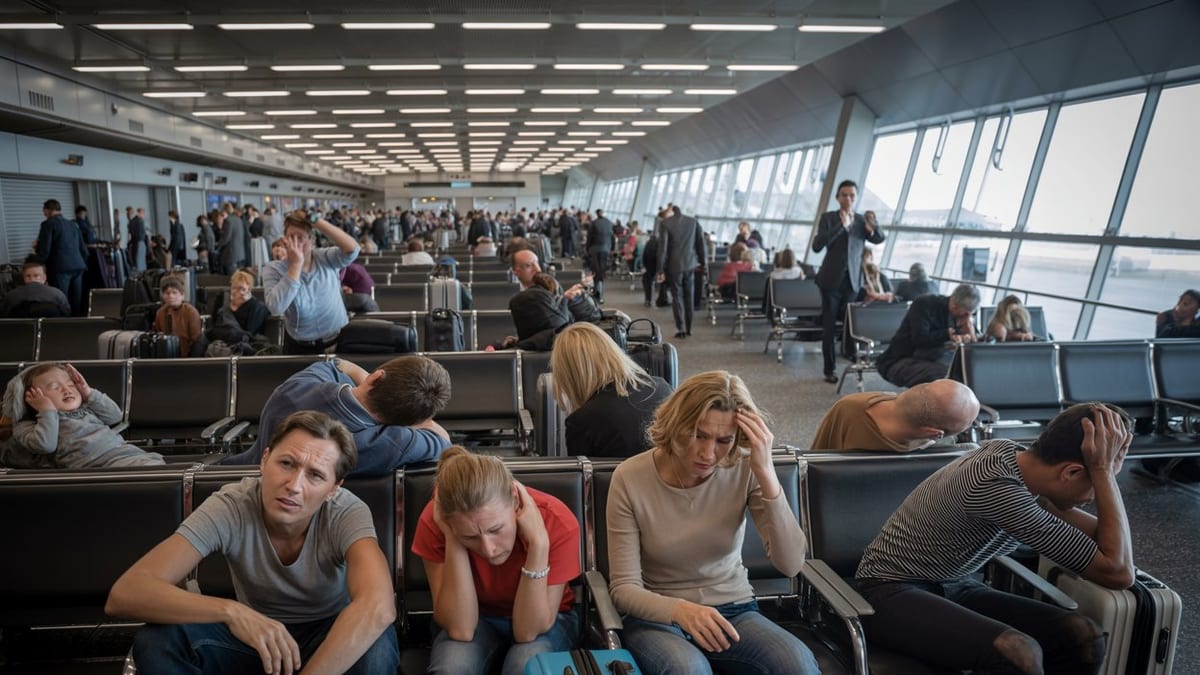
Nearly 300 passengers booked on a SpiceJet flight from Amritsar to Dubai were left stranded for close to 18 hours after their Sunday departure was repeatedly rescheduled, sparking noisy protests at Sri Guru Ram Dass Jee International Airport and renewed scrutiny of how long delays are handled on Indian international routes.
Get the latest news straight to your inbox!
Flight SG5155 rescheduled multiple times overnight
Publicly available flight data and local media coverage indicate that the affected service was SpiceJet’s Amritsar Dubai flight, operating as SG5155 on Sunday, August 30, 2026. The flight was initially scheduled to depart in the morning, with different outlets reporting a planned takeoff window around 8 to 8.40 am. Subsequent updates pushed the departure first to late morning, then afternoon, and finally to the early hours of Monday.
Reports from Punjabi and Hindi outlets describe the departure being revised several times, with passengers first told to expect an 11 to 11.40 am pushback, then an afternoon slot around 2 pm, before learning that the aircraft would now leave at approximately 2 am the following day. The rolling changes meant many travelers spent the entire day inside or outside the terminal, unsure when they would finally be able to board.
Coverage from regional newspapers and television channels states that the delay ultimately stretched to about 17 to 18 hours between the original schedule and the revised overnight departure. Flight-tracking platforms on Monday showed the same SpiceJet route slated for a late night departure from Amritsar to Dubai, underscoring how significantly the customary timetable was disrupted.
Some reports attribute the disruption to technical reasons affecting the aircraft, although detailed cause-of-delay information was not immediately available through public sources. Passengers, however, largely focused on the length of the wait and the uncertainty around when the service would actually operate.
Passengers report protests, confusion and limited assistance
Local news coverage from Amritsar describes growing anger in the terminal as the delay stretched into the evening and passengers said they struggled to obtain clear information. Several outlets report that travelers gathered near the airline’s counters, raising slogans and demanding either a firm departure time, alternative arrangements, or refunds.
Families who had traveled from other districts in Punjab and neighboring states reportedly said they had already incurred significant costs to reach the airport, only to spend the day sitting or standing with luggage in crowded areas. Some accounts mention passengers with young children and elderly relatives waiting for long periods in the heat outside the terminal building when they were not allowed to proceed to security.
According to multiple regional-language reports, travelers alleged that they were not offered hotel accommodation despite the extended delay running overnight into the next day. Others said they received only limited food and water support at the airport and complained that updates were largely delivered via periodic messages and revised boarding times rather than in-person explanations that answered their questions.
Footage carried by local broadcasters and digital news platforms shows chaotic scenes at the airport, with passengers surrounding check in counters and security staff visible in the background as discussions about the status of the flight continued late into the night.
Jobs, onward connections and visas at risk for Dubai-bound travelers
The Amritsar Dubai route is heavily used by migrant workers, small business owners and families connecting to onward flights in the Gulf and beyond. In this instance, regional outlets highlighted the concerns of passengers who feared the prolonged delay could affect employment start dates, project deadlines or visa conditions in the United Arab Emirates.
Several media reports describe travelers who said they were due to report for duty in Dubai within a day or two of their scheduled arrival and worried the setback might jeopardize new jobs or probationary contracts. Others reportedly had connecting arrangements from Dubai to other Middle East destinations and were uncertain whether those onward tickets would still be valid by the time they eventually arrived.
Some passengers cited non refundable accommodation bookings and transport reservations at their destination, arguing that the financial impact of such a long delay extended beyond the cost of the single air ticket. Travel disruptions on busy expatriate routes often have a cascading effect, particularly when departures slip from daytime to the early hours of the following morning, as happened in this case.
The episode has also renewed debate among frequent travelers in northern India over which carriers they choose for Gulf-bound routes, with several commentators on social platforms pointing out that repeated delays can disproportionately affect workers on tight reporting schedules and families managing visa validity windows.
Spotlight on DGCA rules and long-delay obligations
The Amritsar incident has prompted renewed attention to India’s aviation consumer protection framework, particularly Directorate General of Civil Aviation (DGCA) rules on compensation, meals and accommodation during extended delays. Passenger rights guidelines set out minimum expectations for airlines when a flight is delayed beyond certain thresholds, varying by sector length and cause of disruption.
Local coverage notes that some passengers at Amritsar referenced these provisions while asking the airline for hotel rooms or alternative flights, asserting that an overnight delay of nearly 18 hours on an international sector should qualify for more substantial assistance. Commentaries in national and regional media have underlined that while technical or operational issues can be unavoidable, communication and support during such events are central to compliance with DGCA norms.
Legal commentators and frequent fliers on aviation forums have pointed out that travelers facing long delays can, in many cases, seek refunds, rebooking on later services, or support in the form of meals and accommodation, depending on the circumstances and whether the disruption was within the airline’s control. However, awareness of these rights remains uneven, especially among passengers traveling infrequently or booking through intermediaries.
The Amritsar Dubai disruption may therefore serve as a reference point in ongoing discussions about how well Indian carriers and airports are implementing passenger-rights rules on the ground, and whether additional enforcement or public awareness efforts are needed to ensure that travelers receive the support laid out in existing regulations.
SpiceJet under scrutiny amid broader reliability concerns
The heavily publicized delay adds to a string of recent high profile disruption stories involving SpiceJet that have circulated on social media and travel forums, where customers have complained about late running services, short notice rescheduling and difficulties reaching customer care channels. Aviation watchers note that operational reliability is under close scrutiny for all Indian carriers during this period of rapid growth in air travel demand.
Analysts quoted in recent aviation coverage have observed that delays on key international routes can have a disproportionate reputational impact, since they tend to generate extensive online attention from affected passengers posting photos and videos from terminals and departure gates. For an airline with a significant share of traffic on India Gulf corridors, maintaining stable schedules is particularly important to retain the confidence of workers and families who rely on these flights.
At the same time, industry observers caution that disruptions at congested airports or during adverse operational conditions can affect multiple carriers. In earlier episodes, temporary airspace closures and infrastructure constraints have forced airlines to divert or reschedule flights from Amritsar and other northern Indian cities, disrupting international departures to destinations such as Dubai, Sharjah and Muscat.
As travel between Punjab and the Gulf continues to rebound, the Amritsar Dubai delay is being closely watched by consumer groups and frequent travelers, who argue that clear communication, timely assistance and transparent aftercare are likely to be decisive factors in how passengers choose between competing airlines on this busy corridor.