


More news on this day
Air passengers across Asia faced widespread disruption today as major hubs in Tokyo, Beijing and more than 20 other cities reported at least 152 flight cancellations and 4,224 delays, according to live operational data from airline trackers and airport displays.
Get the latest news straight to your inbox!
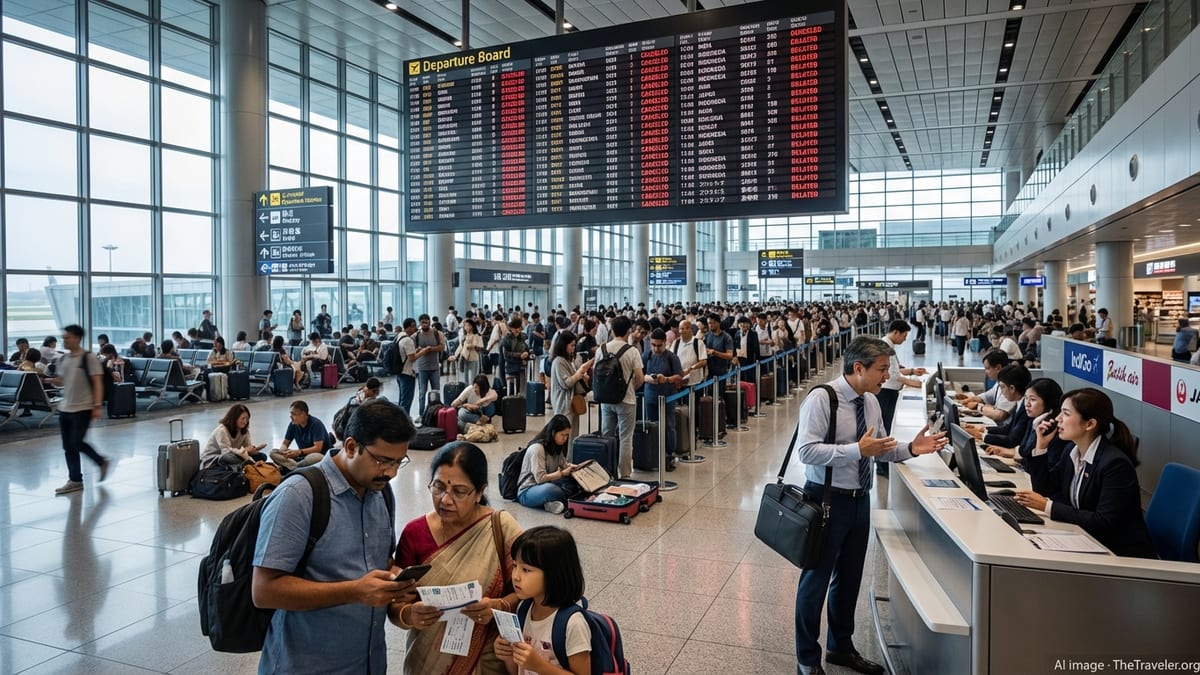
Tokyo and Beijing Hubs Struggle With Knock-On Disruptions
Tokyo’s Haneda and Narita airports and Beijing’s dual hubs at Capital and Daxing reported some of the heaviest congestion, with flight trackers showing multiple services scrubbed or running behind schedule. Publicly available boards for Beijing Daxing on 31 August listed several departures to domestic cities such as Harbin as cancelled, while other services showed estimated departures pushed back by nearly an hour.
On the key Tokyo to Beijing corridor, real-time trackers showed a mixed picture for 31 August. Some Air China services between Haneda and Capital, such as CA6708, operated broadly on schedule, while others including the Narita to Capital service CA926 were marked as cancelled on Trip.com’s live status feed. Additional flights on the route, including Air China and partner codeshares, recorded delays of up to an hour in recent days, underscoring how tight scheduling magnifies any operational stress.
On-time performance data for the Haneda to Capital route compiled over the past month indicates that roughly four in five flights departed on time, but that late departures have averaged well over 30 minutes behind schedule. That pattern, combined with the cancellations recorded today, contributed to bottlenecks across both airports as aircraft and crews struggled to return to normal rotations.
Airport analytics platforms tracking August operations show that Monday has typically been one of the stronger days for on-time departures on this route, suggesting that today’s elevated disruption stands out from the usual weekly pattern and is feeding into wider regional delays.
Weather and Capacity Constraints Add Pressure Across Asia
The spike in cancellations and delays comes as Asia’s peak summer travel period combines with unsettled regional weather. Earlier in August, Typhoon Chan-hom brought strong winds and heavy rain to eastern Japan, prompting the cancellation of dozens of departures at Tokyo’s Haneda and Narita airports in a single evening, according to regional business media. While that system has since moved on, airlines and airports are still working through schedule adjustments and repositioning of aircraft triggered by earlier storms.
Updated daily outlooks from major Japanese carriers caution that adverse conditions can continue to affect operations at short notice, particularly for domestic sectors feeding into Tokyo. These notices highlight the potential for delays, diversions or returns to departure airports when weather deteriorates along a route, adding a layer of uncertainty for travelers even when mainline international services appear to be operating.
In mainland China, Beijing’s Capital and Daxing airports are also operating near capacity on many trunk routes, which makes it more difficult to absorb disruptions. When multiple flights in a specific time band are delayed or cancelled, knock-on effects can spread quickly through the network, creating missed connections onto domestic and international links and increasing the number of aircraft that are out of position.
Flight-history records for heavily used domestic routes into Beijing, such as Shanghai to Capital, show frequent departure delays of 30 minutes or more during the final week of August. When combined with today’s cancellations, these patterns point to a regional system that has little slack to handle additional shocks.
Impact on Travelers: Missed Connections and Rebooking Challenges
For passengers, the wave of 152 cancellations and more than 4,200 delays translated into missed connections, extended layovers and last-minute changes to travel plans across Asia. Live comments on traveler forums and social platforms describe itineraries where one leg between Tokyo and Beijing was cancelled while connecting segments on other carriers remained in place, forcing same-day rebooking or overnight stays.
Publicly accessible airline advisories emphasize that travelers whose flights are cancelled or significantly delayed should confirm their booking status through official websites or mobile apps before heading to the airport. Recent cases shared by passengers indicate that working directly with the operating airline can simplify re-routing, particularly when tickets were originally purchased through third-party agencies.
With many flights operating close to full, same-day alternatives are often limited, especially on popular corridors linking major Asian business and transit hubs. Travelers on multi-leg journeys via Tokyo or Beijing report that it can be easier to secure new itineraries that reroute through secondary hubs in the region, rather than waiting for the next direct flight on an already congested route.
Airlines are also signaling that seats on near-term departures may be constrained as they consolidate some services in response to demand and operational limits. That dynamic can leave affected passengers facing a choice between extended delays while waiting for space to open up, or accepting itineraries that involve additional stops and longer overall journey times.
Data Platforms Reveal Scale of Operational Strain
The scale of today’s disruption has been most visible on aviation data and tracking platforms that compile live feeds from airports and airlines across Asia. Tools that aggregate on-time performance for specific city pairs, such as Tokyo Haneda to Beijing Capital, show a clear uptick in delays during August, with average late departures stretching beyond an hour on some days.
Route-level statistics updated on 31 August highlight how performance has varied by departure time. Early morning services between Tokyo and Beijing have tended to post higher on-time rates, while afternoon and evening banks show significantly longer delays when flights leave late. This pattern is consistent with a network where minor issues in the morning hours accumulate into major disruption by the end of the operational day.
Live airport departure boards for Beijing Daxing on 31 August illustrate how these trends play out at a single hub, with back-to-back cancellations on some domestic routes and clusters of flights departing within minutes of each other after earlier delays. When combined with the cancellations on Tokyo–Beijing services and other regional routes, the numbers contribute to the overall tally of 152 cancellations and 4,224 delays being reported across Asia today.
Analysts note that while some of this disruption can be directly linked to short-term weather systems and airspace constraints, a significant portion reflects structural capacity limits on runways, terminals and air traffic management that leave little margin when demand peaks.
Guidance for Passengers Traveling in the Region
Given the heightened risk of disruption, passenger advisories from airlines and airports across Asia consistently recommend that travelers monitor their flight status closely in the 24 hours before departure. Many carriers now push real-time notifications through official apps and messaging services when gate changes, delays or cancellations occur, making these tools a key resource on days with widespread operational strain.
Travelers transiting through Tokyo or Beijing are encouraged by publicly available guidance to allow additional connection time, particularly when itineraries involve separate tickets on different airlines. The current pattern of rolling delays increases the risk that tight self-made connections will be missed even when the first flight departs only slightly behind schedule.
For upcoming journeys, flexibility remains important. Industry data and recent operational alerts suggest that early morning departures are still more likely to operate on time than flights leaving later in the day, especially on intensively used routes such as Tokyo to Beijing. Choosing flights with longer layovers at major hubs can also provide a buffer when earlier sectors are affected by delays.
As airlines and airports work to restore regularity, the combination of live tracking services, proactive schedule checks and conservative planning on connection times can help passengers navigate a period marked by elevated cancellations and thousands of delayed departures across Asia’s busiest corridors.
Live departures board for Beijing Daxing International Airport
Air China CA926 Tokyo Narita to Beijing Capital flight status
On-time performance data for Tokyo Haneda to Beijing Capital route