


At the southern tip of Manhattan, Battery Park is where New York Harbor opens up and the city’s history begins. For many travelers it is just a gateway to the Statue of Liberty, Ellis Island, or a quick ride on the Staten Island Ferry. Visit in a hurry though, and you can easily walk past the best harbor views, atmospheric gardens, and small surprises that make this corner of New York worth lingering over. With a bit of planning, you can turn a rushed transit stop into one of the most memorable parts of your trip.
Get the latest updates straight to your inbox!
Getting Oriented: Understanding The Battery, Ferries, and Views
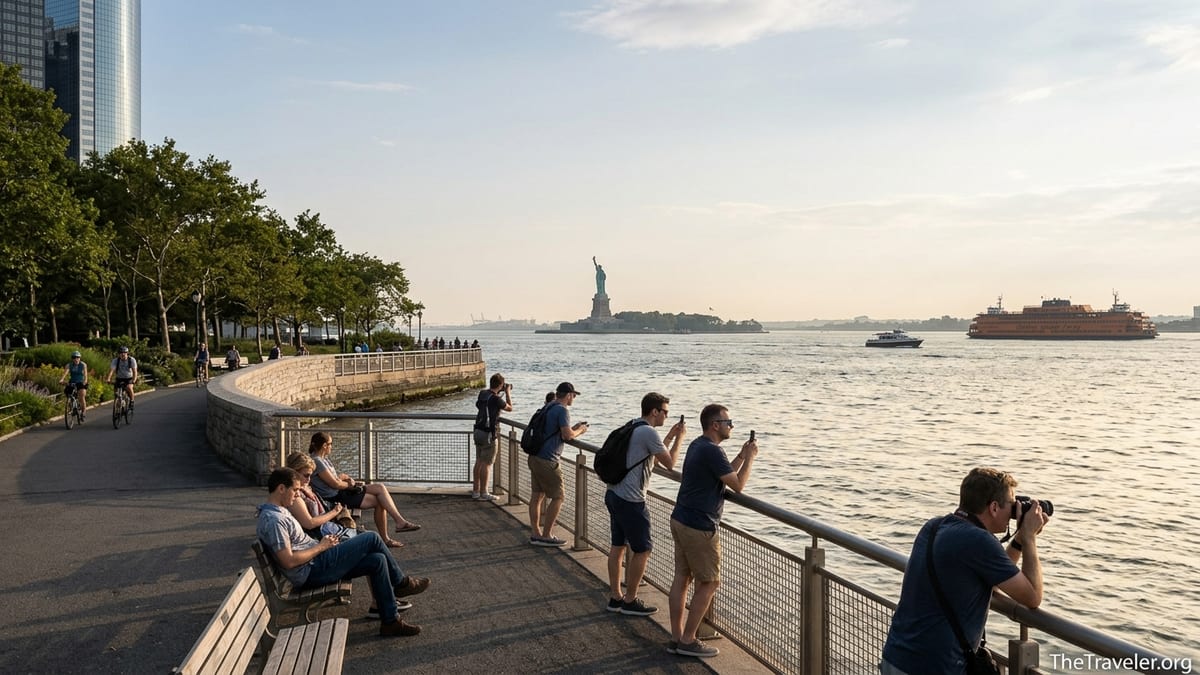
Locals increasingly use the name “The Battery” for the 25 acres of waterfront parkland at Manhattan’s southern tip. It borders the Staten Island Ferry’s Whitehall Terminal on one side and the departure area for Statue of Liberty and Ellis Island ferries on the other. Stand anywhere along the waterfront promenade and you are essentially at the front porch of New York Harbor, looking toward the Statue of Liberty, Ellis Island, Governors Island, and the Verrazzano-Narrows Bridge in the distance.
Practically, this means Battery Park is both a viewpoint and a transport hub. From here you can board Statue City Cruises boats to Liberty and Ellis Islands, catch the free Staten Island Ferry from Whitehall Terminal, or walk a few minutes to the Battery Maritime Building for Governors Island ferries. Ferries and terminals cluster tightly together, so if you simply follow the crowds you may reach your boat, but you will likely miss the quieter lawns, gardens, and lesser-known vantage points tucked just behind the paved paths.
The key to not missing the best of Battery Park is to separate “harbor logistics” from “park time.” If you have a morning Statue of Liberty reservation, build in at least 45 to 60 extra minutes before or after your ferry purely for wandering the park. Travelers often spend three or four hours on Liberty and Ellis Islands but only five rushed minutes in the Battery, even though the skyline-and-harbor combination here rivals many paid viewpoints elsewhere in the city.
For planning purposes, think of the park in three zones: the waterfront promenade for classic harbor views, the central lawns and gardens for quieter moments and photo backdrops, and the transport edges around Whitehall Terminal and the Liberty Island security screening area, where you mainly manage tickets and queues. Moving deliberately between these zones keeps you from spending your entire visit standing in line.
The Classic Harbor Views You Should Not Miss
If your time is short, head straight to the waterfront railing along the park’s southwest edge. This is where you get one of the cleanest land-based views of the Statue of Liberty from Manhattan. On clear days you can make out the torch, the folds of the robe, and the pedestal without needing binoculars. Arrive in the late afternoon and you will often see the statue silhouetted in soft side light, which photographs more naturally than the harsh midday glare off the water.
Walk north along the promenade, keeping the water on your right, and you will see ferries cutting across toward Staten Island and Governors Island. Pause roughly opposite the Coast Guard memorial and you will have a broad panorama that takes in Ellis Island, the New Jersey skyline around Jersey City, and the lower Manhattan skyscrapers behind you. Many visitors unknowingly snap their harbor photos only from the Whitehall Terminal waiting room; the outdoor railing in the park itself usually has fewer people and better framing.
For a very specific photo angle, stand just south of the Statue City Cruises embarkation area, where the security facility funnels people onto the Liberty Island boats. From here, Liberty Island lines up almost directly in front of you and the ferries frequently pass across your frame. It is a good spot for dynamic shots with boats in the foreground and the statue beyond. Photographers who want a less cluttered composition can walk slightly farther south toward the end of the promenade, where there are fewer railings and signs intruding into the shot.
Sunrise visits are dramatically quieter and give you soft, even light looking west across the harbor. In winter months the sun stays fairly low all morning, flattening the contrast and making it easier to shoot both water and skyline without blown-out highlights. In summer, early evening is better, when the brick of Castle Clinton and the copper-green patina of the statue catch warm light instead of overhead glare.
Hidden Corners: Gardens, Lawns, and Quiet Benches
Just a few steps inland from the main promenade, Battery Park changes character entirely. Instead of concrete and ferry queues you will find perennial gardens, winding paths, and pockets of shade where it is possible to forget you are surrounded by some of the most expensive office towers in the world. The park’s restored gardens cover many thousands of square feet, and in late spring and early summer they are thick with pollinator-friendly plantings that feel more like a botanical garden than a busy urban park.
One of the easiest overlooked areas is the large oval lawn in the center of the park. On sunny days you will see office workers from the nearby Financial District eating lunch on the grass, but in the shoulder seasons it can be surprisingly empty. Grab a take-away coffee from a nearby deli on State Street and sit at the edge of the lawn to watch ferries slide past beyond the tree line. It is also a good fallback if the waterfront feels too windy or crowded.
Look out for the park’s smaller memorials and sculptures as you wander. The Korean War Memorial, with its cut-out silhouette framing the harbor, offers a meditative viewpoint that most visitors breeze past on their way to the Statue of Liberty boats. The East Coast Memorial, with its soaring eagle and granite pylons listing the names of World War II servicemembers lost at sea, stands near the southern edge and adds a solemn counterpoint to the otherwise festive ferry atmosphere. Both locations are usually far quieter than the main paths and can yield powerful photos that juxtapose history, architecture, and open water.
Benches along the inner paths are some of the best in the city for people-watching. Sit facing inland and you will see a constant flow of commuters cutting diagonally through the park toward the subway, joggers looping the perimeter, and families steering strollers toward the SeaGlass Carousel. Turn around and face the harbor instead, and your view becomes a constant parade of ferries, tugs, and occasional cruise ships sliding into or out of the harbor. Either way, allow yourself at least 20 unscheduled minutes to simply sit; you will experience the Battery less as a tourist choke point and more as New Yorkers use it every day.
SeaGlass Carousel and Family-Friendly Surprises
Near the southeast corner of the park you will find one of its most unexpected sights: the SeaGlass Carousel, a glowing glass pavilion where riders sit inside large, illuminated fish rather than on traditional horses. It was created by the Battery Conservancy as a whimsical reference to the nearby harbor and the old New York Aquarium that once stood at the Battery. Tickets are around six dollars per person, and both children and accompanying adults need tickets to ride, so a family of four should plan on roughly twenty-four dollars for a single spin.
The ride lasts only a few minutes, but it feels otherworldly, especially in the early evening when the pavilion lights up and the colors play across the glass walls. Even if you do not ride, it is worth walking by to see the architecture and to photograph the fish sculptures from outside as they glide past the windows. Lines tend to be shorter on weekday mornings and longer on weekend afternoons, when local families often stop here after visiting Liberty and Ellis Islands.
Several small playgrounds and open spaces nearby give children room to burn off energy between ferry rides. The paths around the carousel create a natural loop: parents can grab ice cream from a seasonal kiosk, then circle past the carousel, through a patch of gardens, and back toward the waterfront. For younger kids who may be too restless to stand in a long ferry queue, spending half an hour here before joining the line can make the whole day go more smoothly.
Practical note: the carousel does sometimes close for bad weather or maintenance, especially in the winter and early spring, so treat it as a bonus rather than the sole reason for your visit. Check posted hours the day you arrive and be prepared with an alternative plan, such as walking to the nearby playgrounds or focusing on the harbor views if the pavilion is not operating.
Castle Clinton, Tickets, and Avoiding Common Pitfalls
At the heart of Battery Park stands Castle Clinton, a circular stone fort that has served over time as a harbor defense, immigration station, concert hall, and now a visitor center. For modern travelers its most important role is as an official ticket office for Statue City Cruises, the authorized ferry service to Liberty and Ellis Islands. If you want to visit the statue up close, this is one of the few safe places in the park to sort out tickets in person.
To avoid disappointment, especially in spring and summer, it is best to reserve Statue of Liberty pedestal or crown tickets several weeks or even months in advance. Same-day tickets from Castle Clinton often sell out early, and the on-site line can be long. Even if you already have tickets purchased online, you still need to pass through the new security screening facility within the Battery before boarding the ferry. Plan to arrive at least 30 minutes ahead of your assigned departure window, and more like 45 to 60 minutes during peak holiday periods.
One of the easiest ways to sour a visit is to get caught in informal ticket hawking. Around the perimeter of Battery Park, especially near subway exits for South Ferry and Bowling Green, you will find freelance sellers aggressively offering “Statue of Liberty tickets” or “boat tours.” Some run legitimate harbor cruises that do not actually land on Liberty or Ellis Island, while others are more dubious. The simplest rule is to ignore all street sellers and buy only from the official Statue City Cruises channels or at Castle Clinton’s windows. This protects both your budget and your schedule, since there have been persistent reports of visitors steered into unwanted shuttle bus rides or expensive detours.
Another common misstep is underestimating how long the Statue of Liberty and Ellis Island can take. If you board a morning ferry from Battery Park, spend an hour or more on Liberty Island, then continue to Ellis Island to explore the immigration museum, you can easily return to Manhattan mid- or late afternoon. Build at least four to five hours into your day for the full experience. If you have limited time and mostly want views, consider staying on Manhattan’s side and using Battery Park and the Staten Island Ferry instead of rushing both islands.
The Staten Island Ferry: Free Moving Viewpoint
Just east of Battery Park’s main lawns, the Whitehall Terminal hosts the Staten Island Ferry, a free service that runs between Lower Manhattan and St. George on Staten Island. The boats operate roughly every 15 to 30 minutes, depending on time of day, and the crossing takes about 25 minutes each way. For cost-conscious travelers who mainly want harbor views rather than museum visits, this is arguably the best sightseeing bargain in New York.
Once on board, head straight to the outdoor decks at either the bow or stern, or stake out a spot by the large side windows inside if the wind is strong. For the best Statue of Liberty views when you leave Manhattan, stand on the right-hand side of the boat as you face forward toward Staten Island. The ferry will pass relatively close to Liberty Island, giving you unobstructed views and strong photo opportunities without paying for a dedicated cruise. On the return trip from Staten Island, switch to the opposite side to keep the statue in view again.
Be aware that you must disembark at St. George Terminal on Staten Island, then re-board a later boat back to Manhattan. Many travelers simply walk off, loop through the terminal’s waiting area, and get on the next departure, turning the whole excursion into about an hour of continuous harbor viewing. If you have more time, you can walk a few minutes to the waterfront esplanade in St. George for skyline photos before heading back.
Because the ferry is free and heavily used by commuters, there are generally no lines comparable to the Statue of Liberty boats, but security and crowds can build during rush hours. To enjoy a more relaxed crossing with plenty of space on deck, time your ride for mid-morning or mid-afternoon on a weekday, or mid-day on weekends. As always in busy transit hubs, keep wallets and phones secure and ignore anyone outside the terminal who claims to sell “tickets” for what is, and always has been, a free service.
Side Trip to Governors Island and Skyline Perspectives
Just beyond the Whitehall Terminal sits the Battery Maritime Building, a historic green-and-glass structure where ferries to Governors Island depart. The ride across Buttermilk Channel typically takes less than ten minutes and opens up yet another set of perspectives on Lower Manhattan and the harbor. When you step off on Governors Island, the skyscrapers of the Financial District fill your entire field of vision, which makes for some of the most dramatic skyline photography available without paying for an observation deck.
For visitors based in Manhattan, this Governors Island loop can be easily combined with a Battery Park visit in a single day. Spend the morning walking the promenade, visiting Castle Clinton, and perhaps riding the SeaGlass Carousel. Then board a late-morning ferry to Governors Island, have a casual lunch at one of the seasonal food vendors or picnic areas, and climb to one of the landscaped hills for sweeping views back toward the Battery, the Brooklyn waterfront, and the Statue of Liberty off to one side.
Because Governors Island has limited vehicle traffic and plenty of open space, it feels far more relaxed than Midtown or even Central Park. Families often rent bikes or surrey carts, while photographers roam around old Coast Guard houses and art installations. When you sail back to Manhattan in the afternoon, position yourself on the open deck facing north: as the ferry approaches the Battery Maritime Building, the facades of the skyscrapers rise seemingly straight out of the water, creating a striking end to the day.
Keep in mind that Governors Island has seasonal schedules and may have different weekday and weekend hours. Before committing to the detour, check same-day information from the Governors Island operators and plan your timing so you are not rushing to catch the final return ferry.
Practical Tips: Timing, Weather, and Safety
To get the most out of Battery Park’s views and hidden corners, match your visit to the time of day and season whenever possible. Spring and fall offer the most comfortable temperatures and often the clearest air, which matters when you are photographing distant subjects like the Statue of Liberty and Ellis Island. In midsummer, plan around the midday sun by visiting early in the morning or in the golden hours before sunset, when the light is less harsh and the park benches are cooler.
Weather has a big impact on how enjoyable the harbor feels. On bright but cold winter days, the wind can be intense along the waterfront, so a warm hat and gloves make the difference between a quick look and an extended stroll. In humid summer weather, ducking briefly into the shade around the SeaGlass Carousel or under the trees near the East Coast Memorial can keep you going for another hour. Always bring a light layer, even in July, as temperatures can drop quickly when clouds roll in over the harbor.
Security procedures around the Statue of Liberty ferry boarding area are similar to airport-style screening, with limits on certain items and bag sizes. You will pass through this only if you are visiting the islands; the rest of the park remains open and freely accessible. Allow extra time for the screening location, which has been shifted and upgraded in recent years, and factor that into any timed ticket you hold for pedestal or crown access.
As in any busy tourist area, standard city precautions apply. Keep your bags zipped, be cautious about setting cameras or phones on railings even for a moment, and be skeptical of anyone who insists you must follow them for “official” tickets or tours. The legitimate information sources inside Castle Clinton, the Battery Conservancy’s kiosks, and the clearly marked terminals for Staten Island and Governors Island ferries will give you all the details you need without on-the-spot pressure sales.
The Takeaway
Battery Park is far more than a staging area for ferries. Treated thoughtfully, it can be one of the richest slices of New York you experience: a place where Revolution-era defenses sit beside modern glass towers, where memorials open onto salt air and shipping lanes, and where you can see both the Statue of Liberty and the rhythms of everyday city life in a single frame.
The key is to slow down. Build time into your Statue of Liberty or Staten Island Ferry day specifically for wandering the lawns, gardens, and smaller memorials. Use the free ferry as a moving observation deck if your priority is views rather than museum time, or add a quick Governors Island hop for a different angle on the skyline. Most importantly, keep your plans flexible enough to follow the light, the weather, and your own curiosity through the park rather than simply queuing for the next boat.
If you do, you will leave not just with photos of a distant statue, but with a more complete sense of how New York is linked to its harbor, and how this small wedge of green at the island’s tip continues to shape the city’s story.
FAQ
Q1. Can I see the Statue of Liberty clearly from Battery Park without taking a boat?
Yes. From the southwest waterfront promenade in Battery Park you get a clear, direct view of the statue across the harbor. You will not be as close as on Liberty Island, but you can still take recognizable photos, especially with a phone or camera zoom.
Q2. How much time should I plan for a Statue of Liberty and Ellis Island visit from Battery Park?
If you plan to visit both islands, allow at least four to five hours from the moment you join the security line in Battery Park until you are back on Manhattan. That includes ferry rides, time on Liberty Island, and at least a brief visit to the Ellis Island National Museum of Immigration.
Q3. Where should I buy official Statue of Liberty ferry tickets in Battery Park?
For in-person purchases, use the official ticket windows inside Castle Clinton in the center of Battery Park. Avoid street sellers around the park who offer “Statue tickets” or “boat tours,” as many do not go to Liberty or Ellis Island even if they pass nearby.
Q4. Is the Staten Island Ferry really free and is it worth it just for views?
Yes, the Staten Island Ferry between Whitehall Terminal and St. George is free. It is one of the best no-cost ways to see the Statue of Liberty, Ellis Island, and the Lower Manhattan skyline because the boat passes through the heart of New York Harbor on every trip.
Q5. What is the best time of day to visit Battery Park for photos?
Early morning and late afternoon generally offer the most flattering light, with softer shadows and less glare off the water. Sunset can be especially beautiful for skyline shots, while mid-morning on clear days is good for crisp views of the Statue of Liberty.
Q6. Is SeaGlass Carousel in Battery Park suitable for adults, or just children?
SeaGlass Carousel is popular with children, but adults ride it as well. The illuminated fish and music create a gentle, immersive experience, and many visitors treat it as a whimsical art installation as much as a ride.
Q7. Can I easily combine Battery Park with a visit to Governors Island?
Yes. The Governors Island ferry leaves from the Battery Maritime Building just beyond Battery Park and Whitehall Terminal. Many travelers spend a few hours exploring Battery Park, then take a short ferry ride to Governors Island for afternoon views and open space.
Q8. Are there good places to sit and relax away from the ferry crowds?
Yes. The central oval lawn, shaded benches along the inner paths, and quiet corners near the East Coast Memorial and Korean War Memorial all offer calmer spots than the busy ferry boarding areas on the park’s edge.
Q9. Is Battery Park safe to visit in the early morning or evening?
Battery Park is generally busy and feels safe during daylight and early evening hours, especially around commuter times. As with any urban park, it is sensible to stay in well-lit areas after dark, keep valuables secure, and be aware of your surroundings.
Q10. Do I need tickets or reservations just to walk around Battery Park?
No. The park itself is free and open to the public, and you can walk the paths, sit on benches, and enjoy the harbor views without any ticket. Reservations are only needed for attractions such as the Statue of Liberty ferries or special access like the statue’s pedestal and crown.