


More news on this day
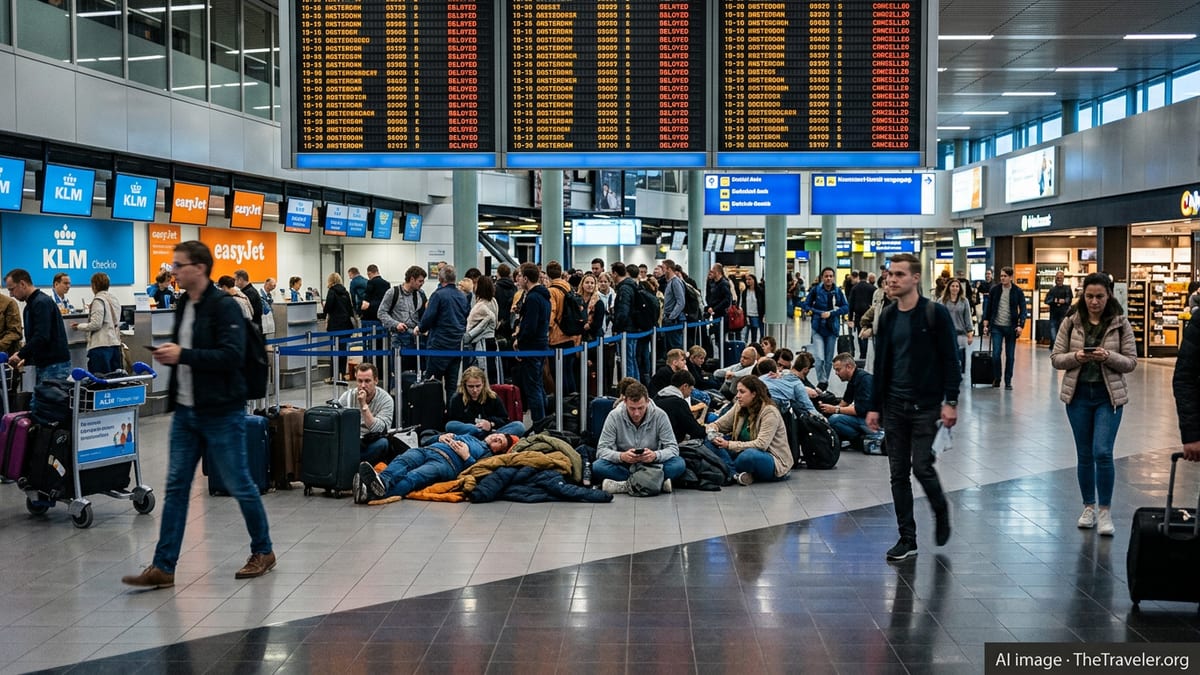
Thousands of passengers were stranded or facing missed connections on June 20 as Aeroflot, Rossiya Airlines, KLM, SAS, Brussels Airlines and British Airways reported a combined 96 cancellations and 277 delays at major European hubs, disrupting services to and from London, Amsterdam, Moscow, Stockholm, Brussels and multiple long haul destinations.
Get the latest news straight to your inbox!
Major Hubs Struggle With Knock On Disruptions
Publicly available flight tracking data for June 20 indicate that major airports including London Heathrow, Amsterdam Schiphol, Moscow Sheremetyevo, Stockholm Arlanda and Brussels Zaventem all experienced significant schedule disruption affecting short haul and long haul routes. While overall traffic continued to move, the combination of outright cancellations and rolling delays created bottlenecks in security lines, transfer corridors and baggage halls.
Reports from airport operations dashboards and third party status trackers show British Airways and KLM among the most heavily affected carriers at London and Amsterdam, with individual rotations between the two hubs operating behind schedule and in some cases being scrubbed entirely. Similar patterns were visible for SAS services in and out of Stockholm and Brussels Airlines departures from the Belgian capital.
In Moscow, Aeroflot and Rossiya Airlines saw a series of domestic and international flights either cancel or depart substantially late, compounding earlier operational strain that has periodically hit Russian carriers over recent seasons. Passengers connecting through Sheremetyevo and other Moscow airports were left facing rebooking challenges as remaining flights filled quickly.
Across the five hubs, disruption spilled into surrounding regional airports as diverted aircraft and displaced crews forced last minute schedule changes. This led to knock on delays for services that were not initially listed among the affected flights, particularly evening departures that rely on aircraft arriving from earlier disrupted sectors.
Mixed Causes Behind 96 Cancellations and 277 Delays
Analysis of airline statements, timetable adjustments and regional aviation coverage suggests that today’s disruption stems from a mix of factors rather than a single incident. Staffing constraints at air traffic control centers and ground handling firms remain a recurring theme across Europe, with some hubs still struggling to match peak summer demand after several lean years for the aviation workforce.
Weather complications in parts of northern and western Europe contributed to localized flow restrictions earlier in the day, forcing carriers to consolidate frequencies or temporarily suspend rotations on thinner routes. Even modest airspace congestion can quickly cascade when schedules are tightly timed, particularly at slot constrained hubs such as Heathrow and Schiphol.
Airlines including KLM and British Airways have also been operating amid ongoing fleet and maintenance pressures, according to recent industry reports, occasionally leading to short notice aircraft changes or cancellations when spare capacity is limited. Similar dynamics apply to SAS and Brussels Airlines, where older aircraft and high utilization patterns can leave little margin when technical issues arise.
For Aeroflot and Rossiya, today’s cancellations and delays take place against a backdrop of past information technology disruptions and changes in available aircraft types highlighted in previous seasons, which have at times forced rapid schedule reconfigurations. Although no new large scale technical failure was widely reported today, the carriers appear to be operating with reduced resilience when unexpected issues emerge.
Passengers Face Long Queues, Missed Connections and Rebookings
The immediate impact for travelers has been long queues at customer service desks, gate podiums and transfer counters across the affected hubs. With 96 flights cancelled, many passengers have sought rerouting on already busy services, squeezing remaining seat availability and pushing some rebookings into later days.
Those on delayed flights have faced uncertainty over departure times, with some aircraft initially posting modest delays before being repeatedly pushed back as congestion and crew hour limitations worsened. This pattern has been particularly challenging for those connecting to long haul flights to North America, Asia and Africa from London, Amsterdam and Brussels, where minimum connection windows were quickly exceeded.
According to information from online compensation and passenger rights platforms, travelers across the European Union may be eligible for reimbursements or fixed compensation in certain cases of long delay or cancellation, depending on flight distance, cause and rerouting options. However, the process typically requires documenting boarding passes, confirmation emails and actual arrival times, which can be difficult during ongoing disruption.
Hotels near the key hubs reported a visible uptick in last minute bookings as late evening departures slipped beyond curfew windows or were withdrawn from schedules. Families beginning summer holidays and business travelers returning from the workweek appeared among those seeking overnight stays after missed connections left them without same day alternatives.
Broader Strain on Europe’s Peak Summer Operations
Today’s wave of cancellations and delays comes at the start of the peak summer travel period in Europe, when capacity is stretched and schedules are densely packed. Industry coverage in recent weeks has pointed to rising passenger volumes converging with ongoing staffing and airspace challenges, raising the risk that even localized disruptions can ripple widely.
Policy discussions within the European Union over updated passenger rights and compensation rules have also returned to the spotlight, as advocacy groups argue that stronger enforcement and clearer communication requirements are needed when mass disruptions occur. Proposed reforms have focused on standardizing how airlines handle cabin baggage, rebooking and cash compensation when flights are significantly delayed or cancelled.
For airports such as Amsterdam Schiphol and London Heathrow, which serve as primary connection points for global traffic, maintaining operational resilience has become a central priority. Investments in digital queuing systems, automated border control and improved staffing flexibility are being promoted as ways to absorb shocks from weather, technical failures or sudden shifts in demand.
Nonetheless, today’s events show that the network remains vulnerable to compounded stresses. With 277 flights delayed in a single operating day among a handful of major carriers, even small deviations from plan can quickly affect thousands of passengers scattered across continents.
What Travelers Can Do During Ongoing Disruption
Travel experts and consumer organizations generally recommend that passengers monitor their flight status directly through airline apps or departure boards, particularly during busy travel days when schedules are fluid. Rebooking options can appear and disappear quickly as inventory is reallocated, so acting promptly once a cancellation is confirmed can improve chances of securing an acceptable alternative.
Passengers affected by today’s cancellations and long delays are being advised, in public guidance from travel rights platforms, to retain receipts for meals, accommodation and ground transport where applicable. These documents can support later reimbursement or compensation claims under European rules or equivalent policies for non EU carriers operating from European airports.
For future trips during the summer season, observers suggest leaving longer connection times at large hubs, especially when itineraries involve multiple carriers or separate tickets. Booking earlier departures in the day, when operations are less exposed to accumulated delays, is also seen as a way to reduce the likelihood of missed connections.
While today’s disruptions at London, Amsterdam, Moscow, Stockholm and Brussels have caused widespread frustration, industry analysts note that they may serve as a further catalyst for airlines and regulators to refine contingency planning, clarify passenger entitlements and strengthen the resilience of Europe’s aviation network ahead of the busiest weeks of the travel year.