


More news on this day
A 45-car CN freight train derailed Sunday in the suburban community of Repentigny, north of Montreal, disrupting a residential rail corridor and briefly cutting power to nearby homes but causing no reported injuries or hazardous leaks, according to published coverage and official bulletins.
Get the latest news straight to your inbox!
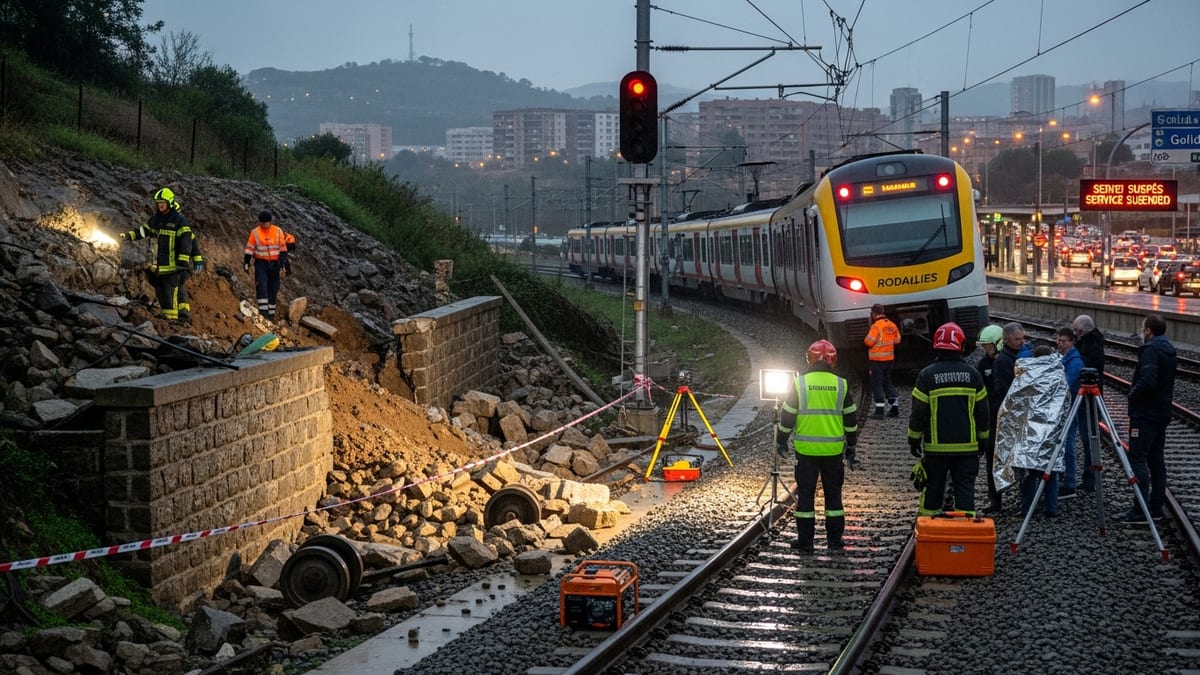
Derailment in residential corridor north of Montreal
Reports indicate the derailment occurred on Sunday, July 5, in Repentigny, a city on the north shore of the St. Lawrence River roughly 25 kilometres northeast of downtown Montreal. Coverage from Quebec media outlets describes the train leaving the tracks near the intersection of Le Bourg-Neuf Boulevard and Émile-Genest Street, in a mixed residential and commercial area where a freight line crosses local streets.
Published information from rail operators and police summaries states that 45 railcars belonging to CN left the tracks. Images shared by Canadian outlets show multiple freight cars tipped on their sides or leaning off the rails, with debris scattered along the ballast and a section of track visibly distorted.
According to publicly available police and railway updates, none of the derailed cars were carrying hazardous materials at the time. Rail spokespeople cited in Canadian Press and other coverage noted that three cars had previously transported diesel but were empty, and there have been no indications of a fuel spill, fire or explosion.
Municipal updates and local reporting indicate that no residents or railway staff were injured. People living closest to the derailment site experienced temporary disruptions but were not subject to extended evacuation measures, and access around the scene was controlled primarily to allow emergency crews and technical teams to work.
Investigation underway into cause of derailment
The Transportation Safety Board of Canada (TSB) stated in a public deployment notice that a team of investigators was sent to Repentigny following the derailment of the CN freight train. The advisory notes that the incident took place on July 5 and confirms that the train was operating on CN infrastructure when the cars left the tracks.
According to TSB procedure, investigators typically begin by documenting the site, examining track conditions, rolling stock and train handling data, and collecting information from operating records and available event logs. The early phase of the work in Repentigny is expected to focus on understanding how such a large number of cars derailed within a relatively short stretch of track in a low-speed, urban environment.
CN has indicated through public statements referenced in Canadian media that it is cooperating with safety investigators and reviewing its own operational data. The company has also said it will provide further updates on the derailment as more information becomes available, though no preliminary cause has yet been identified.
For now, reports emphasize that the incident appears to be a freight-only occurrence with no passenger trains involved. Published coverage notes that the line where the derailment occurred forms part of a freight corridor serving the Montreal region, intersecting densely populated suburbs that rely on the rail network for both regional supply chains and, in some areas, commuter service.
Power outages, travel disruption and cleanup work
Shortly after the derailment, Hydro Québec reported localized power outages affecting a little more than 1,000 customers in the Repentigny area, according to Canadian Press reports and regional outlet summaries. Those outages were attributed to damage or precautionary shutdowns linked to the rail incident, with service restored to most customers by early Monday morning.
Railway and municipal updates describe a significant on-site operation to stabilize and remove the derailed cars. Heavy equipment has been brought in to lift or drag damaged wagons away from the right-of-way, while crews work to dismantle twisted sections of rail and inspect ties and ballast for structural issues. This type of cleanup is often carried out in stages so that one track can be reopened as soon as it is deemed safe.
Local streets around Le Bourg-Neuf Boulevard and Émile-Genest Street have faced intermittent closures as a result of the recovery work, affecting vehicle traffic through the affected neighbourhood. For travelers heading in and out of Repentigny by car, detours around the rail corridor and temporary congestion near work sites are likely until the wreckage is fully cleared.
On the rail side, freight movements along the affected line are expected to remain limited or rerouted until track repairs are complete and infrastructure inspections are finished. While passenger services were not directly involved in the incident, through-traffic in the Montreal region often shares corridors and junctions with freight, meaning some knock-on delays or operational adjustments are possible as rail dispatchers manage capacity around the closure.
Local reaction and safety concerns along key Quebec corridor
Repentigny’s municipal leaders have described the event in public messages as unsettling for residents, particularly given the derailment’s proximity to homes and local businesses. Social media posts and regional commentary reflect a mix of relief that there were no injuries and concern about what might have happened had flammable or toxic cargo been on board.
The derailment comes as Quebec marks the anniversary of the Lac Mégantic disaster on July 6, a tragedy that has profoundly shaped public perceptions of rail safety in the province. News features tied to the Repentigny incident have noted the symbolic weight of that date, with comparisons underscoring how different the outcome can be when cargo consists of non hazardous goods and safety systems contain an incident.
For travelers and tourism operators in the greater Montreal area, the derailment serves as a reminder that much of the region’s passenger and freight traffic still runs through tightly constrained corridors shared between communities and industry. Travel planners often advise visitors using rail or road routes parallel to major freight lines to build in additional time during periods of disruption while cleanup and inspection activities continue.
While formal findings from the TSB investigation are expected to take months, early public information from regulators and railway companies suggests a continued focus on infrastructure resilience, traffic management and emergency coordination in densely populated rail-adjacent communities. For now, the Repentigny derailment stands out as a high profile incident that, despite the dramatic images of toppled freight cars, resulted in limited physical damage beyond the tracks and no loss of life.