


More news on this day
Evacuation orders in Bucyrus, Ohio, continued to ease on Monday after a Norfolk Southern freight train derailed near residential streets, prompting overnight shelter operations and a hazardous materials response.
Get the latest news straight to your inbox!
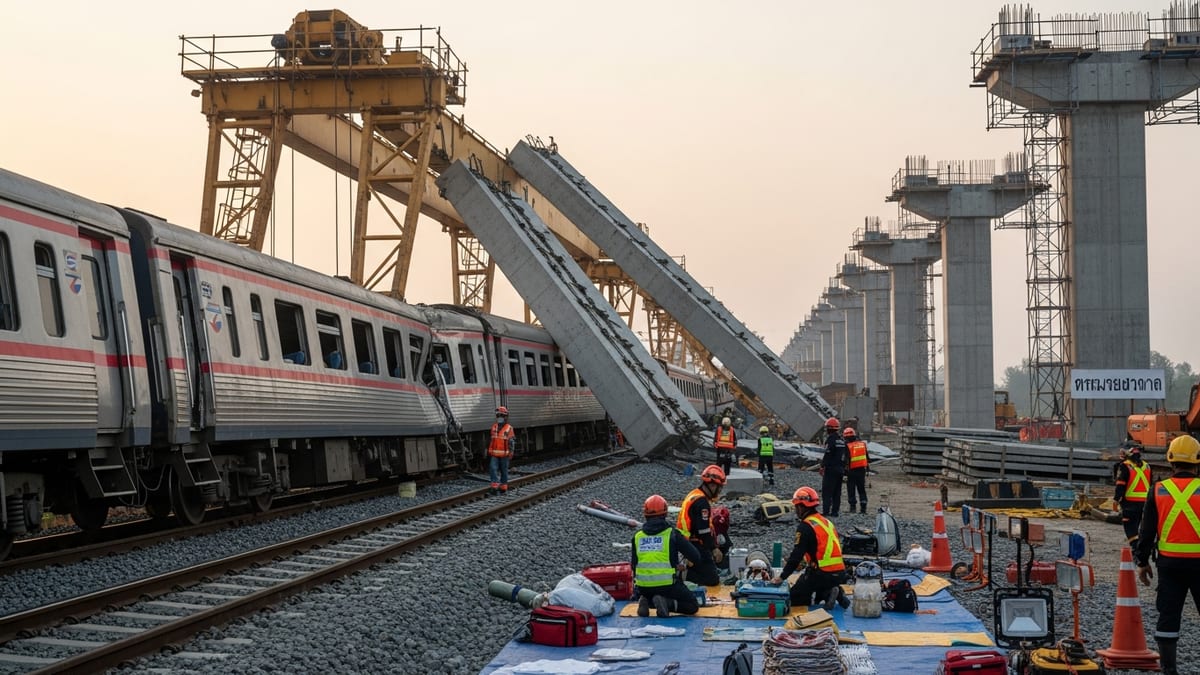
Evacuations Narrow as Hazard Risk Reassessed
Reports from local outlets indicate that the derailment occurred late Sunday near central Bucyrus, where several freight cars, including at least one tanker, left the tracks close to homes and surface streets. Initial concern centered on a possible hydrochloric acid leak from the tipped tanker car, which led emergency crews to establish a broad safety perimeter around the scene.
Publicly available information shows that residents within roughly a one-mile radius of the derailment were initially instructed to evacuate, with temporary shelters opened for those who could not stay with friends or family. As the night progressed and first assessments were completed, that zone was gradually reduced, allowing some households to return while air monitoring continued.
By early Monday, reports indicated that the most acute danger from a potential chemical release had eased, though officials at the scene continued to watch the damaged tanker and surrounding freight cars. Local road closures remained in place near the tracks, and residents were advised to expect a visible emergency presence and intermittent sirens as work continued.
Travelers passing through the Bucyrus area by car were urged to use alternate routes to avoid congestion around detours and emergency access points. Those with lodging reservations in or near the city were encouraged, through published guidance, to check for possible access changes or delays before arrival.
Rail Operations Disrupted Along Key Corridor
The Norfolk Southern line through Bucyrus forms part of a busy freight corridor across northern Ohio, and the derailment has temporarily disrupted rail traffic in the region. According to regional coverage, trains scheduled to pass through the impacted stretch of track have been held or rerouted while crews work to remove damaged cars and inspect the rail bed.
Freight customers relying on this route could experience delays as the company reorders its schedule. Publicly available rail industry reports note that congestion is a frequent byproduct of even localized derailments, as dispatchers juggle stalled trains, crew hours, and alternative paths within an already constrained network.
Passenger travel in the immediate Bucyrus area is primarily by road, so the derailment’s direct impact on rail passengers appears limited at this stage. However, travelers using long-distance bus services or driving parallel to the rail corridor may encounter heavier traffic than usual as trucks and detoured vehicles share alternative routes.
Published guidance from transportation planners suggests that the line will likely remain out of service until track inspections, repairs, and safety checks are completed. Timetables for full restoration were not immediately clear, and travelers planning regional rail-connected itineraries through northern Ohio may face schedule adjustments until the route reopens.
Environmental Monitoring and Community Concerns
The incident in Bucyrus has quickly drawn local attention to environmental and public health risks associated with freight trains that move hazardous materials through residential communities. Early reports stress that, as of Monday morning, there were no confirmed widespread chemical releases, but air quality and soil monitoring around the damaged tanker car were continuing.
Published coverage highlights that responders have focused on detecting any trace of hydrochloric acid or related compounds that might have escaped the tanker. These efforts include visual inspection of the car, checks for visible vapor, and use of handheld monitoring devices to measure conditions around the site and downwind.
Residents in nearby neighborhoods expressed concern in local reporting about odors, possible long-term health effects, and the proximity of hazardous cargo to homes and schools. Public information statements have emphasized that any significant leak would warrant renewed evacuations and a broader safety perimeter, and that monitoring is intended to provide early warning if conditions change.
For visitors and travelers staying in Bucyrus, the main environmental consideration at present is localized. Those lodging near the railway or within the original evacuation zone may encounter temporary restrictions, noise from ongoing operations, and occasional air-monitoring activities. Current reports indicate that hotels and inns farther from the tracks are operating normally, with only indirect impacts from traffic and detours.
Norfolk Southern’s Safety Record Under Renewed Scrutiny
The Bucyrus derailment arrives at a time of sustained national attention on Norfolk Southern’s safety practices following the 2023 hazardous materials derailment in East Palestine, Ohio. That earlier incident triggered large-scale evacuations, extensive environmental testing, and a series of federal investigations and settlements focused on hazardous cargo movements and emergency response protocols.
In the aftermath of East Palestine, federal agencies issued new safety advisories and published findings calling for improvements in defect detection, real-time sharing of train consist information with local responders, and more robust oversight of hazardous materials routing. Subsequent settlements between Norfolk Southern and government agencies have required investments in monitoring, cleanup, and safety upgrades across the rail network.
Publicly available analyses note that each new derailment, even when localized and contained, tends to reinforce public concern about whether those promised safety improvements are reaching communities along busy freight corridors. The Bucyrus incident is already being cited in commentary that points to Ohio’s repeated experience with hazardous materials moving by rail through small towns and city centers.
For travelers, the renewed scrutiny may translate over time into visible changes, such as additional trackside sensors, longer inspection times in yards, or more detailed information being shared with local emergency managers. In the short term, however, the immediate focus in Bucyrus remains on stabilizing the train, clearing the line, and confirming that residential areas are safe to fully reoccupy.
Travel and Tourism Implications for Bucyrus and Northern Ohio
Bucyrus serves as a modest but notable waypoint for travelers exploring northern Ohio, including those driving between Columbus, Cleveland, and Lake Erie destinations. The derailment has introduced short-term uncertainties for visitors, particularly those with plans near the rail corridor or in neighborhoods that experienced overnight evacuations.
Local tourism operators and hospitality businesses, according to regional travel coverage, have remained open, though some have reported cancellations from guests wary about potential chemical exposure or ongoing disruptions. At the same time, there have been early signs of resilience, with small businesses adapting their hours to accommodate residents and responders moving in and out of the affected area.
Travel writers note that incidents of this kind can influence visitor perceptions long after the physical cleanup is finished, especially when they involve hazardous materials. Clear communication about environmental test results, future rail safety steps, and the restoration of normal operations is likely to play a significant role in how quickly Bucyrus’s image recovers among prospective visitors.
For now, travelers considering a stop in Bucyrus are advised, based on current public information, to monitor local news and municipal updates for any changes to evacuation zones, road closures, or rail-related disruptions. With the immediate hazard reportedly reduced and cleanup underway, the city is beginning the careful process of returning daily life, and visitor activity, to a more familiar rhythm.