


More news on this day
More than 200 passengers left scrambling for flights and hotel rooms in Cambodia after a residential world cruise abruptly halted this month are drawing fresh attention to the financial fragility that can lurk behind even high-end voyages, and to what happens when operators run out of cash far from home.
Get the latest news straight to your inbox!
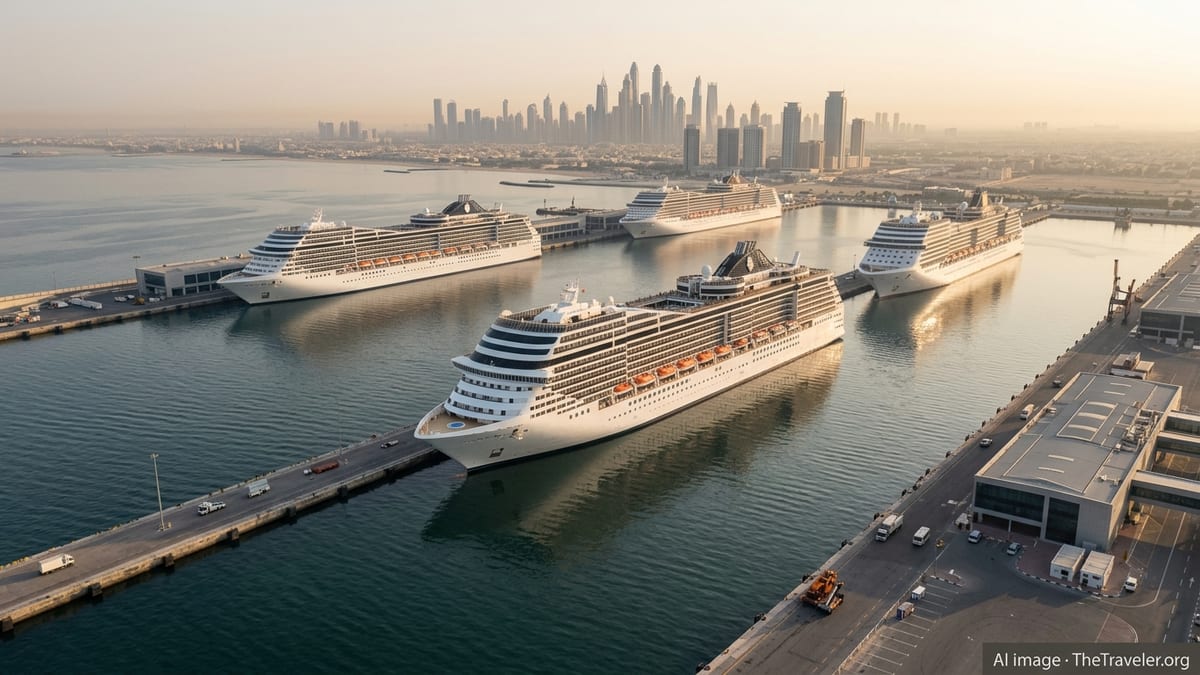
MV Odyssey Shutdown Triggers Global Alarm
The latest flashpoint centers on MV Odyssey, a 650-passenger residential ship operated by Florida-based Villa Vie Residences. The vessel had been marketed as a “floating home” for residents planning to live and travel at sea for years, with cabins selling for sums that in some cases exceeded 300,000 dollars. According to published coverage, the company acquired the 1993-built ship in 2023 and launched an around-the-world itinerary spanning all seven continents.
In late October 2026, the voyage was suspended while Odyssey was docked in Sihanoukville, Cambodia. Publicly available information indicates that 203 passengers from about 15 countries were instructed to disembark with only hours of notice after the operator said it could no longer pay for fuel. Reports from international outlets describe residents being taken into town and then left to secure their own hotels, onward flights and visas.
Associated Press and other coverage state that the line blamed soaring fuel prices for making its business model unworkable. Company notices cited monthly fuel costs per cabin surging from roughly 1,800 dollars to as much as 6,000 to 8,000 dollars in 2026 while sailing in Asia. Internal documents reviewed by major broadcasters reportedly showed that the operator had been searching unsuccessfully for new financing for at least three months before the shutdown.
In early November, the now-empty Odyssey departed Cambodia after refueling, carrying only crew. Subsequent reports from Singapore and international media indicate the ship has since been arrested in port as creditors seek to secure claims, while the company’s leadership has publicly signaled plans to pursue Chapter 11 bankruptcy protection in the United States.
From “Forever Cruise” Dream to Stranded Reality
The Odyssey episode has resonated widely because it collided with a powerful lifestyle trend. Over the past several years, a small but growing group of operators have tried to monetize the idea of retiring or working remotely on board, packaging multi-year or open-ended itineraries as an alternative to life on land. Cabins have been marketed much like condominiums, with buyers paying large upfront sums for the right to occupy units over several years.
Passengers on Odyssey had relocated from North America, Europe and Australia, in some cases selling homes to finance multi-year stays. Reports from outlets including CBS News, the Guardian and ABC in Australia describe residents suddenly confronted with urgent and complex logistics: paying for emergency flights, finding temporary accommodation in Cambodia, and arranging storage or shipment of personal belongings that remained aboard.
Several accounts published in international media outline signs of financial strain that preceded the shutdown. Residents described being asked to contribute directly to fuel purchases to enable the ship to leave a previous port in Singapore, and internal presentations reportedly discussed distinguishing between passengers who could pay more and those who could not. Despite those red flags, many travelers told reporters they felt locked in after committing large parts of their savings.
While the particulars of the case are unusual, the images of passengers wheeling luggage onto a little-known Cambodian pier after investing hundreds of thousands of dollars in a “forever cruise” have fed into a broader unease about what recourse travelers actually have when cruise business models fail.
Bankruptcy Protections and Passenger Rights Under Scrutiny
The Odyssey crisis is unfolding against a backdrop of strong overall growth in cruising. Industry data cited in academic and regulatory reports indicate that global cruise passenger numbers rebounded sharply after the pandemic, reaching a record of more than 37 million travelers in 2025 and projected to climb further in the coming years. That boom has encouraged both established brands and new entrants to expand fleets and experiment with niche products.
At the same time, regulatory filings from the United States Federal Maritime Commission highlight that passenger vessel operators continue to fail each year, forcing authorities and financial providers to manage refund processes. The agency’s recent annual reports describe efforts to strengthen monitoring and compliance intended to ensure passengers are protected from “non-performance of cruise lines,” especially in cases of insolvency.
Traditional cruise lines selling shorter, round-trip itineraries from U.S. ports are typically required to provide financial security, such as surety bonds or trust arrangements, intended to cover refunds when voyages are canceled due to bankruptcy or other non-performance. However, the newer residential and world-cruise models can involve more complex structures, with long-term residence agreements, resale rights and private contracts that may fall outside the standard framework familiar to many holidaymakers.
Legal specialists quoted across recent coverage note that many Odyssey passengers are now navigating overlapping systems: potential claims in U.S. bankruptcy proceedings, any local protections tied to the port of embarkation or company registration, and private travel insurance policies. Some passengers have expressed concern in public statements that they may wait months or years for clarity on refunds, even as immediate housing and travel costs mount.
Warning Signs and Risk Factors for Future Cruisers
Although the Odyssey shutdown is an extreme example, it has amplified attention on warning signs that travelers can monitor when booking complex or long-duration cruises. Analysts cited in global reporting on the incident point to several recurring red flags that appeared in the months before passengers were stranded, including repeated last-minute itinerary changes, delayed departures, and direct appeals to guests to cover core operating costs such as fuel.
Publicly available commentary from maritime and tourism experts suggests that the scale and novelty of residential cruises can obscure basic financial questions. Travelers committing to voyages measured in years rather than days may be focused on lifestyle amenities and cabin layouts, while giving less attention to key indicators such as the operator’s balance sheet, access to financing, and the existence of independently administered escrow or trust accounts for prepaid funds.
The Odyssey case also illustrates how quickly conditions can change once a ship is forced to halt operations in a foreign port. Passengers have reported that they were given about seven hours’ notice to disembark in Sihanoukville, and that they received limited practical assistance afterward. Without broad alliance agreements like those common in commercial aviation, stranded cruise travelers may have fewer structured alternatives for rebooking or repatriation.
Consumer advocates interviewed in news coverage emphasize that prospective cruisers should review travel insurance language carefully, since not all policies cover carrier insolvency. They also suggest confirming in advance what support the cruise brand is contractually obliged to provide if a voyage is curtailed abroad, including whether the company will pay for flights home or accommodation if an itinerary is cut short for financial reasons.
Balancing Cruise Growth With Stronger Safeguards
The turmoil surrounding Odyssey stands in contrast to a broader narrative of confidence in mainstream ocean and river cruising. Large public cruise corporations have reported strong booking trends and expanding order books, with new ships entering service across North America, Europe and Asia. Industry forecasts from academic and financial sources project passenger growth into 2027, driven by pent-up travel demand and a wave of new hardware featuring larger ships and more onboard attractions.
Yet the same reports also underline structural vulnerabilities that become more acute for smaller or highly specialized operators. Exposure to fuel price volatility, currency swings, and shifts in regional demand can be magnified for companies that lack diversified fleets or strong access to capital markets. In that context, incidents like Odyssey’s shutdown raise questions about whether current financial assurance rules fully capture the risk profile of multi-year residential products.
Regulators and policymakers are already signaling increased attention to passenger protections. Government and commission documents published in recent months outline efforts to refine how non-performance is defined, improve transparency around the financial instruments backing cruise operators, and strengthen communication protocols with travelers when disruptions occur. The goal, according to these public filings, is to reduce the likelihood that consumers are left both stranded abroad and uncertain about eventual refunds.
For now, hundreds of former Odyssey residents are working through the practical aftermath of seeing their lives at sea cut short on a Cambodian pier. Their experience has become a case study shared across travel forums, financial advisories and industry conferences, and it is likely to shape how both regulators and travelers evaluate the next wave of ambitious “live aboard” cruise concepts that promise the world at sea.