


More news on this day
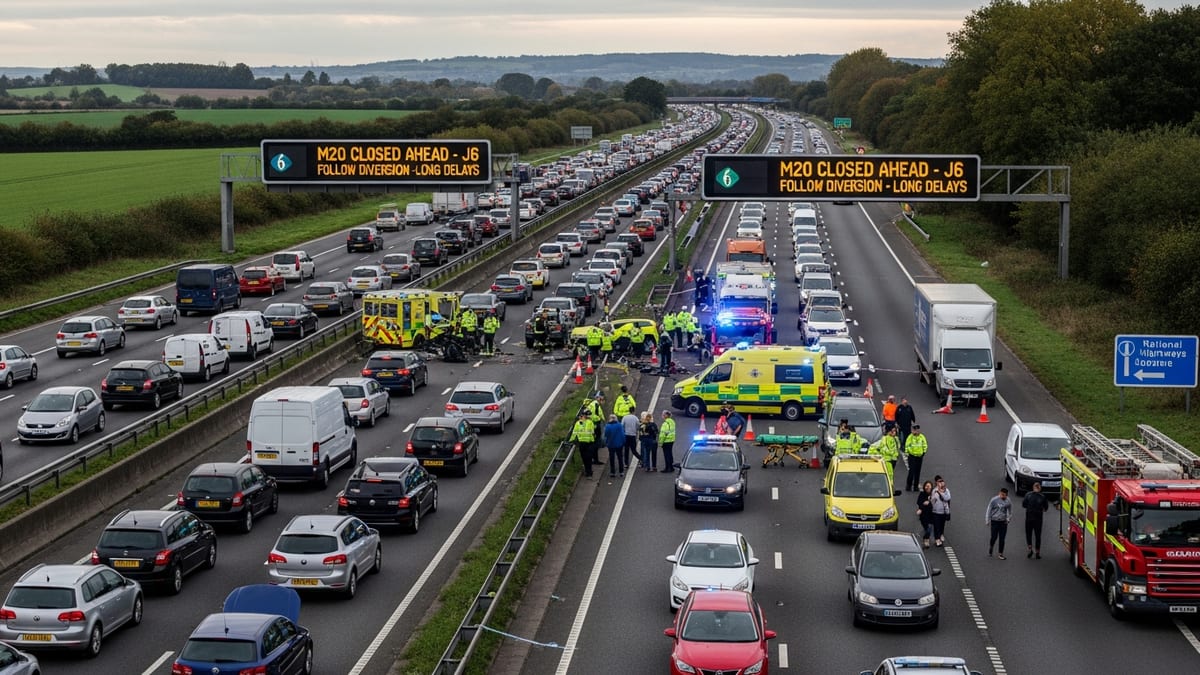
Hundreds of motorists and passengers were stranded for hours on the Kaduna–Abuja highway on Monday, November 9, after multiple crashes involving heavy-duty vehicles near Gidan Busa and Katari triggered a major traffic gridlock on one of northern Nigeria’s busiest intercity corridors.
Get the latest news straight to your inbox!
Chain of Crashes Turns Routine Journey Into All-Day Ordeal
Published reports indicate that the disruption began when several articulated trucks were involved in separate crashes around Gidan Busa, shortly before Katari, effectively sealing off key sections of the dual carriageway. Long vehicles trying to negotiate narrowed diversions reportedly jackknifed or broke down, leaving little room for smaller cars, buses and vans to maneuver.
Coverage from regional news outlets describes queues of vehicles stretching for several kilometres in both directions as the afternoon progressed. Some travellers reported spending much of the day in near-standstill conditions, with journey times on the roughly 160 kilometre route between Kaduna and Abuja stretching well beyond the usual two to three hours.
The affected section lies on a strategic link between the federal capital and Kaduna, a major gateway to the northwest. The gridlock therefore affected not only private motorists but also commercial buses, ride-hailing operators, logistics firms and traders moving foodstuffs and manufactured goods between cities.
Images and video clips shared on social platforms, referenced in multiple news reports, showed dense lines of fuel tankers, container trucks, intercity buses and smaller vehicles packed together, with many passengers stepping out to walk along the tarmac while engines remained idling.
Ongoing Reconstruction and Narrow Diversions Intensify Congestion
The crashes occurred against the backdrop of long-running reconstruction on the Kaduna–Abuja highway, which has been undergoing phased rehabilitation and expansion for several years. Publicly available information on the project shows that traffic is frequently diverted onto temporary lanes or half-width sections, narrowing the carriageway at several points.
News coverage of Monday’s incident highlights how these narrowed stretches increased the impact of the crashes. With heavy trucks funneled into single lanes and shoulders partially occupied by construction materials or earthworks, there was limited space to clear damaged or immobilized vehicles or to create alternative channels for traffic to pass.
Transport commentators cited in previous analyses of the corridor have repeatedly noted that long-distance freight traffic has grown faster than the capacity of many Nigerian highways, including Kaduna–Abuja. When reconstruction coincides with a high volume of articulated vehicles, minor collisions or mechanical failures can quickly translate into hours-long standstills for everyone behind them.
Recent road safety data made public by Nigeria’s federal road safety authorities continue to list the Abuja–Kaduna route among the country’s more accident-prone federal highways, together with other busy freight and passenger corridors where reconstruction and high truck volumes intersect.
Travellers Seek Escape Via Bush Tracks and Longer Alternative Routes
As the gridlock persisted into late afternoon and evening, some motorists attempted to avoid the stationary lines of traffic by leaving the main highway altogether. According to several online reports, vehicles were seen diverting onto rough bush tracks near the blocked section, forming improvised convoys through unfamiliar terrain in the hope of bypassing the crash site.
Witness accounts cited across local media describe drivers moving cautiously through narrow paths and farmlands without clear knowledge of where the tracks would rejoin a paved road. These improvised detours raised new risks, including the possibility of vehicles becoming stuck, colliding on single-lane paths or damaging suspensions and tyres.
Other travellers reportedly chose to turn back toward Kaduna and explore significantly longer alternative routes such as the Kachia to Bwari axis, even though public discussions about that option often mention both its extra distance and different security considerations. For commercial drivers working on fixed schedules, the choice was between remaining in gridlock with uncertain end time or accepting higher fuel costs and longer driving hours on alternative roads.
The disruption therefore had knock-on effects well beyond the crash site itself. Passengers missed business meetings, family events and connecting journeys, while commercial operators confronted the likelihood of delayed deliveries and, in some cases, requests for refunds or rescheduled trips.
Human and Economic Costs for Road Users Caught in the Standstill
For passengers and drivers caught between Gidan Busa and Katari, the most immediate concern was the long wait in high traffic density, often with limited access to water, food or restrooms. Publicly available reports from the scene noted that some families travelling with children or elderly relatives were forced to improvise, buying supplies from roadside vendors or rationing the provisions they had brought along.
Those transporting perishable goods, such as fresh vegetables or livestock, faced the risk that items would lose value or spoil as hours passed in stationary heat. Logistics firms and small-scale traders using the route as part of regional supply chains may now be counting the cost of missed delivery windows and damaged goods.
Observers of Nigeria’s transport sector have long underlined that such gridlocks carry broader implications for the economy. The Kaduna–Abuja highway is an essential link between the capital city and agricultural producers, manufacturers and service providers scattered across the northwest. Even when crashes do not produce large numbers of casualties, each prolonged standstill can slow the movement of inputs and finished products, contribute to higher operating costs and reduce the reliability of road-based travel for both business and leisure.
For travellers who are already concerned about safety and reliability on the corridor, the experience of spending six to eight hours or more on a journey that should take a fraction of that time is likely to reinforce perceptions of vulnerability on an already heavily scrutinized route.
Calls for Better Traffic Management, Road Safety and Traveller Information
The latest gridlock has reopened public debate about how to reduce the impact of crashes and roadworks on one of Nigeria’s most important highways. Commentaries in local media and from transport analysts point to a combination of factors: the density of heavy trucks, the condition of vehicles, the design of temporary diversions and the availability of rapid clearance teams that can remove crashed or broken-down vehicles before traffic bankups become unmanageable.
Some analysts argue that stricter scheduling of articulated vehicles during peak passenger travel periods could lower the risk of multiple truck crashes on narrow diversions. Others emphasize the value of clearer signage and advance warnings around construction zones, so that drivers can reduce speed in time and avoid sudden lane changes that may lead to collisions.
There is also renewed focus on the importance of timely information for travellers. In the absence of a widely used, official real-time traffic advisory system for the Kaduna–Abuja corridor, many drivers rely on word of mouth, social media posts and messaging groups to decide whether to start or continue a journey. Monday’s events illustrate how quickly conditions can change, leaving those already on the road with few options once they are committed to a congested stretch.
For now, public reporting suggests that traffic has gradually eased following efforts to clear the crashed vehicles and manage the backlog. However, the November 9 incident adds to a pattern of serious disruptions on the Kaduna–Abuja highway, reinforcing discussions about the need to accelerate reconstruction, improve truck safety standards and provide more reliable information to the many travellers who depend on this route.