


More news on this day
Nigeria’s domestic air travelers faced another difficult month in August 2026, as newly released regulator data shows widespread delays across the network, led by Air Peace and United Nigeria Airlines.
Get the latest news straight to your inbox!
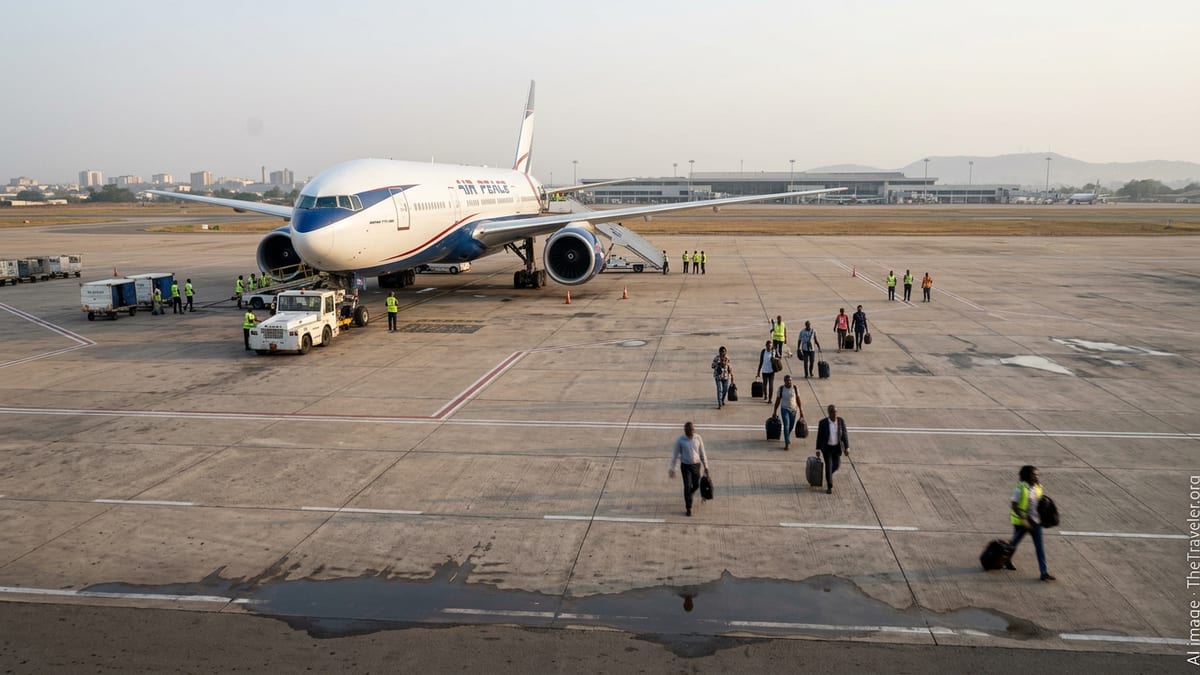
Regulator’s August snapshot shows delays dominated domestic schedules
Published summaries attributed to the Nigeria Civil Aviation Authority (NCAA) indicate that domestic airlines operated 7,961 flights in August 2026, with 4,765 of those flights delayed and 36 cancelled. The figures were circulated as part of the regulator’s monthly breakdown of flight disruptions for domestic operators.
The data suggests delays were not limited to a single hub or operator, with roughly six out of every 10 flights affected across the month. For travelers, that translates into missed meetings, disrupted connections, and longer time spent in terminals, particularly on peak travel days and popular city pairs.
While most disruptions were shorter, the month still included a meaningful number of long delays. The NCAA’s delay bands, as summarized in published coverage, show that a large share of delays fell under two hours, but hundreds stretched beyond that, including some lasting three hours or more.
Air Peace recorded the highest number of delayed flights
Across the month, Air Peace operated the largest volume of flights among domestic carriers and also posted the highest raw number of delays. Published breakdowns of the NCAA summary show Air Peace conducted 1,864 flights in August 2026 and recorded 1,330 delays, a delay rate reported at 71.4%.
Because Air Peace flies a large domestic schedule, the airline’s operational performance has an outsized effect on overall passenger experience. When a high-frequency carrier runs behind schedule, delays can cascade through later rotations, affecting aircraft availability and crew assignments across multiple routes during the same day.
The disruption picture also included cancellations. The NCAA’s monthly summary, as reported by Nigerian media, attributes seven cancellations to Air Peace in August, placing it among the carriers with the most cancellations for the month.
United Nigeria posted the worst delay rate and most cancellations
For United Nigeria Airlines, the NCAA data as reported indicates 943 delayed flights out of 1,231 operations in August 2026. Multiple published reports describe this as the worst delay rate among the listed carriers, reflecting a higher proportion of delayed flights compared with peers operating similar domestic patterns.
In addition to delays, United Nigeria is reported to have recorded eight cancellations in August, the highest number of cancellations among the carriers covered in the NCAA’s domestic disruption summary.
For passengers, a high delay rate often means repeated schedule uncertainty even when flights ultimately operate. Cancellations can be more disruptive still, particularly where same-day alternatives are limited, load factors are high, or the route relies on a small number of daily frequencies.
How long were the delays, and which other airlines stood out
Beyond counts, the NCAA summary categorized delays by duration. Reports based on the regulator’s data indicate 2,801 flights were delayed between 16 minutes and one hour, while 1,322 were delayed between one and two hours. Another 407 flights reportedly fell into the two-to-three-hour range, and 235 were delayed for three hours or more.
The NCAA summary also highlighted performance across other operators. Published coverage lists Enugu Air with 582 delays out of 878 flights, while Value Jet recorded 435 delays from 767 flights. Other airlines cited in media reports include Overland, Green Africa, Umza Air, Xe Jet, Binani, and additional domestic operators captured in the monthly tally.
At the better-performing end of the table, reports based on the NCAA figures point to Umza Air recording 52 delays out of 403 flights and no cancellations, while Xe Jet recorded 40 delays from 127 flights. Even those lower-delay totals, however, still reflect punctuality challenges in an environment where on-time performance can be affected by network congestion, aircraft utilization, and operational resilience.
What the data means for travelers and what to watch next
For travelers booking within Nigeria, the August figures reinforce the value of planning for buffer time, especially for time-sensitive trips such as same-day events or onward international connections. Even when most delays are under two hours, repeated smaller disruptions can still break tight schedules and complicate ground transport plans on arrival.
Published coverage also points to increased regulatory attention on passenger rights and service standards in the wider aviation market. In separate consumer-protection related reporting in September, the NCAA was reported to have issued enforcement actions tied to complaint resolution and compensation processes, reflecting a broader push toward compliance with existing rules.
Going into the final quarter of the year, travelers and industry observers are likely to watch whether monthly disruption summaries improve as airlines adjust schedules, manage fleet availability, and build stronger contingency planning. The NCAA’s continued publication of delay and cancellation statistics also raises the reputational stakes for carriers competing for Nigeria’s domestic passengers.