


More news on this day
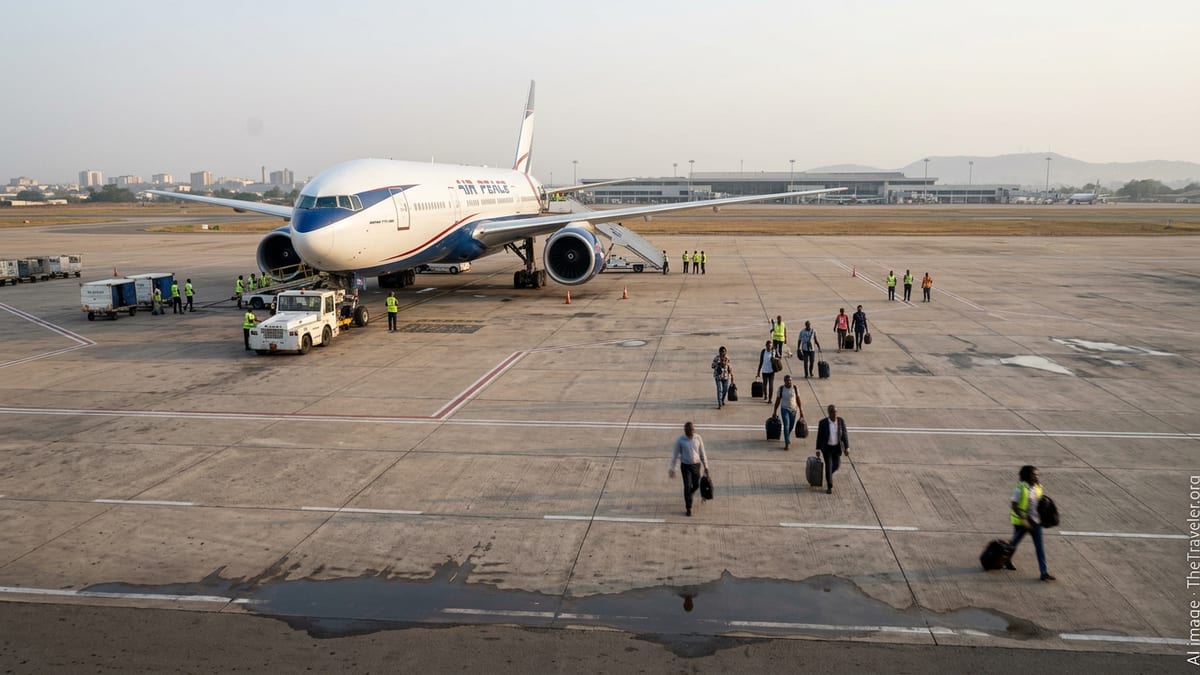
Newly released figures from the Nigeria Civil Aviation Authority show that Air Peace and United Nigeria Airlines recorded the highest flight delays among domestic carriers in August 2026, underscoring persistent reliability challenges in the country’s busy local aviation market.
Get the latest news straight to your inbox!
Regulator’s Data Highlights Widespread Disruptions
Publicly available data from the Nigeria Civil Aviation Authority for August 2026 indicate that domestic airlines operated 7,961 scheduled flights during the month, with 4,765 of those services arriving or departing later than planned. The numbers point to a sector in which delays affected roughly six out of every ten operations, despite ongoing efforts to improve on-time performance.
Within that total, Air Peace and United Nigeria emerged as the carriers with the most significant disruption records. Air Peace, the country’s largest domestic airline by volume, operated 1,864 flights and delayed 1,330 of them, giving it the highest absolute number of delays. United Nigeria ran 1,231 services and delayed 943, the highest proportion of delayed flights among the major carriers captured in the report.
Other airlines also featured prominently in the disruption statistics. Enugu Air recorded 582 delays out of 878 flights, while ValueJet posted 435 delayed services out of 767 operations. Aero Contractors and Ibom Air had 246 and 254 delayed flights respectively, out of fewer than 600 operations each, reinforcing how widespread punctuality issues have become across operators.
The NCAA figures also list 36 cancellations in August, a smaller share of total operations but still a disruptive factor for passengers facing last minute schedule changes, missed connections and overnight stays at airports.
Delay Ratios Put Spotlight on Air Peace and United Nigeria
The new data underline two different dimensions of the delay problem. Air Peace recorded the highest absolute number of delayed flights, largely reflecting its position as the country’s biggest domestic operator with the broadest route network and highest frequency. Its 1,330 delayed flights translate to a delay rate of just over 71 percent, meaning more than seven in ten services failed to depart or arrive on schedule.
United Nigeria showed an even higher disruption ratio. With 943 delays out of 1,231 flights, its delay rate stands at nearly 77 percent, giving it the worst punctuality profile among the high volume carriers listed in the August summary. The same report indicates that United Nigeria also recorded the highest number of cancellations for the month, with eight flights scrubbed from the schedule.
By contrast, some smaller or newer airlines posted fewer delays in both absolute and relative terms, although the NCAA numbers show that no major domestic operator was immune to disruption. The regulator’s breakdown suggests that even carriers with stronger punctuality reputations still faced weather, operational and infrastructure constraints that pushed flights beyond their scheduled times.
The combined figures for Air Peace and United Nigeria alone account for more than 2,200 delayed services in August, nearly half of all disruptions recorded across the domestic network. That concentration has renewed debate around operational resilience, schedule planning and fleet availability at the country’s best known private airlines.
Operational and External Factors Behind August Disruptions
The August statistics were published against the backdrop of a turbulent period for Nigerian aviation. Earlier in the month, industrial action by aviation unions in Lagos and Abuja disrupted operations at key hubs, affecting Air Peace, United Nigeria and several other carriers. Reports indicate that picketing activities and access restrictions at airport facilities led to knock-on delays as airlines sought to reassign aircraft and crew.
Separate incidents also weighed on schedule reliability. In mid August, a runway excursion involving an Enugu Air flight at Benin Airport triggered a temporary runway closure, prompting airlines including Air Peace and United Nigeria to suspend services to the city. With aircraft unable to land or depart, operators were forced to reroute equipment and adjust schedules, compounding delays elsewhere in their networks.
Carriers have also been contending with longstanding structural challenges. High fuel prices, currency pressures, and maintenance bottlenecks have narrowed the margin for on time performance, particularly for airlines operating older or heavily utilized fleets. When a single aircraft is taken out of service for technical reasons, the impact can cascade across multiple flights in a single day.
Airport infrastructure constraints remain another factor. Congested terminals, limited ground handling resources and airspace management issues can all contribute to aircraft spending longer on the ground than planned, especially during peak morning and evening departure banks at busy airports such as Lagos and Abuja.
Implications for Passengers and Airline Competitiveness
For passengers, the August delay figures translate into missed meetings, disrupted family plans and increased travel uncertainty across Nigeria’s domestic network. Consumer advocates have long argued that persistent delays raise the effective cost of air travel, as travelers build in extra time buffers, pay for additional nights in hotels or purchase more expensive fully flexible tickets to hedge against schedule risk.
Frequent disruptions also pose image and competitiveness issues for airlines that are seeking to expand regionally and attract higher yielding corporate and international connecting traffic. Punctuality is a key metric for global travel managers and airline partners considering code share and interline arrangements, and consistent delays can weaken the case for deeper commercial cooperation with Nigerian carriers.
Industry analysts note that some passengers have begun to shift loyalty to carriers perceived as more reliable on key trunk routes, while others are exploring alternatives such as overnight road travel on shorter city pairs despite security and safety concerns. Over time, that kind of demand shift can influence route profitability and fleet allocation decisions for domestic airlines.
The NCAA’s August summary is also likely to inform ongoing policy discussions in Abuja around consumer protection rules, compensation frameworks and the enforcement of existing standards on passenger care during disruptions. Lawmakers and regulators have previously highlighted the broader economic impact of delays, citing lost productivity and higher operating costs across the travel and tourism value chain.
Regulatory Scrutiny and Industry Response
The latest data arrive at a time when the NCAA is under growing pressure to enforce existing regulations on flight delays and cancellations. Nigeria’s aviation regulations set out minimum obligations for carriers when services are disrupted, including the provision of information, refreshments, communication assistance, reimbursement in some circumstances and hotel accommodation during extended overnight delays.
Recent public communications from the authority have signaled closer monitoring of on time performance and passenger handling, particularly for airlines with repeated patterns of disruption. In previous circulars and media briefings, the regulator has stressed the need for carriers to refresh their fleet plans, improve maintenance regimes and invest in crew and operations control systems that can better absorb shocks.
Airlines, for their part, have pointed to external pressures such as currency volatility, rising costs for spares and insurance, and infrastructure gaps that are largely outside their direct control. Some have introduced schedule adjustments, consolidating lightly booked flights and tweaking departure times in an effort to create more realistic block times and reduce the incidence of late operations.
As the busy end of year travel season approaches, observers say the August 2026 numbers are likely to serve as a reference point for both regulators and operators. The scale of delays recorded for Air Peace, United Nigeria and other carriers has reinforced calls for a coordinated approach that combines stricter compliance with consumer protection rules, targeted investment in infrastructure and more transparent communication with passengers when disruptions occur.