


More news on this day
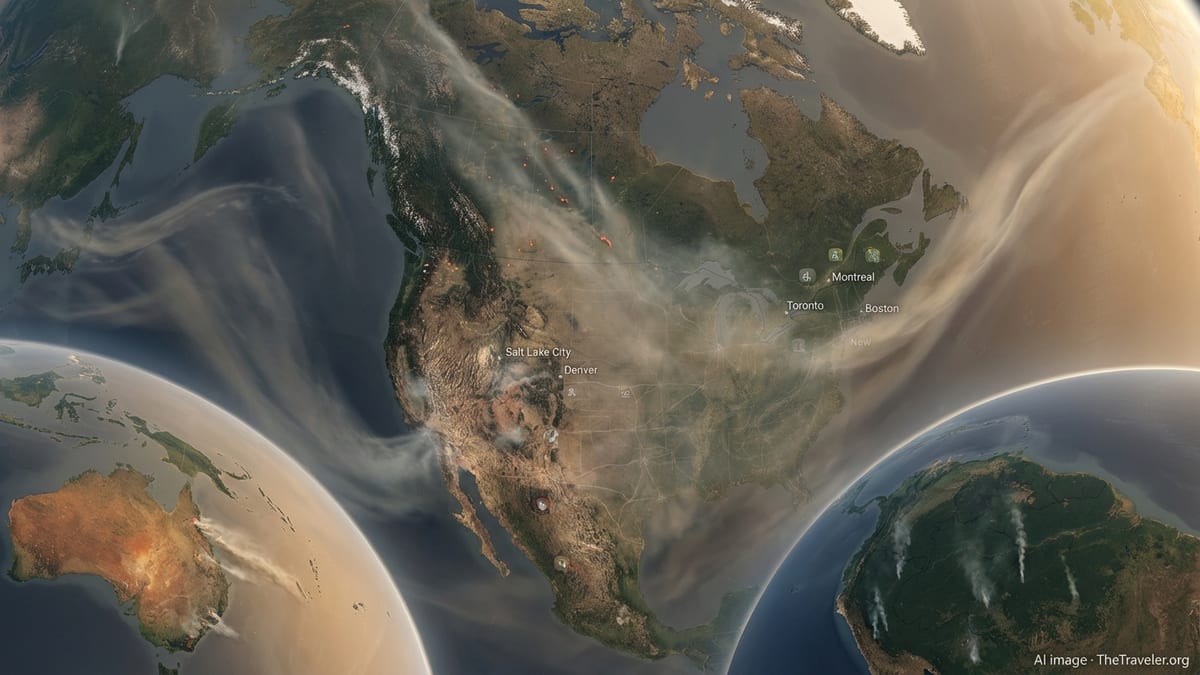
Wildfire smoke drifting across Oregon in early September is prompting fresh travel caution as destination managers, transportation agencies, and public-land operators emphasize rapidly changing conditions that can disrupt itineraries, reduce visibility on highways, and force short-notice closures across popular recreation regions.
Get the latest news straight to your inbox!
What’s driving the warning: smoke, visibility, and fast-changing closures
Oregon’s statewide travel messaging in September has increasingly focused on smoke impacts that go beyond discomfort, including reduced driving visibility and the potential for sudden detours when fire activity escalates near key corridors. Publicly available state guidance has urged travelers to plan for shifting conditions, keep vehicles fueled or charged, and be ready for delays tied to closures and speed reductions near active fire areas.
At the center of the traveler-facing advice is the idea that impacts are often localized even during widespread smoke events. Travel Oregon’s wildfire safety travel alert, last updated September 11, 2026, frames Oregon as a large state where conditions can differ dramatically by region on the same day, while listing remaining large, active fires that may affect travel in the Mt. Hood/Gorge region, Central Oregon, and parts of Eastern Oregon.
For many trips, the bigger day-to-day disruption is smoke. Oregon DEQ’s public guidance around smoke advisories emphasizes limiting outdoor time when smoke is present and using recirculation settings in homes and vehicles to reduce indoor exposure, reinforcing why travelers are being encouraged to treat air quality as a trip-planning input rather than an afterthought.
Tourism business fallout: cancellations, shortened seasons, and revenue pressure
Smoke-driven travel changes are landing during what is typically one of Oregon’s most valuable windows for outdoor recreation and shoulder-season getaways. A recent Oregon State University analysis highlighted in regional coverage connected longer periods of poor air quality with measurable lodging revenue losses, suggesting that sustained smoke events can do more economic damage than brief episodes that visitors may simply wait out.
One high-profile example has been Mt. Hood Meadows, which ended its summer operations early for the remainder of the season due to wildfire impacts tied to the Grasshopper Fire. Published resort updates state that the area had faced smoke impacts since late July and that an evacuation status contributed to the decision to close summer activities rather than attempt intermittent openings.
While not every destination faces direct evacuation zones, the spillover effects can be significant. When visitors cancel mountain and high-desert itineraries, demand can shift toward areas with clearer air, increasing last-minute competition for lodging and indoor attractions in other parts of the state and complicating staffing and inventory decisions for operators across multiple regions.
Where travelers are checking conditions: air quality tools and road status
The most common trip-planning workflow now combines air quality mapping with real-time road status. Travel Oregon highlights the AirNow Fire and Smoke Map for smoke conditions and points travelers to TripCheck for road conditions year-round, reflecting the reality that smoke can affect both health and visibility, while fire activity can trigger closures with little notice.
Oregon DEQ also directs the public to its online Air Quality Index and the OregonAir app for current conditions, alongside advisory details via the Oregon Smoke Blog. For travelers, these tools can clarify whether a destination is in a “good enough” window for outdoor plans, or whether it is smarter to pivot toward indoor options or a different region for the day.
On the transportation side, Oregon’s emergency travel messaging has also stressed basic preparedness in case smoke, closures, or congestion extend drive times. The guidance encourages travelers to anticipate reduced visibility and to treat wildfire season as a period when road conditions can change quickly, particularly near active fire zones.
Public lands and recreation: restrictions can outlast the flames
For visitors planning hikes, dispersed camping, river days, and scenic drives, recreation access is increasingly shaped by temporary restrictions and fire-prevention orders. The Bureau of Land Management’s Oregon-Washington fire restrictions page shows a rolling set of closures, rescissions, and partial rescissions that can vary by district and date, making it important to confirm rules specific to the exact trailhead or recreation site rather than relying on general statewide assumptions.
BLM has also issued district-specific orders, including a fire prevention order for the Medford District dated September 4, 2026, with an effective date of September 5, 2026, and an “until further notice” timeframe. For travelers, these kinds of orders can mean that campfires, certain equipment, or access to specific areas may be restricted even when skies look clearer in town.
In practice, smoke can also reduce the quality of signature Oregon experiences without fully shutting them down. That is pushing some visitors toward coastal and urban itineraries where indoor dining, museums, and covered attractions can fill gaps when outdoor air quality is poor, while others are rescheduling trips to later in the fall when conditions often become more stable.
How travelers are adjusting trips right now
Travel Oregon’s current wildfire guidance emphasizes that travelers should check whether their exact destination is affected and make decisions based on localized alerts rather than broad regional headlines. That approach aligns with how smoke behaves, with wind shifts creating sharp differences between nearby communities and changing conditions over hours, not days.
For travelers who still plan to go, the most practical adjustments are itinerary flexibility and indoor fallback options. DEQ’s smoke advisory recommendations, such as reducing vigorous outdoor activity and using air-conditioned public spaces for relief, translate into travel choices like swapping long hikes for short walks, prioritizing indoor tastings or exhibits, and booking lodging with reliable air conditioning and filtration where possible.
For those deciding whether to postpone, the key limitation is predictability: fire behavior, smoke transport, and closures can change quickly, and not all tourism businesses can operate normally during prolonged smoke. The current Oregon travel warning environment is less about a single statewide shutdown and more about planning trips that can pivot in real time as maps, advisories, and access rules evolve.