


More news on this day
A disruptive passenger was removed from an American Airlines flight in Miami after published coverage described an allegation of indecent conduct onboard, the latest in a series of unruly-passenger episodes drawing renewed attention to airline and federal enforcement tools.
Get the latest news straight to your inbox!
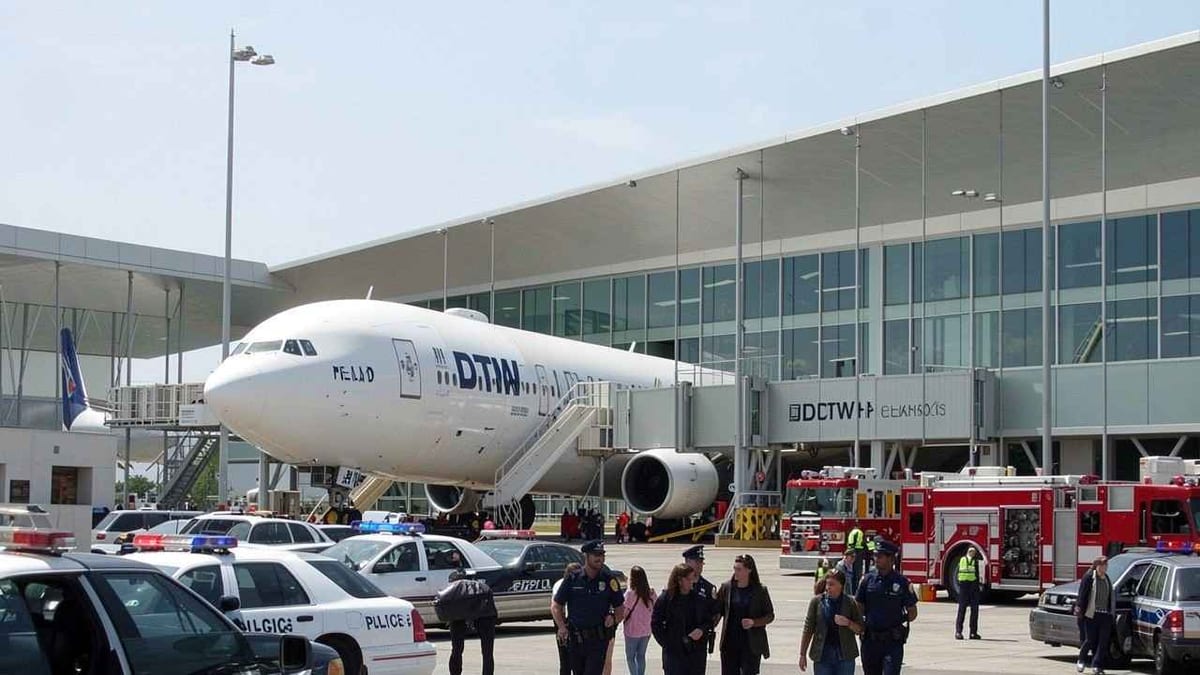
What reportedly happened on the Baltimore to Miami flight
Published coverage identifies the incident as involving American Airlines Flight 1779, a scheduled service from Baltimore/Washington International Thurgood Marshall Airport to Miami International Airport. Reporting describes the flight arriving in Miami and being met by law enforcement due to what the airline characterized as a disruptive customer.
Accounts circulating in multiple outlets tie the disruption to an allegation of indecent conduct during the flight. Details vary by publication, but the common thread is that the situation was handled on arrival rather than through a diversion, with officers meeting the aircraft at the gate and the passenger being removed after landing.
Some reporting points to inflight operational messaging as the basis for the claim, describing a flight attendant report that a passenger in a specific seat undressed and engaged in sexual behavior visible to nearby travelers. Because that level of detail relies on secondary publication of operational communications, many of the most granular descriptions should be treated as allegations rather than established fact.
How airlines typically respond when behavior becomes disruptive
Commercial airlines generally treat in-cabin behavior as a safety issue when it interferes with crew duties, impacts other passengers, or creates a disorderly environment. Response options can range from verbal warnings and seat changes to requesting law enforcement to meet the aircraft on arrival. Diversions are usually reserved for scenarios where safety risks escalate or crew members can no longer manage the situation.
American Airlines’ Conditions of Carriage, which were updated in August 2026, outline broad authority to refuse transport or remove passengers under certain circumstances, including when a person’s behavior threatens the well-being of crew or disrupts onboard operations. Airline policies do not need to mirror criminal statutes to trigger removal; the threshold can be operational and safety-driven.
For travelers, the practical reality is that crew instructions are treated as mandatory. Even when an incident is not violent, behavior that causes a cabin disturbance can lead to law enforcement involvement upon arrival, missed connections for others, and lengthy delays while reports are completed and authorities board the aircraft.
Potential legal exposure: civil penalties and criminal statutes
Unruly behavior in flight can carry consequences well beyond being removed at the gate. The Federal Aviation Administration investigates unruly-passenger incidents that airlines report to the agency, and it emphasizes that interfering with a crewmember’s duties violates federal law.
Federal law includes provisions that address interference with crew members and attendants, with potential criminal penalties that can include imprisonment for serious cases. Separately, civil penalties can apply as well. Publicly available federal statute language also references civil penalties for actions that physically or sexually assault or threaten to assault members of the flight or cabin crew, with specified maximums that can reach tens of thousands of dollars per violation.
It is not automatic that every disruptive episode becomes a criminal case. Outcomes vary widely based on conduct, evidence, whether anyone was harmed, and how prosecutors evaluate the incident. But the legal backdrop is one reason airlines increasingly frame these events in safety terms and escalate quickly when conduct crosses clear lines.
A broader pattern of recent unruly-passenger incidents
The Miami incident arrives amid other widely reported disruptions in early September 2026, including an American Airlines flight from Dallas to Newark that was diverted to Baltimore after a passenger was restrained by other travelers using duct tape and restraints, according to published coverage. That case drew attention for the unusual method of restraint and for how quickly a disturbance can force a diversion.
Separately, recent reporting described a United Airlines flight from Milan to Newark that diverted to Bangor, Maine, where a passenger was removed following allegations of physical aggression toward crew members. While each incident differs, the recurring theme is that flight crews and dispatch teams are managing behavior-related disruptions alongside heavy travel demand and tight schedules.
The FAA has said the overall rate of unruly passenger incidents is far below the early 2021 peak, but it continues to warn that increases still occur and that zero-tolerance enforcement remains in effect. For travelers, the pattern shows that disruptive conduct is increasingly likely to trigger swift operational action: restraint, diversion, police response at the gate, or post-flight enforcement.
What travelers should know about reporting and onboard boundaries
When allegations involve sexual or indecent conduct, the impact on nearby passengers can be immediate and distressing, particularly in a confined cabin environment. Travelers who witness misconduct typically alert a flight attendant, and crew members then decide whether to isolate the person, stop alcohol service, move passengers, or request law enforcement on arrival.
While airlines rarely release detailed accounts of in-cabin incidents, passengers should expect that crew reports and operational logs may be used in follow-on investigations. Even if a flight is not diverted, an aircraft meeting by law enforcement can still lead to extended time at the gate as officers board, speak with crew members, and remove the individual.
For anyone traveling with children or in groups, the practical takeaway is that cabin conduct rules are not only about courtesy. They are enforced as part of aviation safety, with consequences that can include removal, denial of future travel, and potential federal enforcement depending on the behavior alleged.