


More news on this day
Air travel across Asia and the Middle East is facing another wave of turbulence as aviation data providers and airport dashboards show 621 flights canceled and more than 5,100 delayed in recent days, disrupting schedules at major hubs including Tokyo, Jakarta, Manila, Doha and Beirut and affecting carriers such as Shenzhen Airlines, FlyDubai, AirAsia, Garuda Indonesia and others.
Get the latest news straight to your inbox!
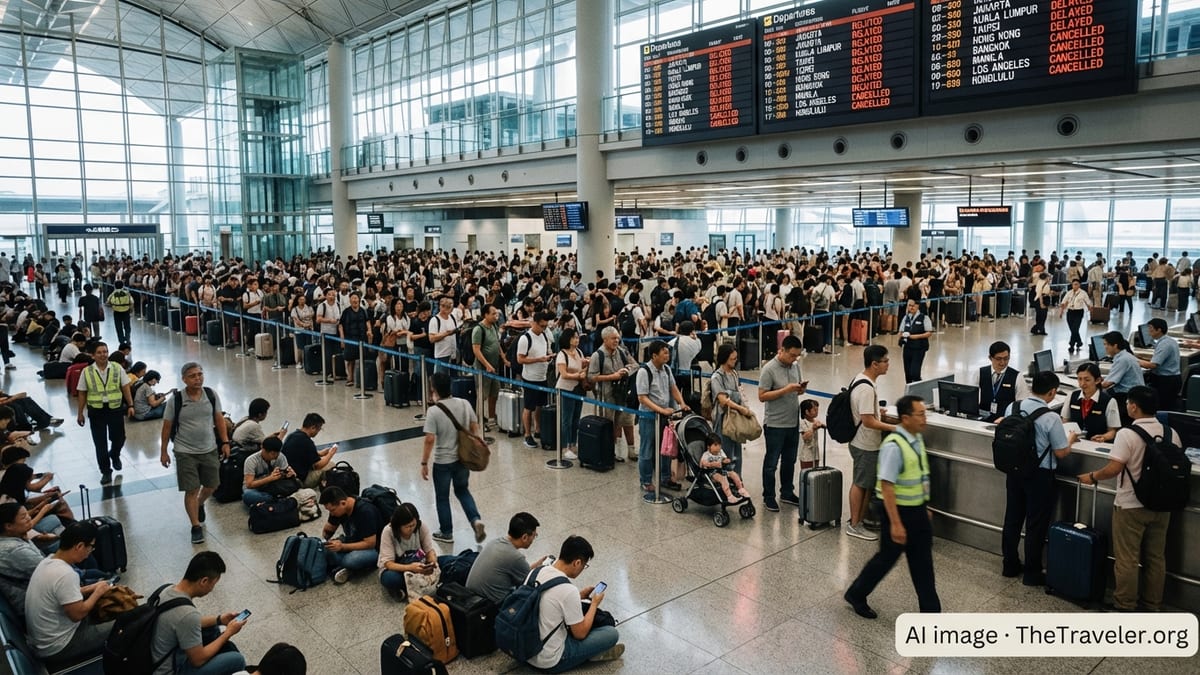
Regional Tensions and Weather Combine to Disrupt Schedules
The latest figures highlight how a combination of regional insecurity, shifting airspace restrictions and seasonal weather patterns is straining operations across some of the world’s busiest corridors. Publicly available information indicates that the current spike in cancellations and delays is not confined to a single country, but is instead spread across key gateways from Northeast Asia to the Gulf, with knock-on effects throughout airline networks.
In the Middle East, ongoing conflict and periodic airspace closures continue to ripple through flight plans, especially on routes touching Lebanon and Gulf states. Earlier schedule changes by major carriers, including extended suspensions of services to Beirut through late June in response to the regional security picture, set the stage for the current round of disrupted operations. Subsequent timetable updates and live airport boards show that while some flights are operating, a reduced schedule and frequent adjustments remain the norm.
In Asia, the onset of the summer rainy season has added another layer of complexity. Monsoon-related thunderstorms and low visibility episodes in parts of Southeast and East Asia regularly force holding patterns, diversions and last-minute ground delays. Industry analyses of past seasons suggest that this period routinely brings an uptick in weather-related disruptions, but this year’s volatility is interacting with already fragile regional networks, amplifying the number of passengers affected.
Together, these overlapping factors help explain why cancellations and delays are appearing in clusters across multiple hubs, rather than being limited to one-off incidents or single-airline issues. For travelers, the result is an increasingly unpredictable operating environment, even on routes that have historically been seen as reliable.
Tokyo, Jakarta and Manila See Fresh Operational Strain
Tokyo’s airports have remained structurally robust, yet scheduled and planned cancellations into the Japanese capital underscore how carriers are reshaping their summer timetables. Updated seasonal schedules published by several Asian airlines show selective reductions on Japan services, including targeted cancellations on certain Hong Kong to Tokyo frequencies on specific June dates. While many flights continue to run, these advance cuts translate into fewer options and fuller aircraft on the services that remain.
In Jakarta, Indonesia’s Soekarno Hatta International Airport has been hit by a fresh wave of same-day disruption. Data compiled from live departure and arrival boards on 9 June points to a concentration of delays and a double-digit number of cancellations in a single 24-hour period, involving both domestic operators and foreign carriers. Reports indicate that airlines ranging from Indonesian full-service brands to regional Asian players have been forced to juggle rotations, with late-arriving aircraft and congested turnaround windows contributing to knock-on delays.
Low-cost and regional carriers such as AirAsia are particularly exposed when schedule buffers are tight. With aircraft typically flying multiple short-haul sectors per day around Southeast Asia, even a modest delay leaving Jakarta can cascade through the network, affecting later departures from Manila, Kuala Lumpur or Bangkok. Publicly available performance data across recent days shows numerous services departing behind schedule, illustrating how disruptions at a single hub can quickly become a cross-border problem.
Manila, meanwhile, remains under pressure as Philippine carriers continue to adjust their Middle East operations. Earlier announcements of route suspensions on Manila to Dubai and Doha sectors because of security concerns and cost pressures have fragmented connectivity for overseas workers and leisure travelers. Newer schedule filings show some Doha services returning in coming months, but with capacity still below pre-disruption levels, any additional operational hiccups elsewhere in Asia can quickly exhaust the remaining slack in the system.
Doha and Beirut Caught Between Conflict and Connectivity
In the Gulf, Doha’s Hamad International Airport continues to function as a key connecting hub linking Asia with Europe and Africa, yet the network around it is under visible strain. Aviation industry documents and advisory notes describe a pattern of reroutings around sensitive airspace and the temporary limitation of certain flight corridors, requiring airlines to adopt longer routings and more complex flight planning. While large-scale cancellations linked directly to Doha’s airspace are not currently dominant in the data, scattered reports from travelers point to isolated long-haul cancellations and rebookings, especially on services to the Philippines and other Asian destinations.
Qatari and partner airlines are attempting to keep core trunk routes, such as those linking Doha with Manila and major South Asian cities, intact. Flight schedule aggregators show upcoming non-stop services between the Qatari capital and the Philippine capital still in place for mid-June and beyond, suggesting that airlines are prioritizing high-demand flows. Even so, the broader conflict backdrop means schedules remain subject to late changes, and passengers connecting via Doha are being urged by travel advisories and airline bulletins to monitor their bookings closely.
Beirut’s Rafic Hariri International Airport stands at the other end of this fragile corridor, where the impact of regional hostilities has been particularly visible. Earlier months saw clustered waves of cancellations by a mix of regional and European airlines as hostilities escalated, with some Gulf and European carriers suspending all services through at least late June. Recent coverage from regional outlets indicates that the airport technically remains open, yet traffic is much thinner than normal, and routine timetable adjustments continue as carriers react to evolving risk assessments and airspace restrictions.
Publicly available departure boards for early June show selected flights between Beirut and Doha still listed as operating, while others, particularly on certain foreign carriers, remain absent from near-term schedules. This patchwork of service has created a challenging environment for passengers seeking to travel between Lebanon and the wider Asian region, as traditional one-stop options via Gulf hubs have been thinned out or temporarily removed.
Impact on Airlines from Shenzhen to FlyDubai and Garuda
The disruption is touching a broad array of airlines, from regional giants to niche operators. China’s Shenzhen Airlines, which uses a mix of Chinese and regional Asian destinations to feed its hubs, faces the same weather-related and airspace challenges as its peers. When storms or congestion strike at major waypoints in Japan or Southeast Asia, flights connecting to or from Chinese secondary cities can be pushed into delay territory, complicating onward connections.
FlyDubai, operating out of Dubai’s hub close to the current conflict zone, has had to navigate a shifting pattern of airspace permissions and overflight constraints since the early stages of the regional crisis. Industry circulars on Middle East airspace closures describe periods during which flights to certain destinations, including Beirut, were halted entirely for extended stretches. While some services have since been restored or rerouted, these earlier suspensions contributed to the cumulative figure of canceled flights and continue to influence how airlines draft contingency-heavy schedules.
In Southeast Asia, AirAsia’s dense point-to-point network means the carrier is especially sensitive to bottlenecks at busy airports such as Jakarta and Manila. Operational data highlighted in recent coverage of Soekarno Hatta shows that when local disruptions occur, AirAsia flights can appear alongside those of rival carriers in lists of delayed departures, reflecting the carrier’s heavy reliance on fast turnarounds and high aircraft utilization.
Garuda Indonesia, the country’s flag carrier, has likewise had to contend with sporadic congestion and weather variability. Flight status services tracking recent Garuda operations on domestic routes out of Jakarta show generally punctual performance on some key sectors, yet even national carriers are not immune to last-minute holding patterns or schedule shuffles when storms or air traffic control constraints converge over major hubs. For Garuda and its regional partners, maintaining reliability amid such volatility requires continual adjustment of block times, crew rosters and spare aircraft positioning.
What Travelers Can Expect in the Days Ahead
The headline numbers of 621 cancellations and more than 5,100 delays illustrate the scale of current disruption, but the on-the-ground picture is evolving by the hour. Airlines continue to tweak schedules in response to changing demand, operational capacity and geopolitical developments, particularly on routes that intersect with the Middle East. Advance schedule changes for Japan services, rolling disruption statistics at Jakarta and ongoing uncertainty around Beirut flights all suggest that travelers should prepare for continued variability across at least the short term.
Consumer advocates and travel advisers point to several recurring patterns in recent weeks. Flights scheduled far in advance through conflict-adjacent hubs are more likely to be adjusted or retimed, and carriers are increasingly consolidating capacity on high-demand days while trimming weaker frequencies. At the same time, many airlines have maintained or expanded flexible rebooking and voucher policies introduced during earlier waves of disruption, giving passengers more room to maneuver when plans change at short notice.
Across Asia and the Middle East, the enduring appeal of major hubs such as Tokyo, Jakarta, Manila, Doha and Dubai means that airlines and aviation authorities are under pressure to keep skies open as safely and predictably as possible. For now, publicly available information suggests that most airports remain operational, but with a thinner margin for error and greater sensitivity to shocks. Travelers are being encouraged by industry guidance to allow extra time, keep contact details updated with airlines and monitor real-time flight information on the day of travel.
As the peak summer season approaches, the balance between demand and operational resilience will determine whether disruption figures recede or climb higher. With regional tensions unresolved and monsoon weather patterns only just beginning, Asia’s air passengers may need to brace for a prolonged period of uneven reliability across the network.