


More news on this day
A recent Union Pacific freight train derailment in Austin is being linked to a malfunction in a distributed power unit, according to emerging investigative findings that are drawing fresh attention to the safety of long, heavy trains moving through dense urban corridors.
Get the latest news straight to your inbox!
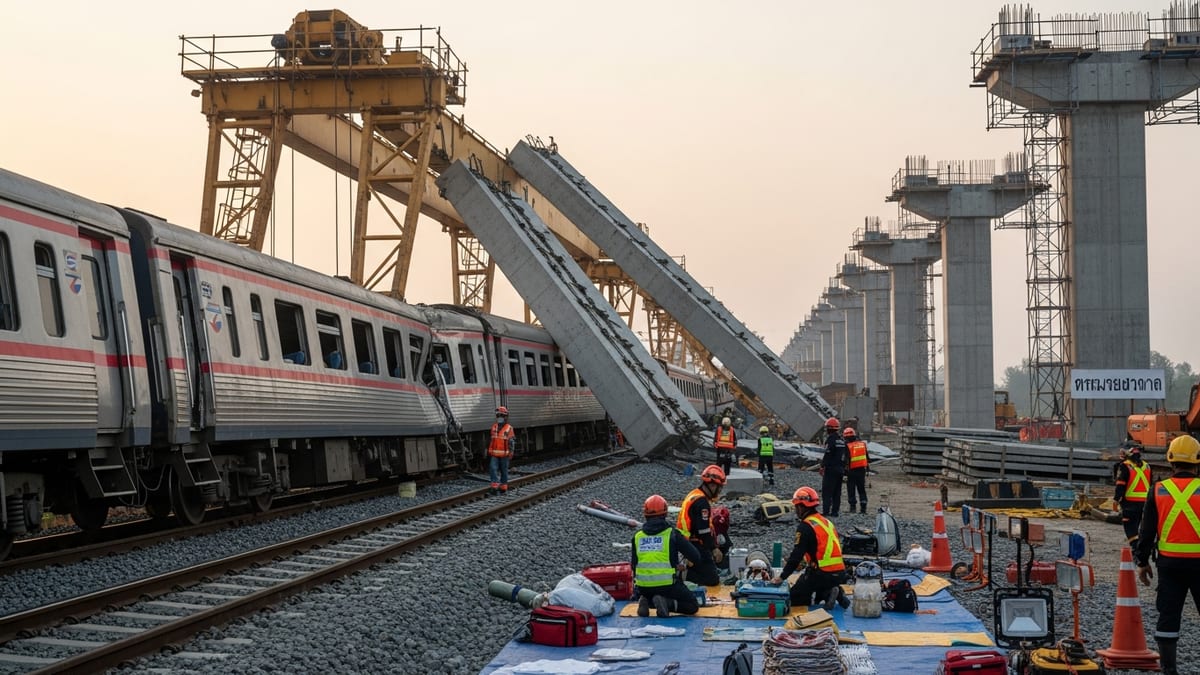
Early-Morning Freight Derailment Snarls Downtown Austin
The derailment occurred in the early hours near downtown Austin, where Union Pacific tracks cut through a mix of commercial and residential districts and run close to key commuter routes. Publicly available information shows that multiple intermodal cars left the rails, some tipping onto their sides, blocking the single main track and closing adjacent streets for much of the day.
Initial reports from local agencies and regional media indicated that no injuries were recorded and that the train was carrying mixed freight, including containerized consumer goods. Hazardous materials were not identified among the derailed cars, limiting the incident’s immediate environmental and public health impact.
The location of the derailment, close to busy surface streets and a tight curve in the line, amplified its visibility for residents and commuters. Photos and descriptions shared in local coverage and online forums showed at least half a dozen double-stack container platforms off the track, with rail cranes and heavy trucks later brought in to clear the wreckage.
Rail traffic through the area was temporarily halted while crews removed damaged cars, inspected track components, and installed replacement rail. According to published coverage, freight operations resumed within about a day, though residual delays persisted on connecting routes.
DPU Failure Identified as Key Factor
Subsequent technical reviews indicate that a failure involving a distributed power unit, or DPU, played a central role in the Austin derailment. DPUs are remotely controlled locomotives placed mid-train or at the rear to help manage power, braking, and in-train forces on long consists.
According to information shared through industry reporting and summary findings referenced by rail safety databases, data downloads from the locomotives and event recorders suggest that one of the remotely controlled units did not respond as expected during a braking sequence approaching the constrained downtown alignment. That discrepancy appears to have contributed to abrupt changes in buff and draft forces along the train.
Experts cited in public analyses of similar incidents note that when a DPU fails to synchronize with the lead locomotives, large compressive forces can build up rapidly, particularly on curves or grades. If those forces exceed what the rail, track structure, or couplers can safely handle, cars can lift, jackknife, or roll over, increasing the risk of a derailment.
In the Austin case, preliminary interpretations of the available data suggest that a miscommunication or malfunction in the DPU control link led to uneven braking between the head end and the mid-train power. That imbalance likely intensified slack action at a critical point in the track geometry, setting off the chain of events that put several cars on the ground.
Spotlight on Long Trains and Urban Rail Safety
The Austin derailment has added to national scrutiny of long freight trains operating through growing metropolitan areas. Publicly accessible Federal Railroad Administration accident reports and prior Union Pacific case summaries document how train makeup, DPU placement, and slack management have figured in other derailments, including events where heavy buff forces were identified as the primary cause.
Railroads argue that longer trains supported by DPUs improve efficiency by reducing fuel use and cutting the number of train movements required to move the same volume of cargo. However, safety advocates and some local officials around the country have raised concerns that these operational gains may come with heightened risks at complex junctions, sharp curves, and congested urban bottlenecks.
In Austin, the derailment occurred on a segment of track that residents have previously described in public forums as a trouble spot because of tight curvature, noise, and proximity to busy streets. The incident has renewed questions about how frequently long freight consists should be routed through downtown, and whether certain stretches of track should be subject to additional speed or train-length limitations when DPUs are in use.
According to broader industry analyses, distributed power systems themselves are not inherently unsafe and are widely used across North America. The Austin derailment instead highlights the technical and operational challenges of ensuring consistent communication, software reliability, and effective train handling when multiple locomotive sets are spread over thousands of feet of cars.
Ongoing Federal and Railroad Investigations
The derailment has triggered parallel inquiries by Union Pacific and federal regulators. Publicly available information indicates that investigators are reviewing locomotive event recorder data, dispatch logs, and inspection records, along with any fault messages tied to the DPU system in use on the Austin train.
Typical post-derailment analyses in similar cases have focused on how the train was made up, where powered units were placed, and how braking and throttle changes were managed in the minutes before the cars left the rails. For the Austin event, those questions are likely to center on the precise timing and nature of the DPU failure and whether any pre-existing warnings or diagnostic alerts were present but unresolved.
Regulatory and carrier findings in other distributed power derailments, reflected in federal summary reports, have sometimes led to recommendations or internal rule changes covering software updates, more conservative operating practices on grades and curves, and additional training for crews managing long, heavy trains with mid-train or rear-end locomotives.
Any formal conclusions about the Austin derailment are expected to influence Union Pacific’s internal standards for DPU use on its Austin Subdivision and potentially other busy corridors in Texas. They may also help shape future guidance from federal agencies on how best to monitor and manage distributed power configurations to reduce the chance of similar failures.
Community, Commuter, and Policy Implications in Austin
While the physical cleanup of the Austin derailment proceeded quickly, the incident has fueled ongoing discussions about freight rail’s footprint in the urban core. Residents posting in local forums and speaking through community groups have expressed concern about what a similar event might look like involving hazardous materials or occurring during peak traffic hours.
The derailment’s impact on commuters was significant on the day of the incident, with road closures affecting cross-town routes and adding delays to an already congested network. According to local transportation coverage, city planners and transit advocates are watching the investigation closely as they weigh longer-term options for freight routing and grade separation projects.
The episode also intersects with broader state and national debates over rail safety, including calls for more stringent oversight of train length, crew training for DPU operations, and investment in infrastructure upgrades at high-risk chokepoints. Information emerging from the Austin investigation is likely to be cited in those debates as policymakers consider whether existing rules adequately address the complexities of distributed power systems.
For now, the tracks through downtown Austin are back in service, and trains have resumed their accustomed rhythm past offices, apartments, and busy intersections. Yet with a DPU failure now identified as a central factor in the derailment, the incident has become a new reference point in discussions about how modern freight operations can coexist safely with fast-growing cities.