


The Lemmenjoki River begins in a tangle of bogs and fells that, on the map, register as a pale-green emptiness in northern Finland. In reality, drifting up that river by boat into Lemmenjoki National Park showed me a different side of Lapland entirely: quieter than the ski resorts, older than the glass igloos, and stitched through with Sámi stories, gold dreams and the everyday rhythms of reindeer and river.
Get the latest updates straight to your inbox!
Finding the End of the Road in Lapland
I first understood how remote Lemmenjoki is when the asphalt gave up. From Inari village, where there is a supermarket, a petrol station and even a small design shop selling Sámi duodji handicrafts, I followed road 955 southwest. The traffic thinned to almost nothing. After around an hour, I turned onto Lemmenjoen kylätie, a narrower road that runs toward the national park between sparse houses, woodpiles and reindeer corrals. Eventually, the tarmac turned to gravel and the road simply stopped at Njurgalahti, the tiny harbor settlement that is the main entry point to Lemmenjoki National Park.
Njurgalahti is not a resort, and that is its charm. There is a Metsähallitus-maintained parking area, a small pier where riverboats wait in summer, a few basic cabins and a kiosk that opens in high season to sell coffee and snacks. In late August, when the first yellows of autumn, or ruska, were just touching the birches, I paid for parking at the machine, tightened my rain jacket and walked down to the river where the flat-bottomed boats were idling against the current.
Unlike better-known Lapland gateways such as Rovaniemi or Levi, there is no public bus timed to meet the riverboats. Most visitors rent a car from Ivalo Airport or Inari and drive themselves. A taxi from Inari to Njurgalahti can be arranged, but drivers will tell you honestly that the ride, which usually takes just over an hour, rarely comes cheap. That lack of easy access keeps Lemmenjoki noticeably quieter than many national parks of similar size and fame.
Upstream Into Silence on the Lemmenjoki River
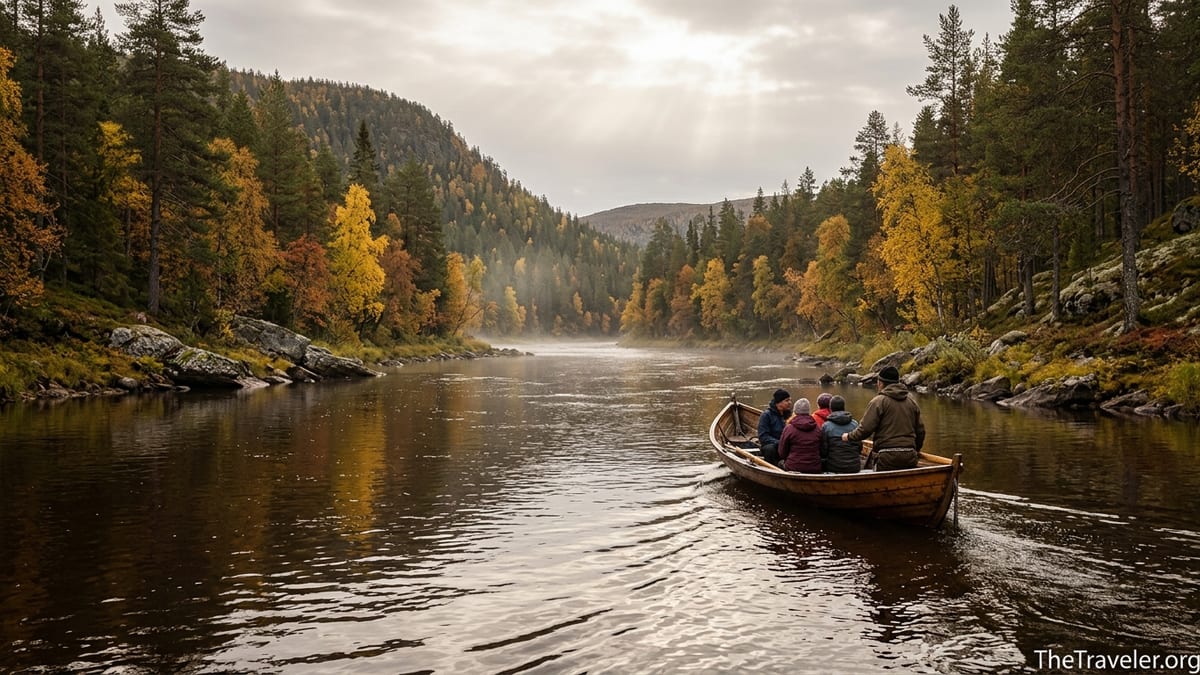
The riverboat that carried us into the park was low and practical, more working vessel than sightseeing cruise ship. Long wooden benches ran along both sides, and an outboard motor pushed us upstream against the slate-brown water of the Lemmenjoki, which locals often translate as the “warm river.” As we left Njurgalahti, the last mobile signal wavered out and the forest closed in. Tall pines, birches and spruces formed a steep-sided valley, broken occasionally by a small open bog glowing in late-summer light.
The boatman, a Sámi guide whose family had lived along the river for generations, narrated in simple, lightly accented English. He pointed out old reindeer fences on the hillsides and explained that, in winter, he moves with his herd in the nearby Hammastunturi wilderness, while summer is for boats, guests and fishing. The local operators typically run these trips as half-day or full-day excursions, with prices that, like most things in Lapland, reflect the remoteness and short season. Expect to pay in the range of a modest day tour elsewhere in Northern Europe, with children often discounted.
As we moved deeper into the national park, other boats became rare. Once, we passed a solitary fisherman in a small aluminum dinghy, anchored near the bank and casting line after line with quiet patience. The further we traveled, the more Lemmenjoki felt like a corridor of silence: no road noise, no ski lifts, just the slap of water against the hull and the occasional croak of a raven crossing the valley above.
Meeting Waterfalls, Gold Fields and Old Stories
About an hour upriver, the guide nosed the boat into a small landing and tied us off to a weathered wooden pole. Here a forest path led inland to Ravadas Falls, one of Lemmenjoki’s signature sights. The walk was short, only about a kilometer, but it wound through classic Lapland forest: blueberry undergrowth, soft moss and twisted pines with bark the color of rust. At the end, the river tumbled over rock in a broad, foaming cascade that sent a fine spray into the air. A simple fire pit and wooden shelter nearby made it clear why some groups come here with their own sausages and linger by the flames.
Back on the boat, we continued to a traditional gold claim, where the riverbank opened into a gravelly strand scattered with troughs, shovels and pans. Lemmenjoki has been part of Lapland’s gold story since the 1940s, and small-scale prospecting still continues here under strict rules that allow only manual work. Our host, sun-browned and quietly amused, demonstrated how to swirl river gravel in a shallow pan until the heavier specks of gold, if any, settled in the bottom crease.
It was an oddly meditative experience, kneeling by the river with icy water numbing my fingers, searching for a glint that almost certainly would not show. A few travelers before me had been luckier; in the small camp hut, tiny vials with pinhead flecks of gold sat in a row on a shelf, labeled with dates and names. The guide joked that any gold we found would be his by local custom, but admitted that, in reality, most guests leave with nothing more than a story and damp trousers.
Near the gold field, the boatman pointed out an old homestead used in summer as an open-air museum of Sámi river life. On some trips, visitors are invited to step inside the turf-roofed buildings and hear about Kaapin Jouni, a famed “reindeer lord” of the early 20th century whose large herd once ranged through this valley. It is one of the quiet ways Lemmenjoki reveals Sámi history: not through staged performances, but by situating you in the real places where that history unfolded.
Cabins, Fireplaces and the Practicalities of Staying in Lemmenjoki
My river journey was a day trip, but many visitors choose to stay overnight inside or near the park. Finland’s Everyman’s Right allows you to hike and, under certain conditions, camp almost anywhere in nature, but national parks such as Lemmenjoki have designated tent areas and lean-to shelters that concentrate impact. Basic camping remains free, though you will need to carry in all food and gear and follow fire regulations that vary with the season and weather.
For those who prefer a solid roof, Lemmenjoki has a network of simple wilderness huts, many managed by Metsähallitus. Some are open, shared shelters where you sleep on wooden platforms alongside whoever else has arrived that night; others are reservable cabins available for a nightly fee that is modest by Lapland standards. Facilities are deliberately minimal: a wood stove, stacked firewood, an outhouse and a nearby water source that you usually purify by boiling or filtering.
Outside the park boundary in villages such as Njurgalahti and Menesjärvi, small family-run guesthouses and lakeside cabins provide a bit more comfort. A night in a basic self-catering cabin with electric heating, sauna access and a kitchenette commonly falls somewhere in the mid-range of Finnish accommodation prices, often less than you might spend for a standard hotel room in Helsinki. In Menesjärvi, for example, some reindeer herding families host guests in converted lakeside houses, combining lodging with experiences such as visiting the herd, feeding reindeer calves in spring or learning about traditional handicrafts.
Food is another practical consideration. There are no restaurants hidden along the Lemmenjoki River, so you either pack your own supplies from Inari’s supermarket or stay at a guesthouse that offers breakfast and dinner. Some visitors stop at the large grocery store in Ivalo, near the airport, to stock up on dried meals, rye bread, cheese and coffee, then top up in Inari. On the riverboat tours, hot drinks and a simple outdoor lunch, often grilled over an open fire, may be included or offered as an add-on, so it is worth checking this when you book.
Seeing Lapland’s Everyday Life Along the River
Before visiting Lemmenjoki, my picture of Lapland was framed largely by images of glass-roofed igloos, husky safaris and Santa-themed attractions around Rovaniemi. The river journey showed a different reality. Here, the dominant sound was not engine noise but the rustle of birch leaves. Instead of souvenir shops, there were drying racks for fish and bundles of firewood piled against cabin walls.
The Sámi guides I met along the river balanced tourism with older livelihoods in a way that felt rooted rather than performative. One morning, a boatman arrived a few minutes late to the pier, apologizing that he had been checking on his reindeer further up the valley. Another day, a host at a small reindeer farm near Menesjärvi showed us how she sewed traditional gákti clothing during the long dark winter, then shifted to welcoming visitors and operating river trips when the midnight sun returned.
These encounters made Lemmenjoki feel less like a remote national park visited in isolation, and more like part of a living landscape. The same river that carried our boat also supports local fishing, connects seasonal grazing areas and, historically, ferried prospectors and traders. When you stand on its banks in the low, golden light of late evening in September, watching small insects dance above the water, it is surprisingly easy to imagine the same scene a century ago.
Hiking, Seasons and How the River Shapes Your Plans
Although the riverboat is the most iconic way to enter Lemmenjoki, the park is more than a corridor of water. From Njurgalahti, a waymarked 4.2-kilometer nature trail loops through nearby forest and low hills, giving day visitors an introduction to the terrain. Longer routes extend deeper into the park, including multi-day circuits that connect wilderness huts, cross open fells and occasionally descend back to the Lemmenjoki River at remote points where experienced hikers may continue by packraft.
Seasonality matters in Lemmenjoki more than many visitors realize. Riverboat trips usually run from roughly June to early autumn, depending on ice breakup and water levels. July brings the warmest temperatures and also the most mosquitoes, though the steady breeze on the boat keeps them largely at bay. September is widely considered one of the best months, with cooler air, fewer insects and the ruska colors turning the valley into a tapestry of gold, orange and red. In October, frost grips the mornings and operations begin to wind down.
Winter transforms Lemmenjoki into a very different experience. The river freezes, boats are pulled ashore and travel shifts to skis, snowmobiles operated by locals and, in some areas, snowshoes. Overnight stays in the park at this time of year demand solid Arctic skills and gear, so most first-time visitors come between June and September. Even in summer, weather changes quickly. On my short trip, a clear blue morning turned to chilly rain within an hour, and I was grateful for waterproof layers, gloves and a wool hat despite it being August.
The river itself often dictates what you can safely do. High water after snowmelt can make landings at certain spots more difficult, while very low late-summer levels can limit how far upstream tour boats go on a given day. Local operators are used to adjusting itineraries on the fly, swapping a planned visit to a more distant gold claim for extra time at Ravadas Falls, for example, if the conditions demand it.
Planning Your Own Lemmenjoki River Journey
For independent travelers, planning a river journey into Lemmenjoki starts with getting to Inari or Ivalo. Domestic flights connect Ivalo with Helsinki, and long-distance buses continue to Inari village. From there, you either rent a car, arrange a taxi or, in some cases, coordinate transport with your chosen tour operator, who may be able to collect you from your accommodation in Inari for a supplement. The key thing to remember is that services are sparse; there is no convenient public bus that drops you right at the river pier.
Once in Njurgalahti, you can often book a boat trip in person during high season, but it is wiser to reserve ahead, particularly in July and early September when domestic travelers and international hikers converge. Various local companies and Sámi families operate on the Lemmenjoki River, offering half-day excursions to Ravadas Falls, full-day trips that combine the falls with gold panning, and tailored journeys for private groups. Prices typically include life jackets, guiding and, on longer outings, coffee or tea brewed over a campfire.
Budget-conscious visitors sometimes pair a paid river cruise one way with hiking the return leg along marked trails that hug the river for parts of the journey. This approach offers a deeper sense of the landscape without significantly increasing costs, though it requires solid navigation skills and enough time to walk back to Njurgalahti before dark. Others base themselves for several days at a simple guesthouse in Menesjärvi or Inari, using one day for Lemmenjoki and others to visit the Sámi Museum Siida or explore lakeside trails around Lake Inari.
No matter which option you choose, packing thoughtfully makes a noticeable difference. Waterproof boots, a good insect repellent in mid-summer, a thermos for hot drinks and a dry bag for your camera are all practical additions. Card payments are widely accepted at supermarkets and many tour operators, but it can be useful to carry some cash for small kiosks, parking machines or a rustic coffee stand at a local event if you happen upon one.
The Takeaway
In a region that has become known worldwide for glass igloos and choreographed Arctic experiences, my river journey through Lemmenjoki National Park offered something quieter and more grounded. Floating up the Lemmenjoki, I saw Lapland less as a winter spectacle and more as a lived-in landscape, where Sámi reindeer herders host guests in their spare season, old gold claims sleep beside the current and national park rules coexist with Everyman’s Right in a pragmatic balance.
This is not a destination for travelers who want instant access and polished infrastructure. Getting to Njurgalahti requires extra effort, and once you push away from the pier, you leave behind mobile reception, cafes and predictable schedules. In exchange, Lemmenjoki gives you long stretches of riverbank without human noise, nights where the only light comes from your cabin window and, in September, hillsides aflame with birch and dwarf shrub color.
If you come here, come with humility and time. Listen to the guides when they talk about reindeer migrations and the park’s gold history, pack out everything you bring in and resist the urge to chase content for social media at the expense of simple observation. Lemmenjoki rewards slowness. In the steady rhythm of the boat engine and the soft slap of water against its hull, you may find a version of Lapland that feels, if not untouched, then at least unhurried by the modern world.
FAQ
Q1. How do I get to Lemmenjoki National Park without my own car?
Reaching Lemmenjoki without a car is possible but takes planning. Most visitors fly or take a long-distance bus to Ivalo, continue by bus to Inari village, then arrange a taxi or transfer with a local tour operator to Njurgalahti, where the riverboats depart.
Q2. When is the best time of year for a Lemmenjoki river journey?
The main riverboat season runs from roughly June to early autumn, with July offering the warmest temperatures and September prized for autumn colors, fewer insects and relatively stable weather.
Q3. Do I need to book Lemmenjoki river tours in advance?
In high summer and during the September ruska period, advance reservations are strongly recommended, as boats and guides are limited and tours can fill, especially on clear weekends.
Q4. Can beginners try gold panning on the Lemmenjoki River?
Yes. Several guided river trips include a visit to a traditional gold claim where beginners are shown how to pan and can try for themselves, using simple manual equipment under supervision.
Q5. Are there places to stay inside Lemmenjoki National Park?
Inside the park there are basic wilderness huts and designated tent areas, some free and some reservable for a fee. More comfortable cabins, guesthouses and small hotels are found in Njurgalahti, Menesjärvi and Inari.
Q6. Is Lemmenjoki suitable for families with children?
For families used to nature, Lemmenjoki works well. Short river trips, the easy nature trail near Njurgalahti and simple gold panning are popular with children, though parents should be prepared for basic facilities and variable weather.
Q7. Will I see reindeer or other wildlife on the river?
Reindeer are common in the wider area and are often seen near roads or along hillsides, but sightings on a specific trip are never guaranteed. You may also spot birds of prey, waterfowl and, with luck, moose in the forest.
Q8. What should I pack for a summer visit to Lemmenjoki?
Essential items include waterproof layers, sturdy shoes, insect repellent, a warm hat, light gloves, a refillable water bottle, snacks or meals and a dry bag to protect electronics from spray or sudden rain.
Q9. Is wild camping allowed in Lemmenjoki National Park?
Finland’s Everyman’s Right allows extensive access to nature, but in Lemmenjoki you are expected to use designated tent areas and shelters, follow fire regulations and respect signs that restrict camping in sensitive zones.
Q10. How does Lemmenjoki differ from more famous Lapland destinations?
Lemmenjoki is quieter and less developed than major ski resorts and winter-focused towns. There are no large hotels by the river, limited road access and fewer staged activities, which makes the experience feel more like everyday northern life than a theme park.