


Lemmenjoki National Park in Finnish Lapland has a magnetic pull for travelers who dream of real wilderness: trackless fells, a slow dark river, gold prospector camps, and Sámi reindeer lands far from roads and resorts. But it is also remote, hard to reach without a car, and far less serviced than better-known Nordic parks. If you are weighing up whether Lemmenjoki is worth the time and effort, this guide walks through what travelers love most about it, what can disappoint, and how to decide if it fits your style of adventure.
Get the latest updates straight to your inbox!
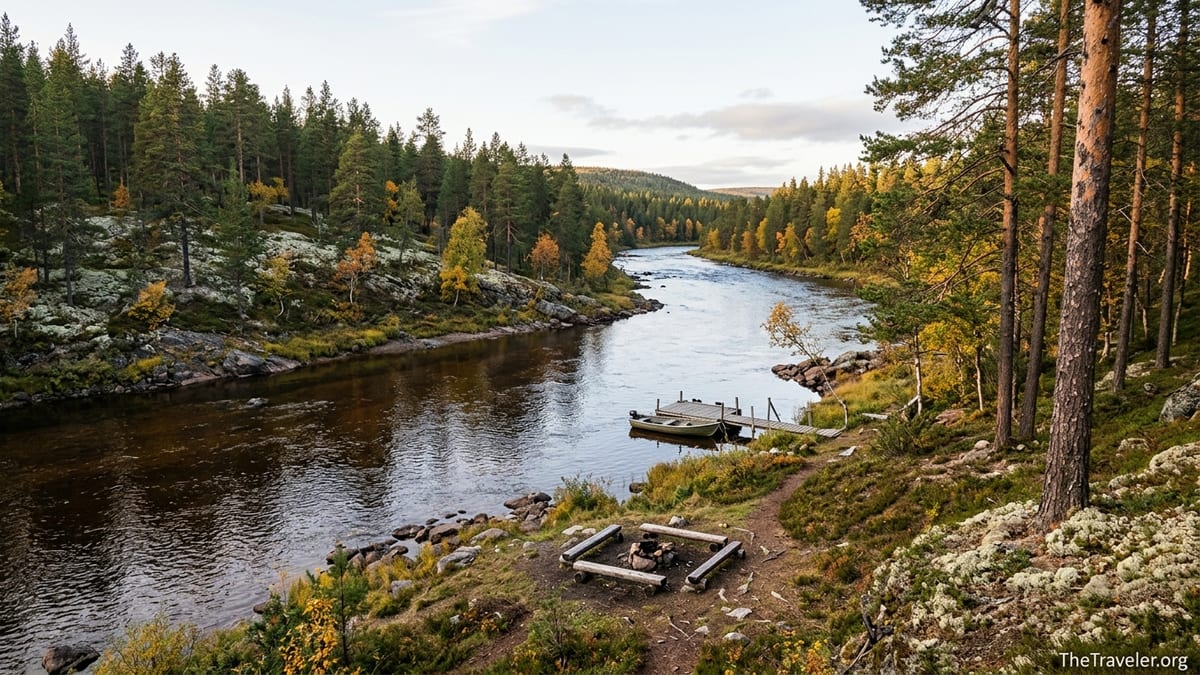
Why Lemmenjoki Feels Different From Other Nordic Parks
Lemmenjoki is Finland’s largest national park at roughly 2,850 square kilometers, tucked in the municipality of Inari in northern Lapland. Instead of dramatic roadside viewpoints and cable cars, it offers long valleys of old pine forest, rounded fells and a broad, tea-colored river that you mostly experience on foot or by boat. Visitors often describe it as one of the last places in Europe where you can walk for hours without hearing a road or seeing a power line.
That sense of remoteness is what many travelers fall in love with. If you have hiked in more popular areas such as Pallas–Yllästunturi or Sweden’s Kungsleden, you will notice the contrast: fewer people, fewer built facilities, and more of a feeling that you are crossing working reindeer herding land and historical gold fields rather than a curated outdoor resort. For some, that is exactly the appeal; for others, it can feel sparse and even a little intimidating.
Unlike heavily touristed Arctic destinations such as Rovaniemi or Tromsø, Lemmenjoki is not built around mass tourism. Summer days still feel quiet even in July and August. Outside the main river valley and its boat piers, it is easy to walk an entire day and meet only a couple of other hikers, if anyone. If your idea of a national park is café-lined parking lots and interpretive centers every few kilometers, Lemmenjoki will feel very bare. If you seek solitude, it is almost ideal.
Because the park borders Norway’s Anárjohka National Park and large roadless wilderness areas, the landscape also feels continuous and big. This makes Lemmenjoki particularly attractive to experienced backpackers who want multi-day routes without villages every evening. For many repeat visitors, that endlessness is the main reason they keep coming back.
What Travelers Love Most: River, Falls and Gold Country
Nearly every first-time visitor gravitates to the Lemmenjoki River valley. From the small village of Njurkulahti, boat services in summer take people upstream to sights like the Ravadas Falls and the historic gold area around Kultahamina. These scheduled river boats typically run from late June to early September, depending on water levels and demand, and prices fluctuate but often land in the range of what you would pay for a half-day excursion in other parts of Lapland. For many visitors without the time or equipment for serious hiking, this river trip is what makes Lemmenjoki worth it.
Ravadas Falls, one of the best-known natural attractions in the park, is a compact but scenic series of cascades where the Ravadasjoki stream meets the Lemmenjoki River. The boat lands near the base, and from there a short forest path leads to viewpoints and fire pits. In practice, this means you can leave your car in Njurkulahti in the morning, ride upriver, walk to the falls, grill sausages at a lean-to, and be back at your accommodation in Inari or Lemmenjoki village by late afternoon.
The other unique draw is the active but small-scale gold prospecting culture. Lemmenjoki’s gold rush peaked decades ago, but there are still claims, cabins and stories scattered along the upper river. There is a marked Gold Route hiking trail and seasonal experiences where local operators let you try hand-panning for gold in gravel troughs. You should not expect to pay for your Lapland trip with your findings, but the chance of seeing a tiny flake in your pan is a memorable, very Lemmenjoki moment for many travelers.
Several boat tours and day hikes also touch on reindeer herding culture. You may pass reindeer fences, old round-up sites and open, lichen-covered fells that function as grazing land. In late summer and early autumn you are likely to see semi-wild reindeer grazing along trails or even in parking areas. Combined with the gold history and the river landscape, this mix of nature and culture is something travelers consistently rank as a highlight compared to more “neutral” wilderness areas.
Who Will Enjoy Lemmenjoki Most (And Who May Not)
Lemmenjoki is at its best for people who are comfortable with basic infrastructure and who value quiet over convenience. If you are a backpacker used to carrying your own food, navigating marked but sometimes faint trails, and sleeping in simple wilderness huts or tents, you will probably rate the park as a top-tier destination. Multi-day routes connect open huts and reserved rental huts, and experienced hikers often stay out for three to five nights at a time.
It can also work very well for road trippers who want one deep, wilderness-feeling day in the middle of a larger Lapland itinerary. A common pattern is to drive the loop Rovaniemi to Saariselkä to Inari, then detour into Lemmenjoki for a boat trip to Ravadas Falls and a short hike before continuing west toward Levi or north into Norway. In this scenario you get a taste of the Lemmenjoki atmosphere without needing specialized gear.
On the other hand, Lemmenjoki can feel underwhelming if you expect dramatic peaks or glaciers like the Lofoten Islands or some parts of the Alps. The scenery is subtler: low fells, endless forest, bogs glowing orange at sunset, and the slow curve of the river. Some visitors on review sites mention that if you only do a quick walk from the parking area without taking a boat or committing to a longer trail, it can feel like “just forest.” To appreciate it, you need either time or willingness to go a bit further in.
Families with small children can enjoy Lemmenjoki if they focus on the river excursion and easy loop trails near Njurkulahti, but it is not the most stroller-friendly or playground-rich national park. Travelers without a car may also find access challenging, as regional buses tend to stop in Inari or along the main road, still many kilometers from Njurkulahti. For those visitors, other Lapland parks such as Urho Kekkonen or Pallas–Yllästunturi are often simpler choices.
Hiking, Boating and Other Ways to Experience the Park
The classic way to experience Lemmenjoki is a combination of boat and hiking. Many people take a one-way boat from Njurkulahti up to Kultahamina or near Ravadas Falls, then walk back along the river trail. This gives you a sense of the landscape without repeating the same scenery, and you can choose how far to walk based on your fitness and daylight. The path follows the river through old pine stands, across small wooden bridges and past lean-tos and campfire sites where you can rest.
For those looking for more demanding routes, the Joenkielinen fell loop stands out. This approximately 18 kilometer circle route climbs to a low summit with wide views over Lemmenjoki National Park and the neighboring Hammastunturi wilderness. The trail starts near Njurkulahti, is generally well marked, and rewards you with a feeling of being above the forest without requiring mountaineering skills. On clear days under autumn colors, it is one of the most loved day hikes in the region.
If you have multiple days, there are longer wilderness routes that link the Lemmenjoki valley to surrounding fells and lakes. Some hikers do circuits of 60 to 80 kilometers, staying in basic open huts, using marked crossings over side rivers, and carrying all food and a map. These trips are best for people experienced with northern conditions: even in August nights can be cold, and fog or rain can make navigation harder. The reward is a level of silence and immersion you rarely find in more accessible parks.
Beyond hiking, Lemmenjoki offers canoeing on the calmer sections of the river, berry and mushroom picking in late summer and early autumn, and cross-country skiing on marked tracks in winter. However, winter use is modest compared to resorts like Saariselkä. Snowmobile routes and guided Northern Lights excursions exist in the broader Inari region, but inside the park itself the focus remains on self-powered travel and fairly quiet trails.
Getting There, Services and Realistic Costs
Reaching Lemmenjoki usually starts with getting to Ivalo or Inari. Most international travelers fly to Helsinki, then take a domestic flight to Ivalo. From Ivalo, it is about an hour’s drive to Inari village, and from there around 45 minutes to Njurkulahti along regional roads. Renting a car at Ivalo Airport is common, and major international rental brands operate there with prices comparable to other Nordic airports, especially if you book several months ahead.
Without a car, your options are more limited. There are long-distance buses connecting Ivalo and Inari to other Lapland towns, but scheduled public transport into Njurkulahti itself is scarce or seasonal. Some travelers arrange private transfers through local guesthouses or combine lift-sharing with organized tours. If you rely entirely on buses, it may be easier to base in Inari, join a day trip to Lemmenjoki operated by a local company, and otherwise focus on Lake Inari and cultural sights such as the Sámi museum and cultural center in town.
On-site services in Njurkulahti and the surrounding area are modest. You typically find a small dock for the river boats, simple parking areas, dry toilets, information boards, and in season a few local businesses offering accommodation in cabins or rooms, meals, sauna, and activities like boat trips and gold-panning. Prices for a cabin night in high season can be similar to other Lapland countryside stays, ranging from relatively basic huts to more comfortable riverside cottages. Many visitors choose to sleep in Inari, where there is a wider choice of hotels, hostels and restaurants, then drive in for the day.
Inside the park, you should expect very few commercial services. Open wilderness huts are free to use on a first-come, first-served basis, while reservable huts and some rental cabins carry nightly fees that you book in advance through official park channels or local operators. Firewood is often provided at designated fireplaces, but you are expected to bring your own food, stove as backup, proper clothing and a paper map. Bank cards are widely accepted in the region, yet once you leave the villages you should not count on buying anything.
Best Seasons, Weather and When It Is Most Worth the Effort
Your answer to “Is Lemmenjoki worth visiting?” will depend strongly on when you go. From late June to early September, the river is ice-free, boat services usually operate, and most marked summer trails are accessible. July and August bring milder temperatures and long days, but also more mosquitoes, especially in still evenings near bogs and water. Many hikers consider late August and early September the ideal window, when nights darken enough for possible Northern Lights, mosquitoes fade, and birch leaves turn yellow.
In May and early June conditions are more mixed. Snow can linger on high ground, trails may be muddy, and river water is often cold and high from melt. On the plus side, this is a very quiet period with powerful light and little tourism. If you are experienced and flexible about conditions, it can be rewarding. For first-time visitors hoping to combine a river boat tour, manageable trails and relatively predictable weather, late summer to early autumn is usually a safer choice.
Winter in Lemmenjoki is long and cold, with deep snow and short days from December through February. There are cross-country ski tracks laid from Njurkulahti toward Joenkielinen and the gold area in some winters, and local guides can organize snowshoe tours or Northern Lights outings in the wider region. However, if your main goal is to see Lemmenjoki’s river valley and falls, winter hides many of its most distinctive features under snow and ice. For a first visit focused on scenery and hikes, summer and autumn offer better value for your time and money.
Spring and autumn shoulder seasons can also impact wildlife experiences. In late August and September, berries ripen and reindeer roundups start, so you may see more animal activity. Bears and wolverines live in the wider region but are rarely seen; birdlife is more noticeable around wetlands in late spring and early summer. In every season, remember that temperatures can drop quickly, especially at night and on exposed fells, so layering and windproof outerwear are essential.
How Lemmenjoki Compares to Other Lapland Destinations
When travelers debate whether Lemmenjoki is “worth it,” they are usually comparing it to other Lapland highlights. Pallas–Yllästunturi National Park offers more ready-made day hikes from villages like Äkäslompolo and Ylläsjärvi, with ski resorts, restaurants and supermarkets right at the trailheads. Urho Kekkonen National Park near Saariselkä provides an extensive hut network and a dense web of both easy and demanding trails. For those who want wilderness but prefer a stronger tourism infrastructure and simpler access without a car, these parks are often more convenient.
Lemmenjoki’s advantage is its quieter, more self-reliant feel and the specific combination of river valley, gold history and Sámi reindeer land. If you are planning a once-in-a-lifetime Lapland trip in winter and your main priorities are Santa experiences, glass igloo hotels, and guaranteed tour options every day, Rovaniemi or Saariselkä will meet those expectations better than Lemmenjoki. On the other hand, if your dream is to sit by a campfire on a riverbank with almost no artificial light in sight, or to walk all day without crossing a road, Lemmenjoki stands out.
Budget-wise, a trip that includes Lemmenjoki does not have to be dramatically more expensive than other northern itineraries. The main added cost is transport, particularly car rental and fuel to reach Njurkulahti, plus the price of river boat excursions if you choose them. Daily costs for cabin stays, groceries from Inari supermarkets, and occasional restaurant meals are broadly similar to the rest of Finnish Lapland. For backpackers using wilderness huts and camping, Lemmenjoki can even be a relatively affordable way to spend many days in the north once you are there.
Many repeat visitors eventually design itineraries that combine Lemmenjoki with more accessible areas. A common pattern is to spend a few nights in Saariselkä or Inari for easier day hikes and services, then add two or three days focused entirely on Lemmenjoki’s river and fells. In that context, the park becomes a highlight rather than the whole trip, and its remoteness feels like an asset instead of a logistical headache.
The Takeaway
Lemmenjoki National Park is absolutely worth visiting for travelers who crave genuine quiet, broad horizons and a sense of being far from the road network. Its slow dark river, unhurried boat trips, modest but atmospheric gold claims and open reindeer fells create a mood that you will not easily find elsewhere in northern Europe. For experienced hikers and canoeists, it offers multi-day routes and wilderness huts that reward self-sufficient travel.
At the same time, it is not the right choice for everyone. Reaching Njurkulahti usually requires a car or organized transfer, on-site services are minimal, and the scenery is subtle rather than spectacular in the alpine sense. If your priorities are easy access, a wide menu of guided activities every day and resort comforts right at the trailhead, other Lapland destinations will fit better.
If you are already planning to visit Inari or drive through northern Lapland, penciling in at least one full day for Lemmenjoki, ideally with a river boat trip to Ravadas Falls and a few hours on the trails, is highly recommended. If you are an experienced wilderness traveler, consider dedicating several days to a hut or tent-based trek deeper into the park. In both cases, Lemmenjoki’s rewards are quiet, space and time, which may be exactly what you are looking for at the edge of the Arctic.
FAQ
Q1. Is Lemmenjoki National Park worth visiting on a short Lapland trip?
Yes, if you are already in the Inari or Saariselkä area and can spare a full day for the river valley and a short hike, Lemmenjoki adds a distinctive wilderness contrast to more developed resorts.
Q2. How hard is it to get to Lemmenjoki without a rental car?
It is possible but inconvenient. Long-distance buses typically reach Inari or main roads only, so most visitors either rent a car from Ivalo Airport or book transfers and day tours through local operators.
Q3. What is the best time of year to visit Lemmenjoki?
Late June to early September offers the easiest conditions, open trails and river boat services. Many hikers favor late August and early September for autumn colors, fewer insects and the chance of Northern Lights.
Q4. Are there easy hikes suitable for beginners or families?
Yes. Short nature trails and sections of the river path near Njurkulahti, plus the boat-and-walk combination to Ravadas Falls, work well for beginners and families with school-age children.
Q5. Do I need to be an experienced hiker to enjoy the park?
No, but experience helps if you want to go beyond the main river valley. For longer routes and overnight trips you should be comfortable with northern weather, basic navigation and self-sufficient camping.
Q6. What kind of accommodation is available around Lemmenjoki?
Nearby you will find small guesthouses and cabins, often with sauna, in Lemmenjoki village and Inari. Inside the park there are basic wilderness huts and some reservable cabins, plus tent sites at designated areas.
Q7. Can I see the Northern Lights from Lemmenjoki?
Yes. In autumn and winter, when nights are dark and skies are clear, the park’s minimal light pollution makes it an excellent place for aurora watching, especially away from villages.
Q8. Is there still gold mining in Lemmenjoki, and can visitors try panning?
Small-scale, mostly manual gold prospecting continues in limited areas. Several local operators offer short gold-panning experiences where visitors can try their luck with supervised equipment.
Q9. How does Lemmenjoki compare to more famous Lapland parks?
It is quieter and less developed, with fewer services and more demanding logistics. Compared with parks like Pallas–Yllästunturi or Urho Kekkonen, Lemmenjoki feels wilder but requires more self-reliance.
Q10. Is Lemmenjoki suitable for a winter visit?
Winter is beautiful but demanding. There are ski and snowshoe options and good aurora conditions, but deep snow, cold and limited daylight mean it suits prepared, well-equipped visitors best.