


More news on this day
An American Airlines passenger who had already boarded a flight was removed from the aircraft after a check-in system error falsely marked them as a no-show, drawing fresh attention to how fragile digital records can upend even the most carefully planned trips.
Get the latest news straight to your inbox!
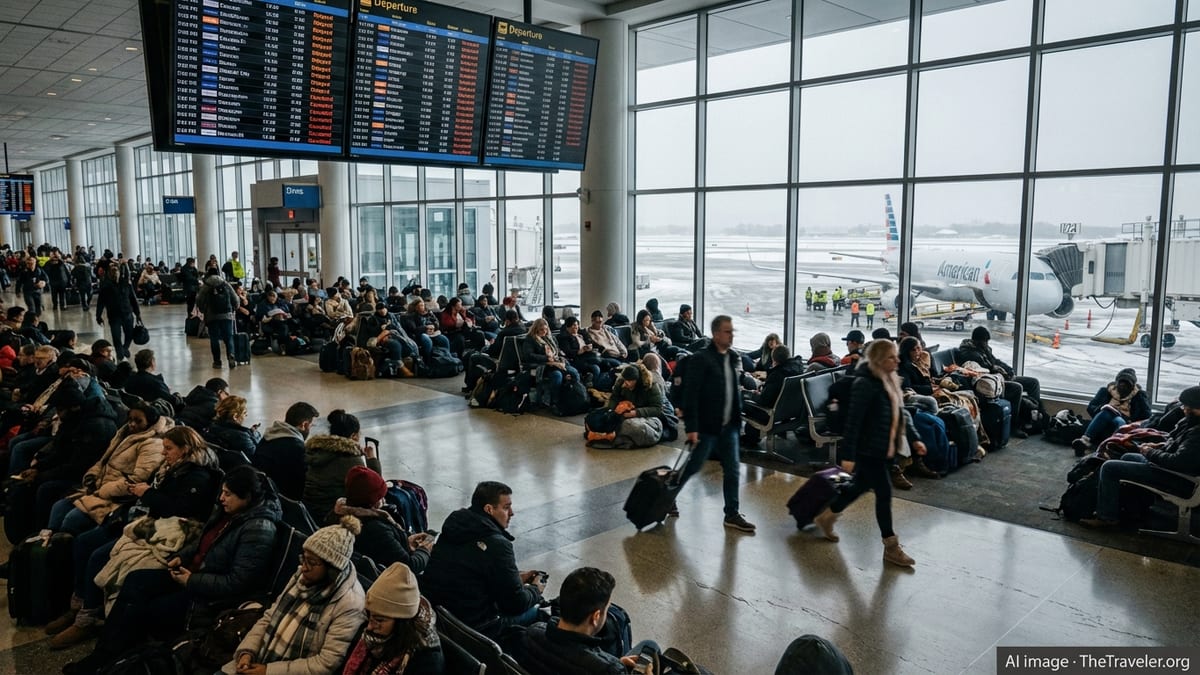
What Happened During the American Airlines Boarding Incident
According to recent aviation industry coverage, the incident unfolded at Dallas Fort Worth International Airport when a traveler with a valid, scanned boarding pass took an exit row seat on an American Airlines flight. A standby passenger soon arrived with a claim to the same seat, prompting crew members to recheck the manifest on their tablets.
Reports indicate that, despite the original passenger having successfully checked in and boarded, the airline’s internal system no longer showed them as checked in for the flight. From the perspective of the digital record, the seat appeared open and available for reassignment, even though the traveler was physically on board.
Gate and cabin staff faced a conflict between what the system displayed and what was happening in the cabin. Instead of reopening the flight in the system and reinstating the boarded traveler’s status, the decision was made to remove the original passenger from the aircraft and retain the standby traveler. Industry commentary notes that flight attendants could see empty seats remaining on board, which has fueled criticism that the situation could have been resolved without taking a boarded traveler off the plane.
Travel-focused outlets further report that the underlying trigger appears to have been a back-end glitch in the airline’s check-in process. Once the boarding pass had been scanned, a system update reportedly reverted the traveler’s status to not checked in, causing the seat to fall back into inventory and making it available to standby customers.
Why a Check-In System Error Matters So Much
This case illustrates how heavily modern airline operations depend on a chain of interconnected technology systems. Ticketing, check-in, security data, boarding gate control, and upgrade and standby lists are often managed by separate but linked platforms. If one component misfires, it can create contradictions between what a traveler sees on their app and what appears on a gate agent’s screen.
Consumer advocacy coverage has recently highlighted similar episodes involving American Airlines in which passengers with confirmed seats or even completed flights later discovered that the system did not show them as boarded. In one case described in regional television reporting, a traveler only learned that the airline’s records had not logged her completed outbound flight when she tried to check in for the return sector and found that the rest of her trip had been canceled.
Frequent travelers commenting on airline forums and social platforms describe a pattern of check-in anomalies, including reservations that drop out of the app, check-in statuses that revert unexpectedly, and upgrade lists that change abruptly during boarding. While many of these glitches are ultimately fixed by gate staff before departure, the new American Airlines incident shows what can happen when a discrepancy is not resolved in the passenger’s favor.
Industry analysts note that carriers have long relied on legacy reservation and departure control systems originally designed decades ago. Modern mobile apps and self-service tools sit on top of these older cores. When synchronization fails, passengers may be left in limbo, armed with a screenshot or boarding pass that does not match the information in the live operational system controlling the flight.
What This Means for Passenger Rights and Compensation
The American Airlines removal has prompted debate about how passenger rights frameworks apply when the root cause is a system error rather than deliberate overbooking. In typical oversale situations, U.S. regulations and airline policies outline compensation levels when travelers are involuntarily denied boarding in favor of others.
Airline policy documents and independent analyses point out that American’s conditions of carriage state that the airline does not involuntarily remove a revenue passenger who has already boarded solely to seat another traveler. However, because the boarded passenger in this case was no longer recognized by the system as checked in, the episode sits in a gray area between traditional overbooking and a technical failure.
Travel law specialists and consumer advocates indicate that current rules were largely written for an era of paper tickets and manual manifests. They generally focus on seat oversales rather than database discrepancies. When a glitch causes the system to treat a confirmed, boarded traveler as a no-show, the standard formulas for involuntary denied boarding compensation may not clearly apply, even if the practical effect for the passenger is nearly identical.
Commentary in consumer-focused travel publications suggests that incidents like this could eventually pressure regulators and airlines to clarify how digital check-in failures should be handled. Key questions include whether boarded passengers affected by back-end errors should automatically receive the same protections and compensation as those bumped in traditional oversale cases, and what documentation travelers need to prove that they complied with check-in requirements.
Growing Concerns About Reliability of Airline Apps
The American Airlines boarding removal comes amid wider unease among travelers about the reliability of airline apps and online check-in tools. In recent weeks, travelers on American have publicly shared experiences of the carrier’s app showing them as not checked in, even after they had seats assigned and boarding passes issued through other channels.
On discussion boards dedicated to American Airlines, passengers describe being asked to return to gate desks because systems indicated they were not properly checked in, despite their mobile or printed passes scanning successfully at security. In several of these accounts, agents were able to correct the record before departure, but only after manual intervention and additional time at the gate.
Analysts note that the industrywide rush toward self-service and automation has reduced staffing at ticket counters and gates, leaving less margin to troubleshoot complex record issues during busy departures. When a system labels a traveler as a no-show, rectifying that status often requires reissuing boarding passes or reopening a closed flight, actions that can be perceived as operationally disruptive in the final minutes before departure time.
Recent coverage on specialized aviation and travel websites also points to a series of high-profile American Airlines seat assignment issues, including near losses of premium cabin seats to standby travelers when system logic temporarily treated confirmed seats as open. Taken together with the removal of a boarded passenger, these episodes are reinforcing a perception among frequent flyers that digital tools are convenient only as long as the underlying data remains accurate.
Practical Steps Travelers Can Take Before Boarding
For travelers, the American Airlines incident reinforces the importance of verifying that what appears on their app or printed boarding pass matches what airline systems recognize at the airport. Travel experts commonly recommend checking in as early as allowed, reconfirming seat assignments on the day of departure, and arriving at the gate before boarding begins to address any irregularities while there is still time to fix them.
Some travel commentators now advise carrying a printed boarding pass in addition to a mobile one, especially for important or complex itineraries. Using a kiosk or counter to print a pass can sometimes force a fresh synchronization with the departure control system, making it less likely that a traveler will be flagged as a no-show during final checks at the gate.
Passengers are also encouraged to keep basic documentation in case something goes wrong. Screenshots of app check-in confirmations, boarding passes, and upgrade lists, along with receipts for paid seat selections or cabin upgrades, can help support later claims or complaints if a system error leads to loss of a seat or significant disruption to travel plans.
Finally, observers note that travelers who encounter serious check-in or boarding discrepancies should document the timeline of events as soon as practical, including when they checked in, when they arrived at the gate, and what they were told about their status. While documentation alone cannot prevent a glitch, it can be instrumental when seeking redress afterward, and may contribute to broader scrutiny of how airlines handle system failures that displace paying passengers.