


More news on this day
Travelers connecting through Hong Kong to the Gulf are confronting a new wave of uncertainty as Cathay Pacific suspends flights to Dubai and Riyadh amid a rapidly escalating global fuel crisis tied to conflict in the Middle East.
Get the latest news straight to your inbox!
Cathay Pacific Pulls Back from Gulf Gateways
Cathay Pacific has suspended its Hong Kong to Dubai and Hong Kong to Riyadh routes through the end of July 2026, removing a key option for travelers moving between Asia, the Gulf, and onward destinations in Europe and Africa. Publicly available information indicates that the airline is also trimming about 2 per cent of its overall planned schedule between mid May and the end of June as part of a broader effort to contain costs as jet fuel prices surge.
The decision comes on top of earlier temporary suspensions, turning what initially looked like a short operational pause into a months long retreat from two high profile Middle Eastern gateways. Aviation trackers and specialist travel sites report that Cathay Pacific has advised passengers booked on the affected services that they can rebook on alternative routes or seek refunds, but many itineraries that relied on smooth Gulf connections now require lengthy detours or new tickets on rival carriers.
For Hong Kong, a major hub linking Northeast Asia with the rest of the world, the loss of nonstop connectivity to Dubai and Riyadh reduces network flexibility at a moment when demand for alternative routings around the Middle East is rising. It also underscores how even large, well hedged airlines are being forced to redraw route maps as fuel markets remain volatile.
Global Fuel Crisis Reshapes Airline Networks
The suspension is unfolding against the backdrop of what energy analysts describe as the most severe disruption to global oil flows in decades. The war involving Iran and its regional rivals has sharply curtailed traffic through the Strait of Hormuz, a conduit for a substantial share of the world’s crude exports. According to economic assessments, the closure and partial reopening of this chokepoint have driven jet fuel prices steeply higher and injected new volatility into airline operating costs.
Industry reporting shows that carriers across Asia, Europe, and Oceania are responding with a mix of fare hikes, fuel surcharges, and schedule cuts. Recent coverage in regional trade publications notes that Asian airlines have introduced emergency fuel surcharges and cancelled select services as aviation turbine fuel prices surged in a matter of days. Cathay Pacific is among the carriers that have raised surcharges while warning that further adjustments to capacity could be necessary if fuel markets tighten again.
Data compiled by travel analytics firms points to hundreds of cancellations and thousands of delays across the Asia Pacific region in recent weeks, as weather disruptions, airspace closures, and fuel supply challenges converged. These pressures are feeding through to passengers in the form of higher prices, thinner schedules, and reduced choice on once competitive long haul corridors.
Dubai, Riyadh, and Beyond: Pressure on Key Corridors
Dubai and Riyadh sit on some of the busiest air corridors linking Asia, the Middle East, Europe, and Africa, so any sustained pullback by a major carrier has an outsized impact. Earlier shocks at Gulf hubs, including a high profile fuel infrastructure incident at Dubai International Airport in March, forced multiple international airlines to curtail operations, highlighting the vulnerability of hub and spoke networks to localized disruptions in a global fuel crunch.
Separate travel industry coverage indicates that a number of European and Asian airlines have already reduced or temporarily halted services to Gulf cities while they reassess security risks, war risk insurance costs, and fuel availability. In some cases, carriers have chosen to redeploy aircraft to long haul routes that bypass the Middle East entirely, such as nonstop services between Asia and Europe or North America, where yields have risen as capacity has tightened.
For travelers, the knock on effects stretch well beyond the Gulf. The removal of Cathay Pacific’s Dubai and Riyadh flights means fewer one stop options from secondary Asian cities to destinations in Africa and the Middle East, potentially pushing more traffic onto already crowded alternative hubs in Europe and Southeast Asia. Travel agencies report that customers bound for business centers and pilgrimage routes alike are facing longer travel times, more complex connections, and higher overall trip costs.
Travelers Face Higher Costs and Uncertain Plans
As the fuel crisis deepens, passengers are encountering not only grounded flights but also sharply higher prices on those that remain. International media coverage in early April highlighted that volatile jet fuel prices are driving a new wave of fare increases and ancillary fees, with budget conscious travelers and those in emerging markets feeling the strain most acutely.
Monitoring of airline announcements shows that Cathay Pacific and several peers have implemented multiple fuel surcharge increases in quick succession during March and April 2026. Travel commentators note that these charges, layered on top of already elevated base fares, are eroding the appeal of discretionary long haul trips and forcing many travelers to scale back or postpone plans.
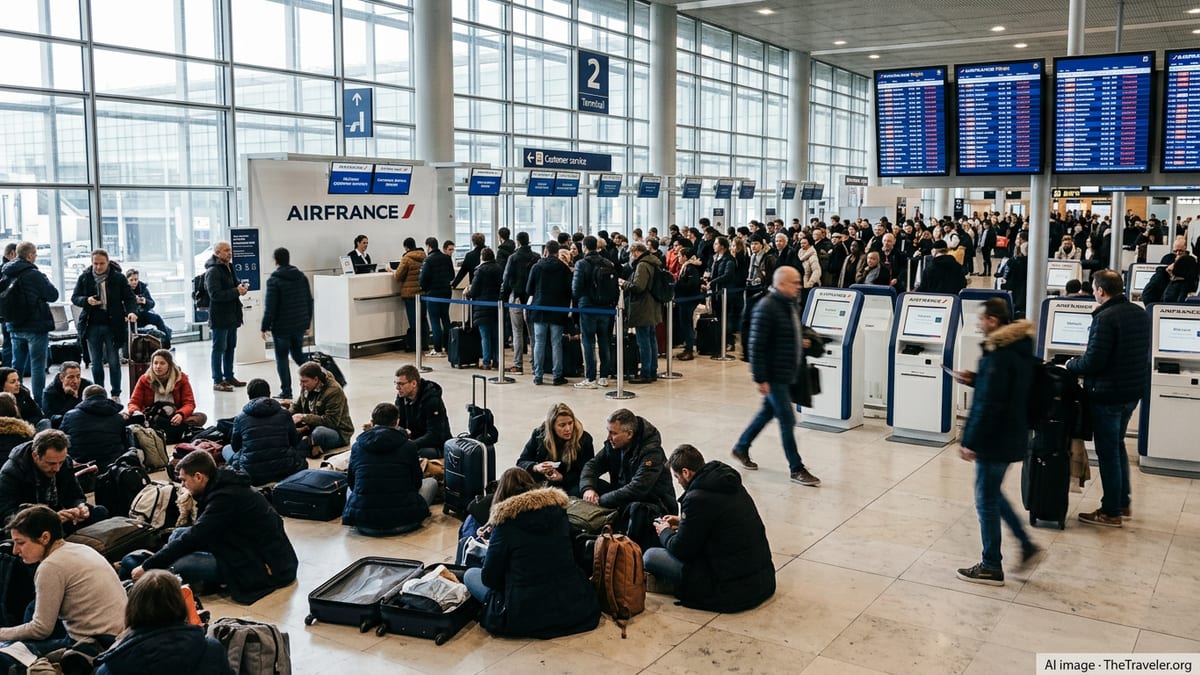
In the Gulf and across Asia, stranded passengers have turned to social media and online forums to document repeated rebookings, last minute cancellations, and difficulties securing timely refunds from overburdened customer service channels. While some airlines are offering fee free changes, others are applying standard fare rules, leaving affected customers to navigate complex conditions in order to salvage their itineraries.
Search for Alternatives Highlights Structural Vulnerabilities
The grounding of Cathay Pacific services to Dubai and Riyadh is also shining a spotlight on longer term structural vulnerabilities in global aviation. Publicly available sustainability reports from the airline and its peers show that despite rapid growth, sustainable aviation fuel still accounts for well under 1 per cent of total jet fuel consumption worldwide, leaving carriers heavily exposed to swings in conventional fuel prices.
Energy analysts argue that the current crisis resembles the oil shocks of the 1970s, with higher fuel costs feeding through to inflation and threatening broader economic growth. Unlike in previous episodes, however, airlines today operate tightly optimized fleets with limited spare capacity, meaning that any prolonged shock to fuel supply or pricing quickly translates into visible disruptions for passengers.
As the summer peak travel season approaches, aviation bodies and travel industry groups are warning that if shipping constraints around the Strait of Hormuz persist, Europe and parts of Asia could face systemic shortages of jet fuel. For travelers hoping to reach or transit through cities such as Dubai and Riyadh on Cathay Pacific, the message for now is to expect ongoing adjustments, monitor bookings closely, and prepare for a period in which flexibility becomes as important as price when planning any long haul journey.