


More news on this day
United States hotel marketers are confronting a rapid and unexpected shock to their digital playbook as artificial intelligence reshapes search results, slashing click-through rates on once reliable paid media campaigns.
Get the latest news straight to your inbox!
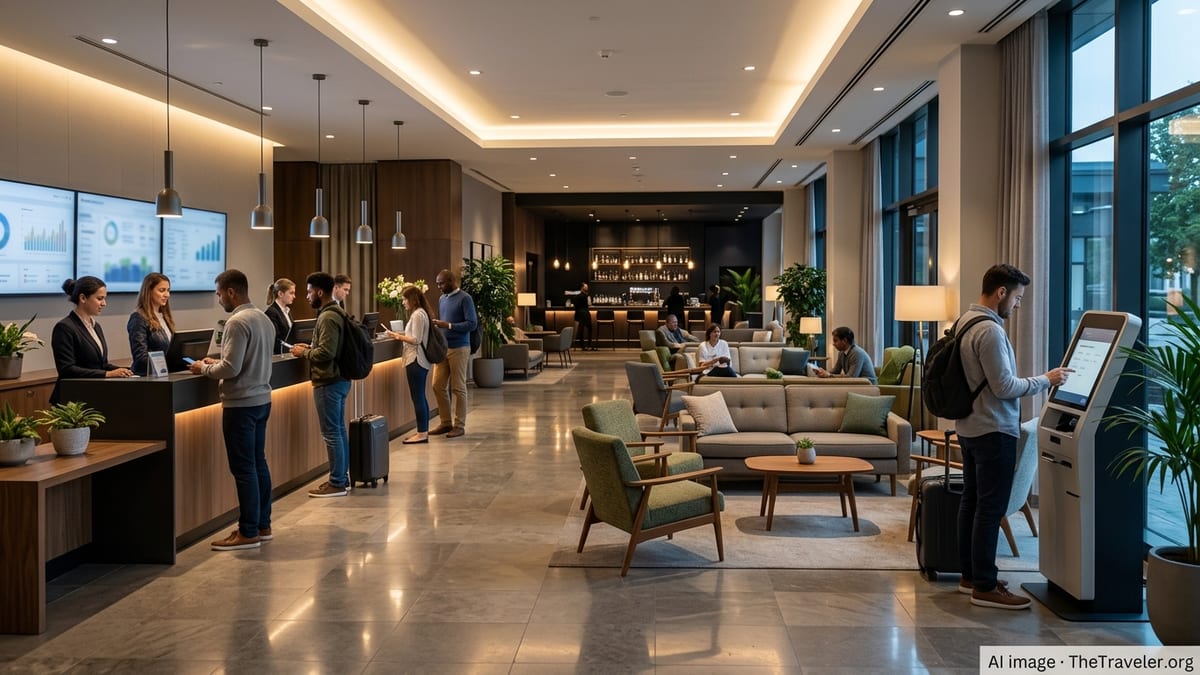
AI Search Experience Rewrites the Hotel Booking Funnel
Across the United States, travel and hotel marketers are reporting a sustained decline in click-through rates on Google Search and hotel metasearch campaigns as AI-driven search experiences keep more users on the results page. Industry analyses of Google’s AI Overviews feature indicate that when the AI summary appears above ads, paid search click-through rates can fall by more than half compared with traditional layouts, particularly on research-oriented travel queries.
Publicly available research on generative AI search shows that AI-generated summaries increasingly answer hotel and destination questions directly on the search page. Users get price ranges, neighborhood recommendations, and shortlists of properties without needing to click through to brand sites or online travel agencies. This “zero-click” behavior is now showing up in performance dashboards across the travel sector, with travel ranking among the categories most heavily affected as planning and booking queries shift into AI modules.
Hotel-focused marketing advisories published in recent weeks describe a new baseline in which more than half of US search queries may end without any external click, putting immediate pressure on channels that depend on traffic volume to justify media spend. For hotel brands that have spent a decade optimizing campaigns around keywords, bid strategies, and conversion paths, AI-led search is compressing the visible real estate that made those efforts profitable.
Paid Media Metrics Signal a Structural Break
Benchmark data compiled for the travel category suggests that a typical search campaign historically achieved click-through rates in the 2.5 to 5 percent range, depending on intent and creative quality. Recent performance commentary from hotel marketing specialists, however, points to campaigns slipping toward the lower end of that spectrum, even as impressions continue to grow. In several reported cases, hotel search campaigns recorded rising impression counts alongside flat or declining clicks, a pattern consistent with ads being pushed below AI-generated content.
An analysis by one major performance agency tracking AI Overviews across millions of searches found that the feature is appearing more frequently on travel-related planning and booking queries that were previously dominated by hotel and flight ads. The same analysis associated AI Overviews with a marked reduction in paid click-through rates when they are present, reinforcing what hotel marketers are now observing inside their own accounts.
Regional tourism reports in the United States are starting to echo this picture. One mid-year report for a California destination marketing organization cited a drop in hotel referrals from paid search, noting that click-through rates slipped even as impressions expanded. While reduced budgets were one factor, the report also flagged structural changes in search results as a likely contributor, aligning with broader industry commentary about AI-led layouts diluting ad engagement.
Google’s AI Bidding Push Collides With Changing User Behavior
The shift in performance is unfolding alongside Google’s multi-year effort to migrate hotel advertisers into AI-powered bidding products. Google previously announced the sunset of key commission-based bidding options for Hotel Ads and has expanded Performance Max and newer AI-centric campaign formats as the default for travel advertisers. These products rely on machine learning to set bids and placements across search, display, YouTube, and other surfaces, including emerging AI placements.
Specialist hotel marketing agencies report that as these AI-led campaign types gain prominence, traditional manual search campaigns are losing relative visibility, especially where AI Overviews or conversational search experiences are active. Some hotel practitioners describe a paradox: automation is optimizing toward impression share across Google’s properties, yet the incremental traffic coming from classic search ad units is shrinking as the interface shifts toward AI responses.
At the same time, independent analyses highlight that click quality is under renewed scrutiny. Industry discussions around Google’s newer AI search surfaces and agentic booking flows suggest that while ads will remain embedded, they may produce fewer but more contextually targeted clicks. For hotels used to measuring success primarily through click-through rate and last-click conversions, this environment makes it harder to separate genuine demand softness from interface-driven click erosion.
New Gatekeepers: AI Answer Engines and Chat-Based Hotel Discovery
The pressure on US hotel paid media is not coming only from Google. Generative AI platforms that help travelers plan trips without traditional search are now moving into monetized hotel recommendations. Recent tracking by hotel technology researchers indicates that sponsored hotel placements began appearing this spring within consumer-facing AI assistants, including conversational tools that return curated property lists inside the chat interface.
Travel behavior studies published over the past year show that a growing share of US travelers are using generative AI at least once during trip research, with adoption particularly strong among younger segments. Major travel platforms have also reported surging experimentation with AI trip planners that assemble hotel and activity suggestions inside a single, interactive result, often before a user ever reaches a search engine.
For hotel marketers, this effectively introduces new gatekeepers between the brand and the guest. Visibility is no longer determined only by keyword bids and organic rankings but also by how often a property appears in AI-generated summaries and recommendation lists. Some early audits of AI-powered search results for hotel queries suggest that online travel agencies and large, well-structured hotel sites are disproportionately cited, raising fresh concerns that independent properties may lose ground unless their content is optimized for generative systems.
Marketers Pivot From Click Maximization to Demand Capture
In response to the shock in paid media performance, US hotel marketers are beginning to reframe their objectives. Industry white papers and conference presentations now stress that chasing historical click-through benchmarks may be unrealistic in an era when large portions of traveler research never leave AI-driven interfaces. Instead, marketers are being urged to focus on being referenced within AI answers and capturing higher-intent users who do click through.
Recommended responses include investing in structured content that clearly describes location, amenities, and policies in ways machine systems can parse, as well as feeding accurate inventory and pricing into metasearch and connectivity partners. Some experts also advocate for “generative engine optimization,” a discipline aimed at improving the likelihood that hotel content appears as a cited source in AI responses across search engines and conversational assistants.
Budget strategies are shifting as well. Commentaries directed at hotel owners suggest reallocating a portion of spend from lower-funnel search campaigns into brand storytelling, loyalty programs, and direct traffic initiatives that are less dependent on a single search interface. Others argue for heavier experimentation with cross-channel measurement, so that marketing teams can attribute bookings that originate in AI discovery environments but convert later through branded search or direct visits.
While the immediate reality is a visible decline in paid media click-through rates for many US hotels, the longer-term story appears to be a redefinition of what counts as discoverability and success. As AI becomes the front door to trip planning, hotel marketers are being pushed to compete not only for ad position, but for presence inside the answers themselves.