


More news on this day
Delta Air Lines has reconnected Hong Kong with Los Angeles through a new daily nonstop service, strengthening Asia Pacific access to the United States and elevating long-haul options for premium travelers and cargo customers.
Get the latest news straight to your inbox!
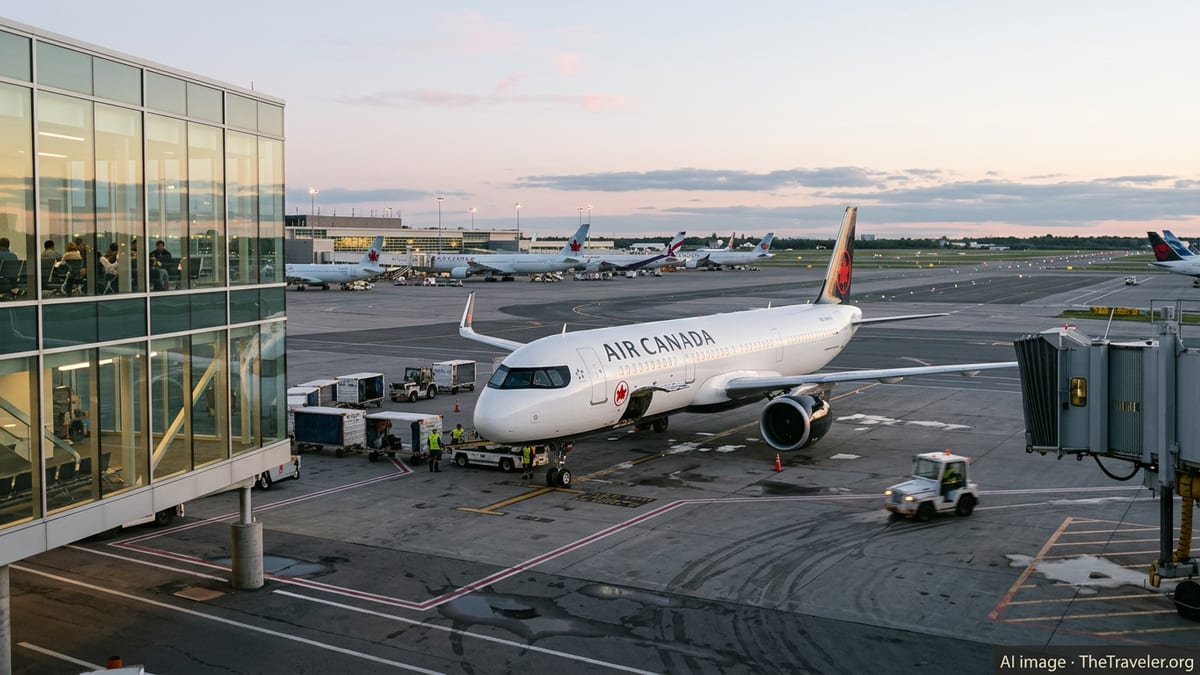
A Revived Transpacific Corridor Linking Two Global Gateways
The launch of daily nonstop flights between Hong Kong International Airport and Los Angeles International Airport marks Delta’s formal return to the Hong Kong market after several years of absence. Publicly available information shows that the route began operating in early June 2026, restoring a direct connection between one of Asia’s most important financial hubs and the carrier’s key West Coast gateway.
The new service is positioned to capture resurgent demand for travel between Asia and North America, particularly as corporate travel, tourism and visiting‑friends‑and‑relatives traffic continues to rebuild. Reports indicate that the schedule has been designed around business‑friendly departure and arrival times while accounting for the long sector length and the crossing of the International Date Line.
Industry coverage notes that the route is operated by an Airbus A350‑900, giving Delta a modern, fuel‑efficient aircraft on a mission that can take roughly 14 to 16 hours depending on direction and seasonal winds. The choice of aircraft places Delta in direct competition with other transpacific carriers that also deploy new‑generation widebodies on services linking Hong Kong with major cities in North America.
By linking Hong Kong and Los Angeles, the service reinforces both airports’ roles as strategic gateways. Hong Kong remains a central hub for southern China and the broader Greater Bay Area, while Los Angeles continues to anchor the western United States for entertainment, technology, trade and tourism flows.
Enhanced Premium Cabins and Onboard Experience
Delta is using the Hong Kong route to showcase its latest long‑haul premium products. According to airline materials and route reports, the A350‑900 on this sector offers four distinct cabins: Delta One suites, Delta Premium Select, Delta Comfort and Main Cabin. The configuration gives the carrier a premium‑heavy mix tailored to corporate travelers, high‑net‑worth leisure customers and frequent flyers seeking upgraded comfort.
Delta One suites feature fully lie‑flat seats with sliding doors, enhanced privacy and premium bedding on this ultra‑long flight. Coverage of the product notes that customers in the front cabin receive multi‑course chef‑inspired meals and curated wine and beverage selections designed for long‑haul travel. The suite design is intended to compete directly with the leading business‑class offerings of major Asia Pacific and Gulf carriers on comparable routes.
In Delta Premium Select, travelers are offered wider seats with deeper recline, extra legroom and upgraded amenities compared with standard economy seating. Industry analysis indicates that the airline sees this premium economy cabin as an important revenue driver on lengthy transpacific services where some customers are willing to pay more for additional space and comfort but may not opt for a full business‑class fare.
Across all cabins, passengers have access to the Delta Studio entertainment platform, with reports citing more than 1,000 hours of movies, series, music and other content available on personal screens. Standard long‑haul amenities such as in‑seat power, USB charging ports and Wi‑Fi connectivity are also promoted as part of the onboard experience on the Hong Kong to Los Angeles flights.
Stronger Asia Pacific Connectivity via Los Angeles
Delta’s expansion at Los Angeles International Airport provides the backbone for the connectivity that underpins the Hong Kong service. Published information on the carrier’s LAX operation highlights more than 160 peak‑day departures to over 50 destinations, including key Asia Pacific and South Pacific cities such as Shanghai, Tokyo, Sydney, Brisbane and Auckland. This network allows Hong Kong passengers to link to a wide array of destinations across the Americas with a single connection.
The Hong Kong flight unlocks over 30 one‑stop itineraries from the United States to Asia through Los Angeles, according to airline and airport communications. Travelers originating in major U.S. business centers such as New York, Boston, Atlanta, Detroit and Minneapolis can connect through LAX to reach Hong Kong on a single Delta ticket, with coordinated schedules aimed at minimizing transfer times.
The service also deepens the carrier’s transpacific partnership strategy. Analysts point out that Delta’s joint venture with Korean Air, centered on Seoul Incheon, already offers extensive connectivity into North Asia and Southeast Asia. Adding Hong Kong as a nonstop destination from Los Angeles broadens those options and offers an alternative gateway for traffic flows to southern China and regional financial centers.
For Hong Kong‑based travelers, LAX functions as an efficient jumping‑off point into the U.S. domestic network. From entertainment and media hubs on the West Coast to energy and manufacturing centers in the central states and financial centers on the East Coast, the new daily connection is structured to funnel passengers into Delta’s broader network using a single check‑in and through‑checked baggage.
Premium Ground Facilities and the LAX Delta One Focus
The new route also leverages substantial investments that Delta and Los Angeles World Airports have made in recent years. Publicly available information on the Delta Sky Way project at LAX describes a 2.3 billion dollar transformation of Terminals 2 and 3 into a consolidated complex with centralized check‑in, expanded security lanes and upgraded gate areas. The project is designed to simplify passenger flows and reduce connection times across the carrier’s network.
Within this redevelopment, Delta has introduced a dedicated Delta One check‑in area and a new Delta One Lounge at LAX. Reports indicate that eligible Hong Kong passengers traveling in Delta One receive access to a private curb‑to‑gate experience, including concierge‑style check‑in, priority security and a premium lounge environment featuring elevated dining, bar offerings and spaces for work and relaxation.
These ground‑level enhancements are a key part of the airline’s strategy to attract high‑yield corporate and premium leisure travelers on long‑haul routes such as Hong Kong. Industry observers suggest that combining an upgraded terminal experience with a modern A350‑900 cabin product strengthens Delta’s competitive position against rival carriers that also offer premium‑focused services between Hong Kong and North America.
For travelers connecting onward at LAX, the redesigned terminal complex aims to streamline transfers between domestic and international flights. Improved wayfinding, consolidated security and reconfigured gate layouts are intended to make the Hong Kong to Los Angeles journey more seamless, particularly for passengers with tight connection windows.
Cargo Capacity and Hong Kong’s Role in Global Trade
The relaunch of Hong Kong to Los Angeles service carries significant implications for air freight. Both cities are major cargo hubs, and the A350‑900’s belly‑hold capacity provides Delta Cargo with additional lift on one of the world’s busiest trade lanes. Industry coverage highlights that the route offers new opportunities for high‑value, time‑sensitive shipments ranging from electronics and fashion to pharmaceuticals and e‑commerce goods.
Hong Kong has long been recognized as a leading air cargo gateway for southern China and the wider Asia Pacific manufacturing base. By reinstating nonstop service to Los Angeles, Delta is positioned to capture a portion of the growing demand for reliable, fast transport of goods to and from the United States, particularly as supply chains recalibrate following the disruptions of recent years.
Cargo specialists note that the transpacific market between Hong Kong and North America remains highly competitive, with several major carriers offering dedicated freighter and belly‑cargo capacity. Delta’s entry through daily passenger service adds another option for freight forwarders and logistics providers seeking flexibility in schedules and routing, especially when paired with the carrier’s broader domestic network at LAX.
The strengthened freight corridor aligns with wider trends in which passenger routes are increasingly evaluated not only on seat demand but also on cargo performance. For the Hong Kong to Los Angeles service, the combination of premium passenger focus and enhanced cargo capability underscores the route’s strategic importance in Delta’s global network planning.