


More news on this day
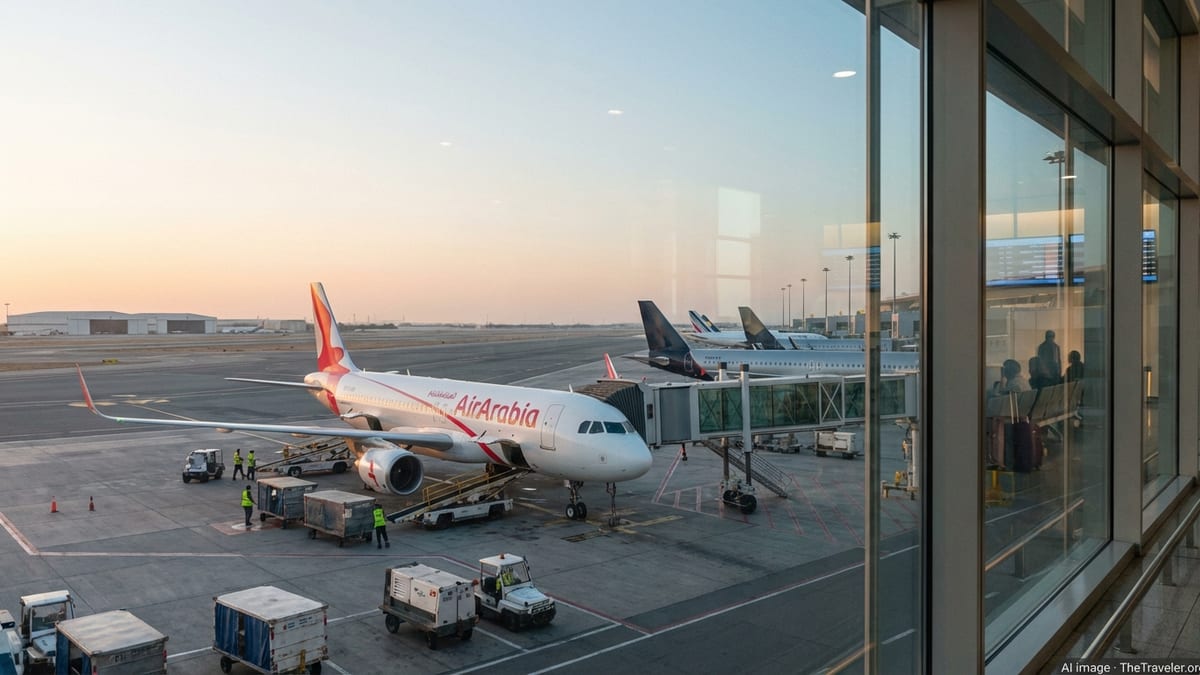
Air Arabia is accelerating its post-pandemic network rebuild from the United Arab Emirates, with Russia joining an expanding roster of destinations stretching from India and Pakistan to Saudi Arabia, Egypt, Italy and Greece as the low cost carrier reconnects key markets across Asia, Europe, the Middle East and Africa.
Get the latest news straight to your inbox!
Russia Back On The Map From UAE Low Cost Hubs
Russia has re-emerged as a growth market for Air Arabia, with the carrier steadily rebuilding and expanding links between the UAE and multiple Russian cities. Publicly available information highlights new and upcoming services including Sharjah to Sochi, alongside existing routes from Abu Dhabi and Ras Al Khaimah to Moscow and Yekaterinburg. These additions strengthen Russia’s role in the airline’s east west network and restore an important leisure and visiting friends and relatives flow that had been constrained in recent years.
Industry coverage indicates that the Sharjah Sochi route is scheduled as a non-stop service beginning in summer 2025, adding the Black Sea resort city to Air Arabia’s Russian portfolio, which already includes Moscow, Kazan, Samara, Ufa and Yekaterinburg. The new operation builds on a wider trend of rising capacity between the UAE and Russia as demand recovers for tourism, business travel and onward connections via Gulf hubs.
Reports from aviation analysts describe Sochi as one of the fastest growing Russia Middle East city pairs, supported by year round tourism and milder winter weather than many other Russian destinations. By deploying Airbus A320 family aircraft on the route from Sharjah, Air Arabia is positioned to capture cost conscious travelers from across its network who can now connect in the UAE to reach Russia without relying solely on full service carriers.
The return and growth of Russia services also reflects easing operational constraints on flights over parts of the Middle East and a more stable geopolitical backdrop on key corridors. As regulators adjust restrictions, airlines such as Air Arabia are using the opportunity to realign schedules and restore previously suspended connectivity, particularly where point to point demand remains resilient.
India, Pakistan, Saudi Arabia And Egypt Anchor South Asian And Middle East Flows
While Russia provides a headline grabbing example of resumed links, Air Arabia’s core growth story remains anchored in heavy demand markets like India, Pakistan, Saudi Arabia and Egypt. Data from network summaries and industry reports shows that the airline now serves an extensive list of Indian and Pakistani cities from its UAE hubs, feeding tens of thousands of workers, students and family visitors through Sharjah and Abu Dhabi every week.
Routes to cities such as Kochi, Mumbai, Delhi, Lahore, Karachi and Islamabad underpin the carrier’s role as a bridge between the Gulf and the wider Indian subcontinent. Affordable point to point fares, combined with bankable schedules timed for onward connections, have made these flights central pillars of Air Arabia’s strategy. For travelers, the result is a dense web of options that often undercut legacy competitors on price while maintaining relatively high frequencies.
Saudi Arabia and Egypt add another layer of resilience. Coverage of Air Arabia’s schedule changes and expansion plans highlights repeated capacity increases to major Saudi gateways including Riyadh, Jeddah and Dammam, as well as important secondary cities serving religious and labor traffic. On the Egypt side, services linking Sharjah and Abu Dhabi to Alexandria, Cairo and other coastal airports form part of a long established bridge between North Africa and the Gulf.
Industry observers note that these intra Middle East and South Asian routes are among the first to be increased when aircraft become available or restrictions ease. They generate steady year round traffic and support Air Arabia’s broader network by providing large pools of passengers who can be connected onward to Europe, Central Asia and now a growing list of Russian and Caucasus destinations.
Italy, Greece And Wider Europe See Low Cost Gulf Connections Grow
Europe is another key beneficiary of Air Arabia’s expanding network from the UAE. Publicly available route maps and schedule filings show that Italy and Greece have become important points in the airline’s European footprint, with services operating both directly from Sharjah and through partnerships with Air Arabia’s Moroccan and Egyptian units.
Italy has emerged as a strategic gateway, particularly through airports such as Bergamo, which connect into Air Arabia Maroc’s network and provide cost conscious travelers with links between the Gulf, North Africa and continental Europe. From the UAE side, passengers from India, Pakistan, Saudi Arabia and Egypt are able to route via Sharjah or Abu Dhabi and then continue toward Italian and other European destinations without needing to transit traditional mega hubs.
Greece, supported by strong tourism demand, features as another growth market in the airline’s published destination lists. Seasonal peaks toward popular Greek islands and cities are increasingly being linked to Gulf and South Asian demand, offering an alternative to higher priced full service itineraries. The combination of competitive fares and relatively simple point to point operations has allowed Air Arabia to test and grow routes that might previously have been considered niche.
Aviation analysts argue that this expanding European footprint is reshaping how travelers think about long journeys between South Asia, the Middle East, North Africa and Europe. Instead of relying solely on one stop itineraries via legacy carriers, passengers can increasingly stitch together low cost segments using Air Arabia’s hubs in the UAE and Morocco, trading premium frills for lower total trip costs.
Network Rebuild Connects Four Continents Via UAE Gateways
Behind the individual route announcements is a broader pattern of recovery and expansion. Company reports and industry briefings indicate that Air Arabia now connects more than 200 destinations across the Middle East, North Africa, Asia and Europe through six operating hubs in the UAE, Morocco, Egypt and Pakistan. The UAE hubs at Sharjah, Abu Dhabi and Ras Al Khaimah remain at the heart of this structure, acting as transfer points between Asia, Europe, the Middle East and Africa.
Recent disclosures covering the 2025 operating year highlight that the airline added dozens of new routes and several new aircraft, allowing capacity to grow in both established and emerging markets. Many of these additions were aimed at tightening coverage across key labor and diaspora corridors, while others focused on leisure hotspots such as Sochi, the Maldives and new Mediterranean points.
This network rebuild has important implications for global travelers. For price sensitive passengers in India, Pakistan, Egypt or Saudi Arabia, the growing web of Air Arabia routes means more one stop options to reach destinations in Russia, Italy, Greece and beyond via the UAE. Conversely, Russian and European travelers gain more direct access to the beaches of the Gulf, the heritage cities of Egypt and the growing tourism offerings of Pakistan and Central Asia.
Industry data on international connectivity in 2025 suggests that corridors linking India, Saudi Arabia, Egypt, Italy, Greece, Pakistan and Russia are among the most dynamic in terms of capacity and passenger growth. Air Arabia’s strategy of combining lean low cost operations with multi hub flexibility positions the airline as a significant player on these routes, helping to reconnect regions that were fragmented during the pandemic years.
What Travelers Should Watch In The Latest Update
For travelers planning trips across Asia, Europe, the Middle East and Africa, Air Arabia’s latest phase of expansion brings both opportunities and considerations. The restoration and growth of services to Russia open up new combinations, particularly for those routing from India or Pakistan via Sharjah to reach cities such as Moscow or Sochi on a budget.
At the same time, the strengthening of links to Saudi Arabia, Egypt and key European destinations like Italy and Greece means more choice when planning multi stop itineraries. Passengers can increasingly mix and match low cost segments via UAE hubs, potentially cutting total journey costs while still maintaining acceptable travel times.
However, industry commentators advise that schedules and frequencies on some of the newer or more seasonal routes can change as airlines refine their networks. Travelers are encouraged to monitor timetable updates closely, especially where services are tied to specific summer peaks or emerging tourism flows. Flexible planning and careful checking of minimum connection times at hubs such as Sharjah, Abu Dhabi and Ras Al Khaimah remain important.
Overall, the latest updates show Air Arabia using the UAE’s strategic position to knit together Russia, India, Pakistan, Saudi Arabia, Egypt, Italy, Greece and many other markets into a more coherent low cost network. For global travelers, that translates into a wider array of affordable options and a renewed role for secondary hubs in shaping how people move between four continents.