


More news on this day
Syrian Airlines has resumed direct services between Damascus and Moscow after an 18‑month suspension, restoring one of the carrier’s most politically and economically significant international routes.
Get the latest news straight to your inbox!
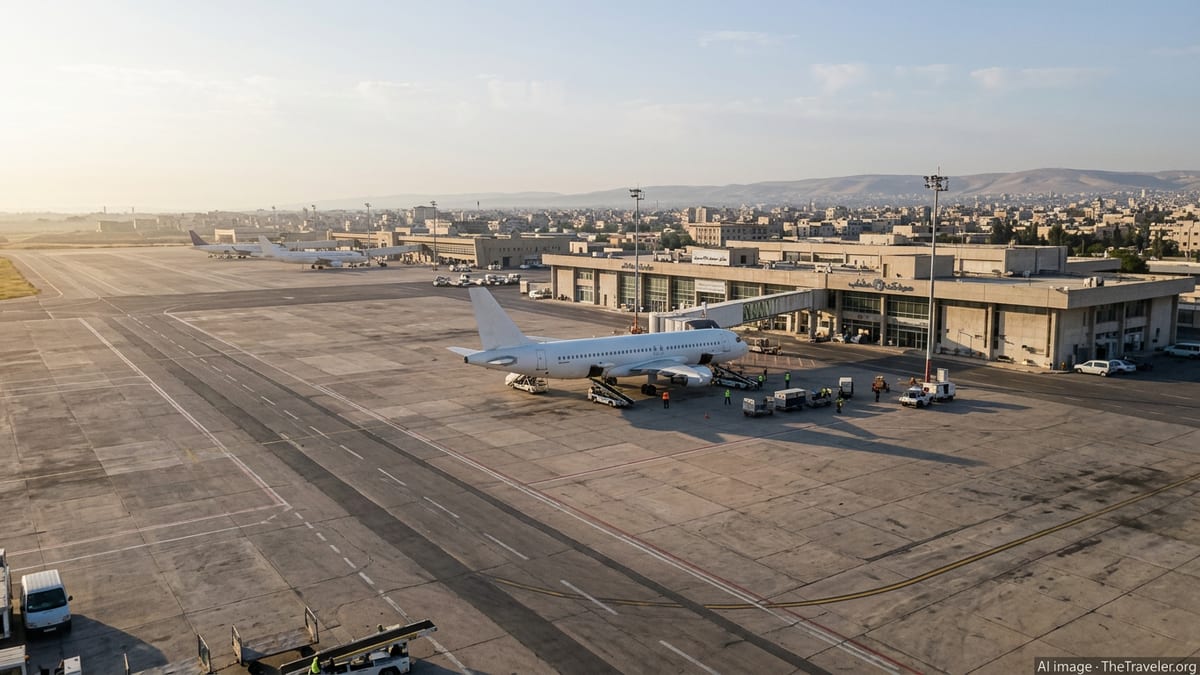
Restarted Route Marks New Phase in Syria–Russia Air Links
Publicly available flight schedules and industry tracking data show that Syrian Airlines has reinstated nonstop services between Damascus International Airport and a Moscow airport following an interruption of around a year and a half. The route had been one of the airline’s longest standing international connections before operations were paused amid security concerns, airport disruptions and shifting demand.
The new timetable indicates a limited but regular pattern of flights each week, reflecting a cautious approach in a still‑fragile market. Aviation observers note that the resumption comes at a time when Syria is gradually rebuilding its network of regional and long‑haul destinations, even as infrastructure and regulatory constraints remain significant.
The move also follows years in which privately owned Cham Wings often maintained the primary air link between Syria and Russia. With the state carrier now re‑entering the market on the Moscow route, travelers have additional options and a clearer state‑backed connection between the two capitals.
Strategic and Political Significance of the Damascus–Moscow Link
The restoration of Syrian Airlines flights to Moscow carries symbolism that goes beyond commercial aviation. Russia has been one of Syria’s closest partners, and air connectivity between the two countries has long mirrored the broader state of their relationship. The direct route offers a civilian counterpart to well‑documented military and governmental air traffic between the two states.
For Syria, the Moscow service functions as both a practical and political corridor. It provides a direct channel for students, business travelers and members of the Syrian diaspora who rely on links to Russian cities, while also signaling an attempt to normalize post‑conflict mobility and economic ties. For Russia, the flights maintain access into Syria’s capital region at a time when wider regional aviation patterns continue to evolve.
Analysts point out that the restart comes as Damascus seeks to diversify its limited portfolio of long‑haul routes. Alongside services to Gulf hubs and regional capitals, Moscow stands out as one of the few destinations outside the immediate neighborhood to be served directly by the national carrier from Damascus.
Operational Constraints in a Sanctions‑Hit Aviation Sector
The return of the Damascus–Moscow connection takes place within a Syrian aviation sector still heavily affected by international sanctions and financing restrictions. Industry references highlight that Syrian Airlines has faced challenges sourcing spare parts, renewing its fleet and processing payments through global clearing systems, all of which can limit route expansion and capacity.
Operational data and airport reports indicate that Damascus International Airport has also been subject to previous closures and partial suspensions linked to security incidents and regional tensions. These disruptions have added a further layer of complexity for any long‑haul route planning, particularly on politically sensitive corridors such as those connecting Syria with Russia.
Capacity on the Moscow route appears modest relative to pre‑war levels, with schedules built around a handful of weekly rotations. Aviation specialists suggest that this reflects both the limited size of the addressable market under current conditions and the practical constraints of maintaining an aging fleet under sanctions.
Impact on Travelers, Diaspora and Trade
For passengers, the reinstated flights reduce the need for multi‑stop itineraries via third‑country hubs. Prior to the restart, many travelers moving between Syria and Russia reportedly relied on combinations of regional airlines, indirect routings through Gulf airports or services to other Syrian cities before connecting onward. A nonstop option from Damascus simplifies planning and shortens total journey times.
The resumption is expected to be particularly significant for Syrian nationals living, studying or receiving medical treatment in Russia, as well as for Russian citizens working in Syria’s reconstruction, energy, and infrastructure sectors. Tourism flows are still limited, but the restoration of direct air links is seen as a prerequisite for any future increase in leisure or religious travel between the two countries.
Cargo capacity on passenger aircraft may also provide a modest boost to bilateral trade, allowing for the transport of high‑value, time‑sensitive goods. However, freight volumes are likely to remain constrained by customs regimes, sanctions‑related controls and the relatively low frequency of flights compared with pre‑conflict years.
Regional Aviation Context and Future Prospects
The return of Syrian Airlines to the Moscow route fits into a broader pattern of cautious reopening across Syrian skies. In recent years, services to certain Gulf destinations and regional capitals have gradually resumed, while some foreign carriers have tested or announced limited operations to Damascus and other Syrian airports. Each new or restored route is watched closely by travelers and airlines alike as an indicator of the country’s reintegration into regional transport networks.
Industry commentary suggests that future growth on the Damascus–Moscow corridor will depend on multiple variables, including security conditions, demand trends, and the evolution of sanctions policy affecting aviation. Any expansion in frequency or the addition of new Russian destinations would likely require improved access to aircraft, maintenance support and financial services for the Syrian flag carrier.
For now, the resumption of flights after an 18‑month suspension marks a notable, if measured, step for Syrian Airlines and for air connectivity between Syria and Russia. The restored route underscores how even a single long‑haul service can carry outsized economic and political weight in a market where every international connection remains hard‑won.