


More news on this day
American Airlines is expanding its transatlantic network with six new nonstop routes, adding two new European cities to its map and strengthening summer connectivity from major U.S. hubs to high-demand destinations across the continent.
Get the latest news straight to your inbox!
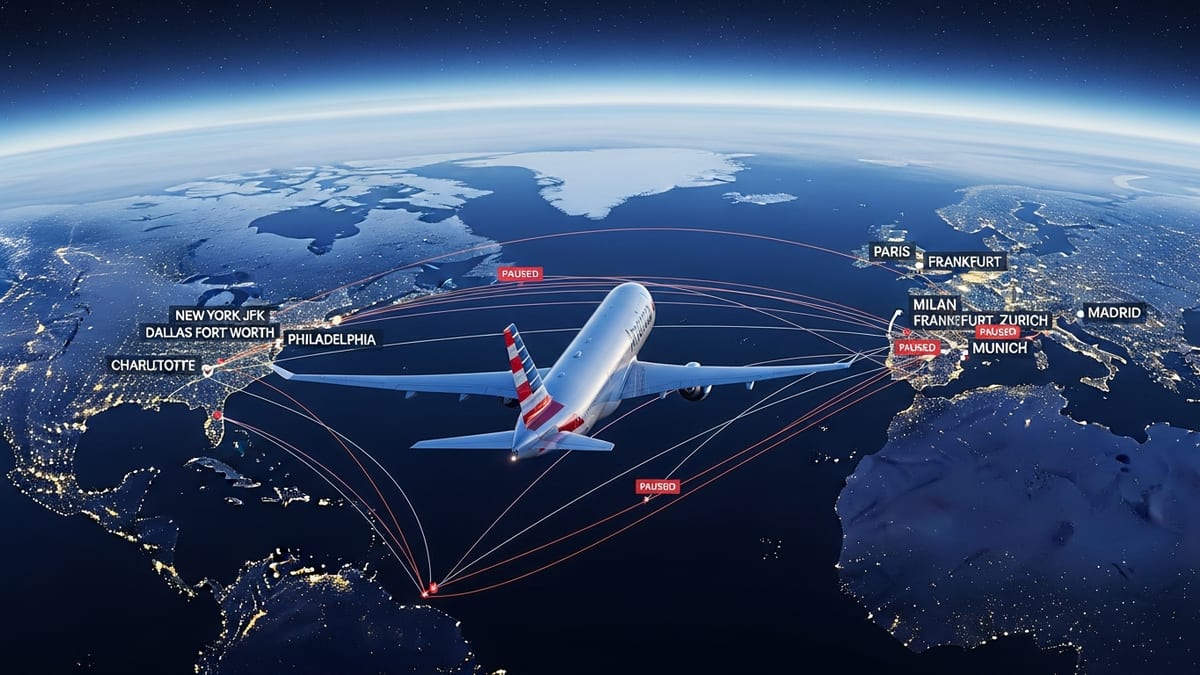
Six New Nonstop Links Across the Atlantic
American’s latest transatlantic expansion centers on six nonstop routes connecting U.S. hubs with popular and emerging European destinations. Network information and recent schedule announcements indicate that the carrier is introducing flights from Philadelphia to Budapest and Prague, as well as services from Dallas–Fort Worth to Athens, Milan and Zurich. In addition, the airline is bolstering its Philadelphia network with further service to a key European market, rounding out a six-route package that targets both leisure and connecting traffic.
The push builds on American’s strategy of using Philadelphia as a primary transatlantic gateway for the Northeast while leveraging Dallas–Fort Worth as its largest global hub. The new links give travelers in the United States additional one-stop options to reach central and eastern Europe, while also increasing capacity to established tourist favorites in the Mediterranean and Alpine regions. Publicly available scheduling data shows that these flights are scheduled to operate seasonally over the peak summer period, when demand for Europe typically reaches its highest levels.
American’s move comes amid strong competition across the Atlantic, with U.S. and European carriers racing to add capacity on profitable summer routes. The six new services are designed to fit into existing banked schedules at the hubs, providing additional connectivity from dozens of domestic cities to the new European destinations through timed connections.
New Destinations: Budapest and Prague Join the Network
The standout elements of the expansion are the additions of Budapest and Prague, two cities that had not been part of American’s active network in recent seasons. According to company disclosures and industry reports, the airline is introducing nonstop service from Philadelphia to both capitals, positioning itself as a direct link from the U.S. East Coast to central Europe.
Budapest, known for its riverfront skyline and historic thermal baths, has seen growing visitor numbers from North America in recent years. The new Philadelphia–Budapest route is expected to appeal both to U.S. travelers heading to Hungary and to passengers from across central and eastern Europe connecting through Budapest on partner airlines. The schedule is structured to allow same-day connections via Philadelphia from a broad swath of American’s domestic network.
Prague’s addition reflects similar dynamics. The Czech capital is a well-established leisure destination, and previous nonstop links from the United States have typically performed well in peak months. By anchoring both Budapest and Prague to Philadelphia, American is further reinforcing the airport’s role as its primary transatlantic hub, while diversifying away from only western European gateways.
Strengthening Major Hubs With Athens, Milan and Zurich
Alongside the two new destinations, American is growing its presence in established European markets by launching additional nonstop options to Athens, Milan and Zurich. Published network plans show new service to Athens and Zurich from Dallas–Fort Worth, enhancing the Texas hub’s role as a connecting point between the southern United States and Europe.
The Dallas–Athens route targets strong summer demand to Greece, which has emerged as one of Europe’s most resilient leisure markets. Travelers from across the central and western United States are expected to connect through Dallas to reach the Aegean, tapping into American’s dense domestic schedule. Similarly, Dallas–Zurich gives the carrier a fresh link to a major financial center and gateway to the Swiss Alps, complementing existing transatlantic services from other hubs.
Milan, a key business and fashion destination in northern Italy, is also part of the six-route package, with American adding nonstop service from a U.S. hub that aligns with its broader European strategy. The Milan flight is structured as a summer seasonal operation, supporting both tourism to northern Italy and corporate travel flows tied to trade fairs and industry events.
Seasonal Focus and Fleet Deployment
The six new nonstop transatlantic routes are built around the summer season, when demand for Europe peaks and widebody aircraft can be most profitably deployed. According to schedule filings and fleet information, American is assigning Boeing 787 Dreamliners and Boeing 777 aircraft to several of the new routes, depending on demand forecasts and operational needs at individual hubs.
Budapest and Prague from Philadelphia are set to utilize Boeing 787-8 aircraft configured with a mix of business, premium economy and economy seating. This layout is intended to capture both higher-yield front-cabin demand and price-sensitive leisure traffic. On the Dallas–Athens and Dallas–Zurich services, American is planning to operate a combination of Boeing 777-200ER and 777-300ER aircraft on select days during the peak period to align capacity with booking trends.
By timing departures to connect with morning and afternoon banks at its U.S. hubs, the airline aims to maximize feed from secondary and tertiary domestic markets. This approach allows travelers from smaller cities to access nonstop transatlantic flights with a single connection, which is a key competitive tool in markets where rival carriers and alliances offer similar options.
Competitive Landscape and Network Strategy
Industry analysis suggests that American’s six new transatlantic routes are part of a broader effort to maintain relevance in a crowded North Atlantic market. While some competitors have focused on point-to-point services from coastal gateways, American is doubling down on hub-and-spoke connectivity, particularly via Philadelphia and Dallas–Fort Worth. By adding central European cities and deepening its reach into southern and western Europe, the airline is seeking to balance leisure demand with connecting traffic flows.
Budapest and Prague place American into markets where other alliance partners and European carriers already operate, but the new services differentiate the network by offering nonstop links from a major U.S. transit hub. At the same time, additional service to Athens, Milan and Zurich positions the carrier to defend share in popular tourism and business corridors.
Observers note that the additions are also influenced by aircraft availability. As new long-haul aircraft join the fleet and previously parked jets return to service, American has greater flexibility to open seasonal routes that were not possible in earlier years of constrained capacity. The six new nonstop transatlantic flights reflect this shift, translating incremental widebody availability into targeted summer growth across the Atlantic.