


More news on this day
Syrian Airlines has restarted direct services between Damascus and Moscow after an 18 month suspension, restoring a key air corridor between Syria and Russia and underscoring gradual shifts in the country’s aviation landscape.
Get the latest news straight to your inbox!
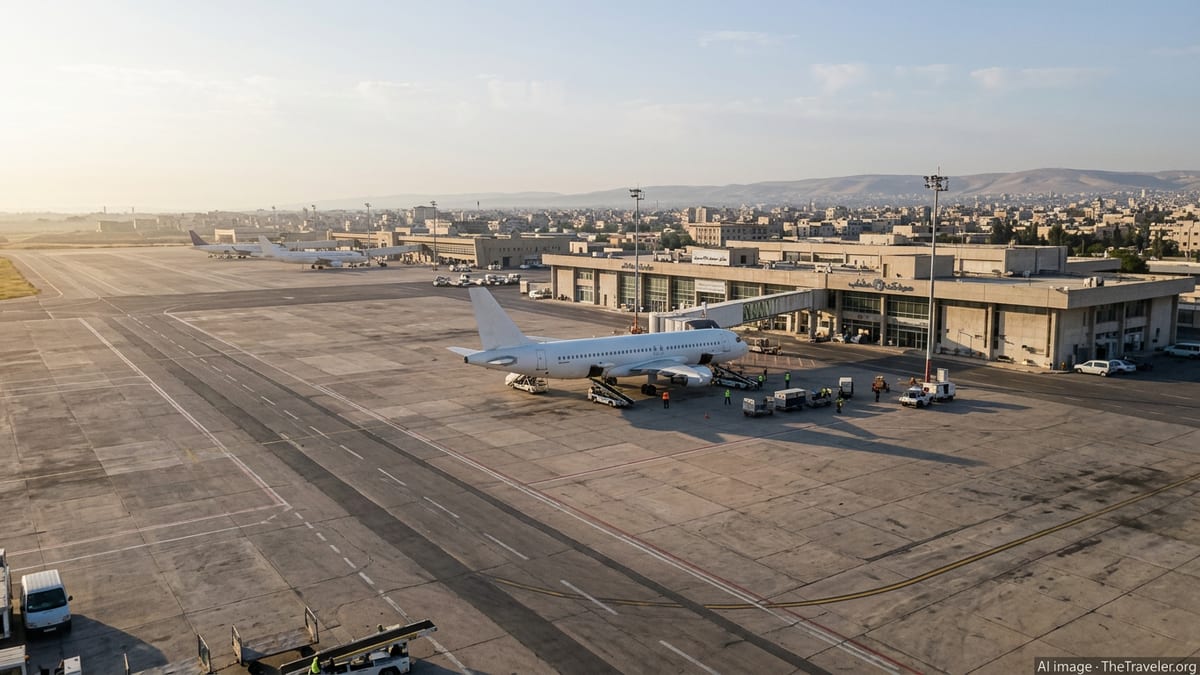
Route Resumption Marks Turning Point for Flag Carrier
The relaunch of the Damascus–Moscow route returns one of Syrian Airlines’ longest standing international connections, historically linking Syria’s capital with a major political and commercial partner. Publicly available flight information shows that the carrier has added Moscow back to its regular schedules from Damascus International Airport, following a prolonged halt attributed to security concerns, operational disruptions and regional instability.
The suspension lasted roughly a year and a half, during which direct commercial connectivity between the two cities relied largely on other operators or indirect routings. Analysts of regional air traffic note that the return of Syrian Airlines on this sector indicates improving confidence in the route’s viability and the operational environment at Damascus International Airport, which has experienced repeated interruptions over the past decade.
Industry observers point out that the move also restores a symbolic link. Moscow has long been one of Syrian Airlines’ flagship destinations, with the connection dating back to the 1970s. Reinstating the service after an extended gap is seen as part of a broader effort by the carrier to reclaim historic routes as conditions permit.
Operational Details and Frequency of New Flights
According to publicly accessible scheduling data, Syrian Airlines has reintroduced the Damascus–Moscow route with a limited but regular pattern of flights, using narrowbody aircraft configured for medium haul services. Initial operations appear to focus on a modest frequency that can be scaled up if demand strengthens, a common strategy for carriers reentering a market after a long pause.
The service links Damascus International Airport with one of Moscow’s major airports, providing direct passenger options that complement cargo and charter activity already present between Syria and Russia. Observers of the airline’s network note that the schedule is being integrated with existing departures to Gulf and regional destinations, indicating an attempt to create smoother onward connections for travelers.
Aviation specialists emphasize that exact timetables and aircraft types remain subject to adjustment, given the volatile security and regulatory environment around Syrian airspace. Published coverage of recent months shows that flights at Damascus have been periodically affected by infrastructure damage and airspace restrictions, prompting airlines to adapt routing and operating days as conditions evolve.
Strategic Significance for Syria–Russia Ties
The resumption of Syrian Airlines flights to Moscow carries broader significance beyond commercial aviation. Russia remains one of Syria’s most important political and economic partners, and direct air links have long underpinned trade, official travel and educational exchanges. Restoring the national carrier on this route reinforces those connections at a time when Syria continues to face extensive international sanctions and limited access to many global markets.
Publicly available information on airline operations in Syria shows that Russian destinations have often been maintained or restored earlier than some regional and European links. The renewed Damascus–Moscow service is likely to serve a mix of Syrian expatriates, students, business travelers and passengers connecting onward through Russian hubs to other parts of Eurasia.
Analysts of regional geopolitics note that air connectivity has frequently mirrored shifts in diplomatic and security conditions. In that context, Syrian Airlines’ decision to return to Moscow is viewed as consistent with a pattern in which routes to politically aligned or supportive countries are prioritized when capacity and safety assessments allow.
Gradual Recovery of Damascus International Airport
The restart of this route also highlights the slow but visible recovery of Damascus International Airport following years of disruption. Reports on flight operations in recent years describe repeated closures, temporary suspensions and damage to airport infrastructure, all of which have constrained both domestic and international services.
Over time, however, schedules show a rebuilding of connections to regional hubs in the Gulf and neighboring countries, followed by selective reinstatement of longer haul routes such as Moscow. Aviation monitoring platforms and humanitarian reporting have noted that, even as the broader security situation remains fragile, passenger traffic through Damascus has been gradually rising from the lows seen during peak conflict and pandemic restrictions.
At the same time, industry assessments stress that risk factors around Syrian airports have not disappeared. Airspace advisories, periodic strikes on infrastructure and changing regional tensions continue to influence insurance costs, flight paths and airlines’ willingness to operate. The reactivation of the Damascus–Moscow link by Syrian Airlines is therefore seen as a cautious step rather than a full return to prewar normality.
Implications for Travelers and Regional Connectivity
For passengers, the restored service offers a more direct and potentially shorter journey between Syria and Russia than multiple stop itineraries through third countries. Travel forums and booking data indicate that demand exists among Syrians studying or working in Russia, as well as among travelers visiting family or conducting trade.
Travel experts caution, however, that prospective passengers should pay close attention to schedule changes, visa requirements and transit rules, which can shift quickly in response to political or security developments. The past 18 months of suspension on this route illustrate how swiftly links can be interrupted, and how dependent operations are on both aviation safety assessments and broader diplomatic conditions.
For the wider region, Syrian Airlines’ move fits into a gradual reopening of air links into and out of Syria by a mix of national and foreign carriers. While the overall network remains far smaller than before the conflict, each resumed route contributes marginally to reknitting Syria into regional transport flows. The Damascus–Moscow flight, in particular, underscores how strategic political partnerships continue to shape the map of who can fly to Syria, and from where.