


More news on this day
An Air Canada flight arriving in Montreal from Los Angeles veered off the runway area during landing this week, briefly coming to rest on the grass and leaving 162 people on board stranded on the tarmac for about three hours before they could disembark.
Get the latest news straight to your inbox!
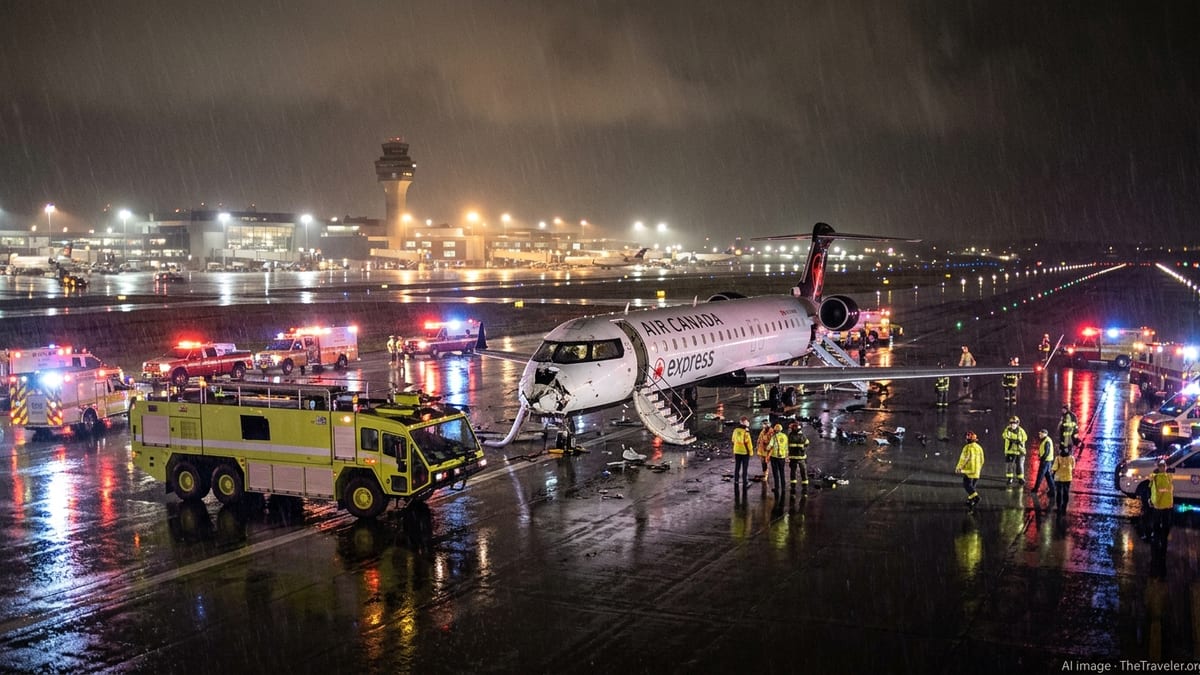
Incident at Montreal–Trudeau after arrival from Los Angeles
Publicly available information indicates the incident occurred on Thursday afternoon at Montréal–Pierre Elliott Trudeau International Airport, when an Air Canada Boeing 737 Max 8 operating a flight from Los Angeles left the paved surface while exiting the runway. Video and images shared on social media and in Canadian news coverage show the aircraft stopped with its landing gear sunk into soft ground beside the taxiway.
Reports indicate there were 156 passengers and six crew members on board, for a total of 162 people. No injuries have been reported, and the aircraft remained upright and structurally intact. Airport fire and rescue vehicles surrounded the jet as a precaution while ground teams assessed the situation.
The aircraft had landed normally and was taxiing off the active runway when it appears to have continued straight ahead rather than fully following the curve of the taxiway, entering the adjacent grassy area. Aviation-focused outlets and local media describe wet conditions at the time, with heavy rain in the Montreal region contributing to reduced friction on paved surfaces.
The north runway at Montreal–Trudeau was temporarily taken out of service following the event so emergency crews could assist the passengers and secure the aircraft. That closure contributed to knock-on delays for other arrivals and departures through the afternoon and evening.
Passengers face extended wait on board after runway excursion
While there were no reported injuries, passengers experienced a prolonged delay before being able to leave the aircraft. Coverage from Canadian broadcasters and local news sites indicates the 162 people on board remained on the plane for roughly three hours while airport and airline teams organized safe ground transportation from the soft-field position back to the terminal.
Because the jet had come to a stop off the paved surface, standard mobile jet bridges and many ground vehicles could not immediately access the cabin door areas. Instead, specialized equipment and buses were required to reach the aircraft on the grass, stabilize boarding stairs and move groups of passengers back to the terminal in stages.
Accounts cited in public reporting suggest the cabin remained powered and secure throughout the delay, with passengers instructed to stay seated while crews awaited clearance to begin disembarkation. The delay, however, left those on board facing uncertainty about onward connections and evening plans, as the aircraft could not be towed until engineering inspections were complete.
The event has drawn renewed attention to how long passengers can be kept on board after ground incidents. In Canada, airline policies and federal passenger-protection rules outline conditions for onboard delays, including access to water, ventilation and washrooms, though the specific application in this case has not yet been detailed in public documents.
Aircraft recovery and operational impact at Montreal airport
Once passengers and crew had been transported to the terminal, attention turned to recovering the 737 Max 8 from the grass and assessing any damage. Images shared by aviation enthusiasts and local media show ground around the main landing gear significantly rutted by the aircraft’s weight, which can complicate towing and require careful coordination to avoid further structural stress.
Reports from Canadian news outlets describe the airport’s north runway remaining closed for a period to allow for the safe removal of the jet and inspection of pavement and safety areas. Montreal–Trudeau operates with two main runways, and the closure of one during a busy summer travel period can create delays and diversions as traffic is funnelled through remaining capacity.
While early information does not indicate major damage to the aircraft, standard practice in such cases is for the airline and maintenance teams to conduct detailed checks of landing gear assemblies, braking systems and structural components before the jet is returned to regular service. Publicly available schedules and fleet-tracking data typically show affected aircraft removed from rotation for inspection following an event of this nature.
For passengers whose onward flights were disrupted, Air Canada’s published customer guidelines set out options for rebooking on later departures and, in some circumstances, eligibility for compensation or accommodation depending on whether the event is deemed within the carrier’s control. Those determinations generally follow internal reviews and, where applicable, regulatory guidance.
Early focus on conditions and taxiway maneuvering
With no injuries reported, attention has turned to understanding how a routine landing roll ended with a modern jet veering into the grass. Aviation specialists quoted in Canadian and international coverage note that runway and taxiway excursions can result from a combination of factors, including surface contamination from rain, incorrect taxi speeds, steering input, or localized braking issues.
Reports from Montreal on the day of the incident point to very wet conditions around the airport, which may have reduced friction on paved surfaces and made precise low-speed handling more challenging. Observers have also highlighted that taxiway turns require significantly slower speeds than takeoff or landing rolls, particularly for large aircraft with long wheelbases like the 737 Max 8.
Published coverage indicates that Canada’s Transportation Safety Board routinely reviews events where an aircraft leaves a runway or taxiway, even when there are no injuries. In previous Air Canada ground incidents, investigators have examined cockpit procedures, crew workload, airport surface conditions and the design of taxiway intersections to identify any safety improvements.
At this early stage, no formal causal findings have been made public. Historically, however, runway and taxiway excursions worldwide have prompted adjustments to pilot training, airport surface markings, and the use of onboard alerting systems designed to reduce the risk of veering off paved areas.
Runway excursions add to pressure on airlines and regulators
The Montreal incident arrives in a period of heightened scrutiny on airline reliability and passenger treatment in Canada and abroad. While the event did not result in injuries, the image of a large jet sitting in the grass and passengers waiting hours to disembark has resonated widely on social media and in mainstream news coverage.
Runway and taxiway excursions, even minor ones, are treated seriously across the aviation sector because they can escalate into more severe accidents under different circumstances. Past investigations worldwide have led to finer-grained monitoring of runway conditions, improvements to braking calculation tools, and more conservative operating procedures during heavy rain or contaminated surfaces.
For travelers, the Montreal runway excursion serves as a reminder that even non-injury incidents can significantly disrupt journeys. Passengers on this Air Canada flight not only faced hours on board after landing but also potential missed connections and schedule changes rippling into subsequent days.
Regulators, airport operators and airlines are expected to review the event in detail, with any findings likely to feed into ongoing efforts to reduce excursion risks and refine passenger-care protocols during lengthy ground delays. As the summer travel season continues, the focus will be on ensuring that lessons from this and similar occurrences translate into smoother, safer experiences for those on board.