


More news on this day
New visa charges and security mechanisms rolling out in 2026, including a visa integrity fee and an expanded bond pilot program, are reshaping how many international travelers plan and pay for trips to the United States.
Get the latest news straight to your inbox!
What the Visa Integrity Fee and Bond Pilot Actually Do
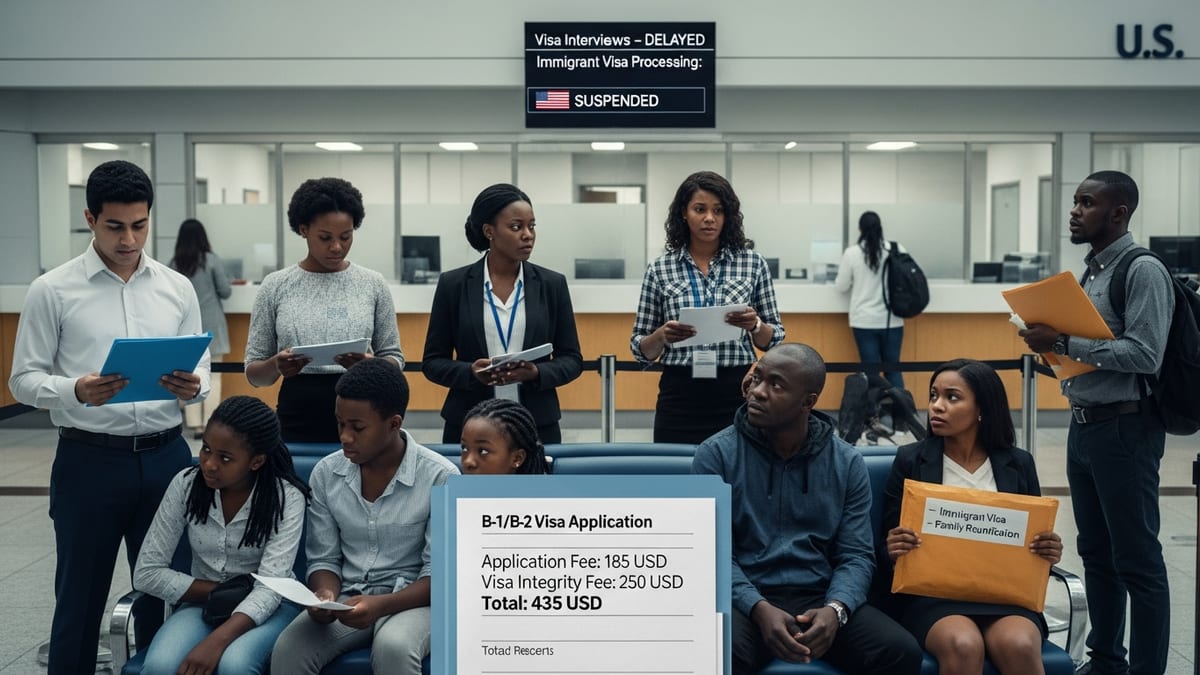
Publicly available regulatory filings describe the visa integrity fee as an additional 250 dollar charge applied to most nonimmigrant visas, collected on top of existing application and issuance fees. The measure is framed in statute and rulemaking as a way to fund enhanced screening, fraud prevention, and overstay enforcement, rather than a traditional user service fee. Legal and policy briefings note that, as of mid 2026, agencies are still phasing in collection procedures at consular posts, creating uncertainty for applicants and travel advisers who are trying to budget for upcoming trips.
Alongside the integrity fee, a separate Visa Bond Pilot Program uses cash bonds of 5,000, 10,000, or 15,000 dollars for selected B1 and B2 visitor visa applicants from countries flagged for high overstay rates, limited data sharing, or citizenship by investment schemes. Government documents indicate that the bonds are intended as a narrowly targeted tool, with funds held and later refunded if visitors depart within their authorized stay. Earlier notices show that the pilot was authorized through August 2026, but subsequent updates have expanded the number of countries covered and extended operational details, effectively keeping the scheme active throughout the 2026 peak travel season.
Practical guides aimed at travelers stress that the two measures operate differently. The integrity fee is a nonrefundable cost attached to visa issuance across many categories, while the bond is a conditional deposit tied to visitor visas for specific nationalities. For affected travelers, however, the combined impact is being experienced simply as a higher financial barrier at the point of planning a trip.
Patchwork Implementation Creates Booking Turbulence
Travel industry bulletins and law firm advisories highlight a persistent implementation gap, with the visa integrity fee approved in law but not yet uniformly charged across all consulates. Some applicants report paying the new fee at certain posts while others, applying for identical categories elsewhere, have not encountered it. This inconsistent rollout is complicating cost estimates for multinational companies, education agents, and tour operators that manage large volumes of U.S. travel.
The bond pilot is producing its own form of turbulence. University international offices and travel consultants report that additional countries continue to be added to the bond list, with a notable expansion in April 2026 bringing the total to around 50. In practice, this has meant that travelers who began planning trips months in advance sometimes discover at the visa interview stage that they must suddenly produce thousands of dollars in accessible funds for a bond, or postpone travel while they arrange financing.
Destination marketing organizations and hospitality groups warn that the uncertainty itself is corrosive. While the total number of travelers directly subject to the bond remains limited relative to overall arrivals, the perception that U.S. entry procedures are unpredictable and expensive is influencing itinerary choices, especially among price sensitive segments. Travel agents describe some clients redirecting conferences or vacations to destinations with simpler, more transparent entry costs.
Global Events Magnify the Disruption
The timing of the bond pilot’s expansion and the visa integrity fee’s phased introduction is colliding with a high stakes year for inbound tourism. With major international sports tournaments and large scale cultural events scheduled across the United States in 2026, from football matches to anniversary celebrations, millions of fans and visitors are navigating visa requirements on tight timelines. Legal guides focused on event related travel underscore that even when most spectators are exempt from the bond, the mere possibility of being asked for a large deposit is prompting some to abandon plans.
Sports law and travel commentaries note that consular guidance has sought to reassure spectators from key markets, explaining that most short stay visitors are not expected to pay bonds for event travel. Yet fans from some bond listed countries still face the additional hurdle, particularly those traveling independently rather than in organized tour packages. This adds complexity for tournament organizers, who must design ticketing and outreach campaigns without being able to predict visa approval or cost structures with precision in several markets.
For business travelers, the overlap with a busy global trade calendar is equally challenging. Conference planners report that sponsors are reconsidering whether to host large conventions in U.S. cities when a portion of their invitees now face higher upfront costs or prolonged visa procedures. In sectors where deals are often finalized at in person events, the risk of reduced foreign attendance due to visa frictions is drawing close attention from local tourism boards and chambers of commerce.
Tourism, Diaspora Communities, and Equity Concerns
Tourism analysts and advocacy groups emphasize that the burden of the bond pilot is highly concentrated. Many of the countries subject to the program are in Africa, the Caribbean, and South Asia, where incomes are lower and access to international banking is more limited. This means that even travelers who can ultimately recover their bond face significant opportunity costs, from selling assets to taking high interest loans. Commentaries from diaspora organizations describe the measure as a de facto barrier that disproportionately affects family visits, religious travel, and small scale business trips.
Statements from several governments and regional bodies reflect concern that their nationals are being singled out for tougher treatment, especially where citizenship by investment programs are in place. At the same time, some officials in these countries acknowledge that overstay rates and unpaid public service bills among a small minority of travelers have strained relations with U.S. authorities. Policy analysts note that both narratives are shaping public opinion and could influence reciprocal measures, such as reconsideration of visa free access for U.S. passport holders in some regions.
For major U.S. gateway cities that rely on visitors from emerging markets, the equity debate has a direct commercial dimension. Hotel associations and retailers in destinations that attract visiting friends and relatives business say that even modest declines in arrivals from bond listed countries can ripple through local economies. The visa integrity fee, while smaller than the bond amounts, further adds to the cost stack for multi generational trips, where several family members apply for visas at once.
How Travelers and the Industry Are Adapting
In response to the shifting rules, travel planners and immigration attorneys are advising would be visitors to the United States to start the visa process much earlier than in previous years and to budget conservatively for potential additional charges. For travelers from countries already on the bond list, best practice recommendations include confirming current bond requirements at the time of scheduling a visa interview and exploring secure funding options rather than relying on last minute borrowing.
Airlines, tour operators, and large event organizers are also adjusting their strategies. Some are working with financial partners to design products that spread the cost of bonds and fees over time, while others are shifting marketing toward regions unlikely to be affected by the pilot. Industry watchers suggest that flexible booking and refund policies will remain a key selling point through the 2026 peak season, given the possibility of further adjustments to visa regulations or bond country lists.
Policy commentators widely expect that the performance of the visa bond pilot and the revenue generated by the integrity fee during 2026 will feed into broader debates about U.S. border management and travel competitiveness. For now, the combined measures are adding a new layer of uncertainty to the calculus of visiting the United States, forcing travelers and the businesses that depend on them to navigate both financial and regulatory headwinds.