


More news on this day
Air Canada has secured a wide-ranging new labour agreement that aims to head off the prospect of mass flight cancellations and protect travelers from a repeat of last year’s strike-driven disruptions just as the peak summer season approaches.
Get the latest news straight to your inbox!
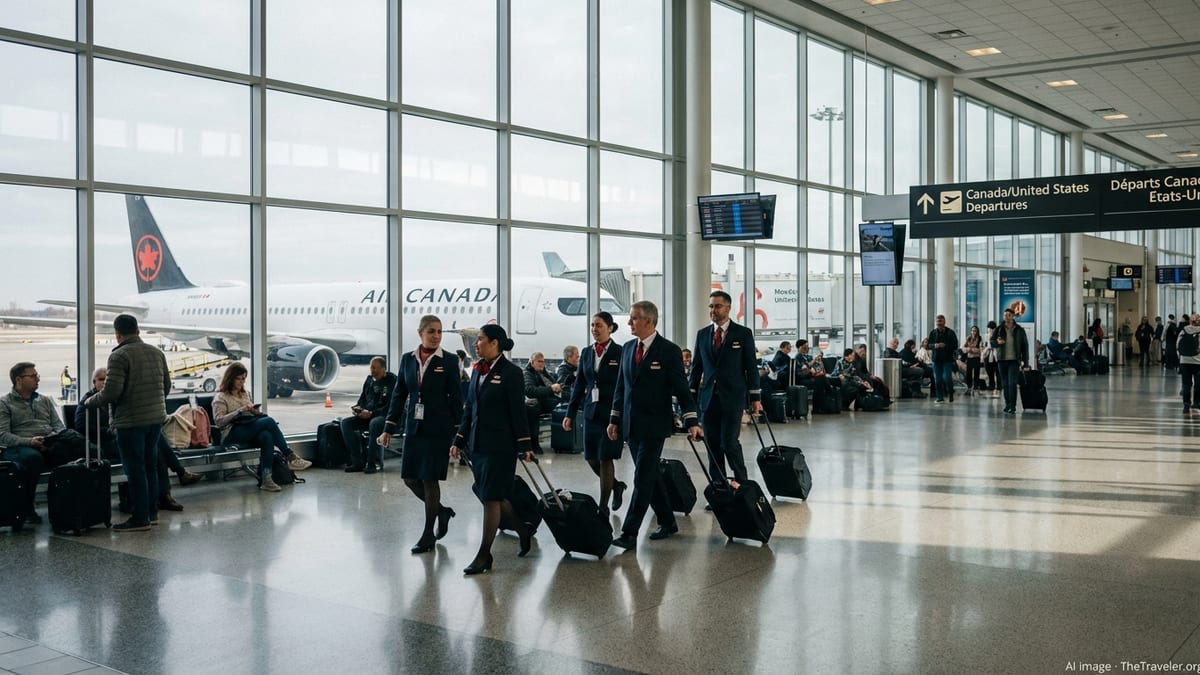
Deal Reached After Months of Labour Tension
Publicly available union and company updates indicate that Air Canada has concluded a large-scale labour deal with key frontline groups after months of tense negotiations and the backdrop of recent strikes, arbitration and court challenges. The agreement follows a period in which the carrier’s operations were repeatedly threatened by work stoppages, strike mandates and lockout notices that triggered rolling cancellations and schedule reductions across its network.
The carrier had already faced a high-profile strike by more than 10,000 flight attendants in August 2025, followed by binding arbitration that imposed a settlement and extended the previous contract while a longer-term framework was developed. Negotiations with other groups, including flight operations and customer-facing staff, continued through early 2026 with the clear risk that further disputes could cascade into fresh disruptions during one of the busiest travel years since the pandemic.
Union bulletins from the spring of 2026 refer to a tentative agreement covering flight operations staff after close to a year of bargaining, describing it as the most substantial update in a decade and highlighting significant improvements in pay and working conditions. Industry analysts interpret this in combination with a broader framework on scheduling and staffing as the core of a new labour package designed to stabilize the airline’s workforce and reduce the risk of operational breakdowns tied to personnel shortages.
Air Canada has not yet released full financial details of the package, but the structure appears consistent with sector-wide trends in which North American carriers have agreed to sharply higher compensation and better quality-of-life protections to secure labour peace and maintain capacity.
Preventing a Repeat of Strike-Driven Cancellations
The emphasis on preventing severe flight cancellations reflects how disruptive recent labour disputes have been for Air Canada passengers. Data and court filings referenced in Canadian media coverage describe thousands of journeys disrupted in 2025 and early 2026 as the airline preemptively cancelled flights ahead of threatened strikes or reworked schedules in response to staffing gaps.
Consumer advocacy organizations in Canada have pointed to class actions alleging that some cancellations were improperly attributed to safety or external reasons when they were allegedly linked to staffing or internal planning. That scrutiny, together with the Canadian Air Passenger Protection Regulations, has increased pressure on airlines to manage labour risks earlier in the bargaining cycle and to avoid last-minute operational decisions that strand travelers with limited recourse.
By reaching a comprehensive deal now, Air Canada appears intent on avoiding the kind of preemptive cancellation waves and day-of-flight disruptions that characterized past disputes. The new agreement is expected to give planners more certainty on crew availability, limit the need for aggressive schedule thinning, and reduce the likelihood that large portions of the network will be shut down if talks falter.
Analysts note that resolving labour tensions well ahead of peak demand also helps limit the carrier’s exposure to compensation claims and reputational damage that can follow visible travel chaos at major hubs such as Toronto, Montreal and Vancouver.
Key Elements: Pay, Scheduling and Staffing Stability
While detailed contract language remains internal, reports on the negotiations suggest that the new package combines higher base pay with changes to scheduling rules and staffing levels that are intended to address long-standing concerns about fatigue and unpredictable work patterns. Similar agreements at other large carriers in Canada and the United States in the past year have included double-digit cumulative wage increases, improvements to overtime and holiday pay, and expanded protections around maximum duty days and rest periods.
Labour representatives have repeatedly highlighted unpaid work during boarding, extended duty periods due to delays and the strain of operating through weather and air traffic bottlenecks. The latest deal appears to recognize those pressures by tying compensation more closely to actual time on duty and by tightening rules around schedule construction and last-minute reassignments.
On the airline’s side, a central objective has been to secure predictability. With more transparent rules around how many crew members are needed to support the schedule and how they can be deployed during irregular operations, Air Canada gains a clearer view of the staffing envelope in which it can safely sell seats and add new frequencies. That visibility is critical to avoiding overextension and the chain-reaction cancellations that occur when even a small shortage in one crew group ripples across a complex network.
Industry observers view the agreement as part of a broader shift in which airlines accept higher near-term labour costs in exchange for greater operational reliability and the ability to run fuller schedules during high-demand periods without fearing a sudden labour breakdown.
Implications for Summer Travelers and the Wider Market
For travelers, the immediate implication of the new labour deal is a reduced risk of sudden schedule upheaval at the height of the summer holiday period. Booking patterns for 2026 already indicated robust demand on transcontinental and transatlantic routes, and Air Canada had been rebuilding capacity on key leisure and business corridors that were curtailed during past disputes and fuel-driven cutbacks.
With a labour framework now in place, the airline is expected to prioritize running its published schedule as close to plan as possible, rather than resorting to rolling cancellations or deep last-minute cuts. Passengers may still face delays and disruptions caused by weather or air traffic congestion, but the likelihood of mass cancellations linked directly to labour breakdowns appears markedly lower than during the 2025 strike period.
The agreement also has competitive implications. Rival carriers across North America have been racing to lock in long-term contracts with pilots, flight attendants and ground staff to underpin ambitious growth plans. Recent deals at United Airlines and other major operators have set new benchmarks for pay and work rules, and Air Canada’s latest move positions it more firmly within that emerging industry standard, potentially aiding retention and recruitment in a tight labour market.
Travel agents and corporate travel managers are expected to watch closely how reliably the airline operates through the summer and early autumn. Strong on-time performance and fewer large-scale cancellations could help rebuild confidence among customers who shifted bookings to competitors during previous rounds of disruption.
Regulatory and Legal Backdrop Shapes Strategy
The timing and breadth of Air Canada’s labour deal are also shaped by an evolving regulatory and legal environment in Canada. The Air Passenger Protection Regulations define when flight delays and cancellations fall within an airline’s control, triggering obligations around rebooking, care and financial compensation. Disputes over how those rules apply to preemptive cancellations in the context of labour negotiations have led to formal complaints and legal challenges.
Recent court decisions authorizing class proceedings against the carrier over how some disruptions were categorized have increased the financial and reputational stakes of getting labour strategy wrong. Public filings in those cases emphasize not only compensation amounts but also the transparency of communication with passengers when flights are pulled from the schedule for operational reasons.
Against that backdrop, a comprehensive labour settlement reduces the risk that future cancellations will be scrutinized as avoidable or within the airline’s control. It also allows management to present regulators and courts with a clearer narrative that the company has taken significant steps to ensure staffing stability and to prevent a repeat of the mass disruption waves seen during earlier disputes.
For Air Canada, the deal marks a strategic pivot from crisis management and ad hoc contingency planning toward a more predictable, contract-backed operating environment. For passengers, it represents a cautiously positive signal that the airline is moving to close a turbulent chapter of strikes, sudden cancellations and uncertainty just as one of the busiest travel seasons in years gets underway.