


More news on this day
Overnight travelers on a Southwest Airlines service identified as Flight SWA4591 faced unexpected disruption after the aircraft diverted to Nashville shortly after midnight, leaving passengers scrambling to rebook missed connections and rearrange early-morning plans across the carrier’s domestic network.
Get the latest news straight to your inbox!
Unexpected Diversion Triggers Overnight Chaos
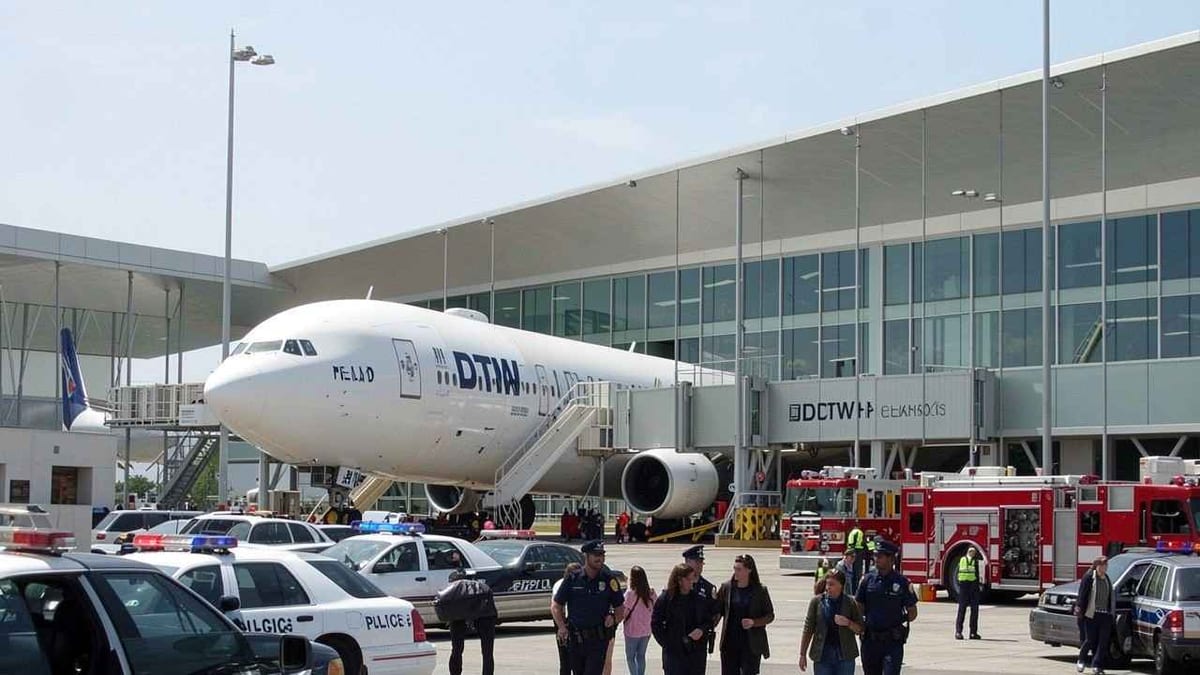
Publicly available flight-tracking information and social media posts indicate that Southwest Airlines Flight SWA4591 diverted to Nashville after midnight, interrupting its planned route and forcing a late night arrival into Nashville International Airport. The diversion occurred at a time when most onward connections were either already departed or closing, magnifying the impact on travelers who were relying on early morning arrivals.
Initial data circulating on aviation tracking platforms points to a mid-route change in the aircraft’s flight path before heading toward Nashville, suggesting an operational or safety-related concern that required an immediate alternate airport. There were no early reports of injuries, but the unscheduled arrival generated extended ground time as the airline worked through aircraft servicing, crew scheduling, and onward flight planning.
The diversion added strain to an airport that already serves as a significant base for Southwest, with multiple early morning departures scheduled to fan out across the United States. With one aircraft and its passengers suddenly off-plan, routine overnight operations were disrupted, producing a ripple effect into the carrier’s first bank of Saturday departures.
Passengers Face Missed Connections and Long Rebooking Lines
Accounts shared online describe long lines at customer service counters, with travelers attempting to secure hotel accommodation, meal vouchers, or rebookings onto the first available flights out of Nashville. Some passengers reportedly chose to sleep in terminal seating areas rather than leave the airport, citing the risk of missing early morning alternatives or limited accommodation near the airport at such a late hour.
Travelers connecting onward to smaller regional destinations appeared to be among the hardest hit, as limited daily frequencies reduced options for same-day rebooking. Those headed to larger hubs had more alternatives, but still faced delays of several hours and, in some cases, complete loss of overnight itineraries, affecting weekend plans, events, and work commitments.
Consumer advocates frequently note that diversions, while sometimes unavoidable, can create substantial confusion for passengers who are unfamiliar with their rights or with typical airline policies on accommodation and compensation. In this case, social media posts referenced uncertainty at the gate about available support, with some travelers reporting that they received assistance quickly while others were left waiting for additional guidance as midnight gave way to early morning.
Operational Pressures at a Key Southwest Base
Nashville plays a major role in Southwest’s domestic network, handling a dense schedule of point to point routes that connect into morning and evening peaks. Industry observers note that an after midnight diversion into such an important station can place sudden pressure on already tight schedules, especially when overnight maintenance activity and limited staffing are factored in.
Recent months have seen a series of operational incidents in the broader industry that highlight how quickly standard schedules can unravel. Aviation data and prior incident reports show that when a flight diverts unexpectedly, airlines must immediately balance crew duty time limits, aircraft positioning requirements, and gate availability. This can lead to subsequent delays or even cancellations for flights that would otherwise have been unaffected.
In Nashville specifically, past episodes involving complex approaches and go arounds have drawn attention to how fast moving situations can become when weather, traffic, and operational constraints converge. Analysts point out that even when a specific event is managed safely, the resulting disruption often plays out over many hours for travelers who are left to navigate changing itineraries and uncertain timelines.
Safety, Diversions, and Passenger Expectations
Aviation experts consistently stress that diversions are a standard safety tool, used whenever crews or dispatchers determine that continuing to the planned destination no longer offers the best risk profile. Publicly available guides on airline operations explain that diversions can stem from a range of factors including onboard medical situations, technical concerns, weather deterioration, or airspace constraints that develop after departure.
In the case of Flight SWA4591, early publicly available information does not definitively identify a single cause, and formal investigative updates typically lag behind real time tracking data. Nonetheless, the event underscores how dependent modern travel has become on tightly tuned schedules, and how even one diverted aircraft can unsettle hundreds of passengers and multiple downstream flights.
Travel specialists often advise that passengers with time sensitive plans build in buffers, particularly when flying late at night or during seasons prone to weather volatility. The experience of those on SWA4591 illustrates that, despite generally high safety standards and extensive contingency planning, disruptions can still arise suddenly and without clear explanation in the moment.
Broader Implications for Southwest’s Reliability Image
Southwest Airlines has spent recent years working to stabilize its reliability reputation following several high profile disruption periods and operational challenges. Public commentary on this latest diversion quickly joined an ongoing conversation among travelers who weigh the carrier’s extensive network and flexible policies against concerns about delays, cancellations, and irregular operations.
Travel forums and social channels on Saturday morning featured a mix of frustration and resignation from those affected by Flight SWA4591, along with advice from frequent fliers on how to quickly secure rebookings or request assistance during irregular operations. Some contributors framed the diversion as an inevitable aspect of flying, while others argued that the overnight handling at Nashville reflected broader systemic strain on staffing and scheduling.
As more detailed information about the circumstances of the diversion emerges, analysts are expected to examine whether the event points to isolated factors or signals additional pressure within Southwest’s operation at one of its busiest bases. For now, passengers on SWA4591 are left to rebuild their disrupted travel plans, while the incident adds a fresh example to the complex story of airline reliability in an era of crowded skies and increasingly time sensitive travel.