


More news on this day
One person has died and a number of others are reported injured after two passenger trains collided near Bedford in central England on Friday, halting services on one of the main rail routes into London.
Get the latest news straight to your inbox!
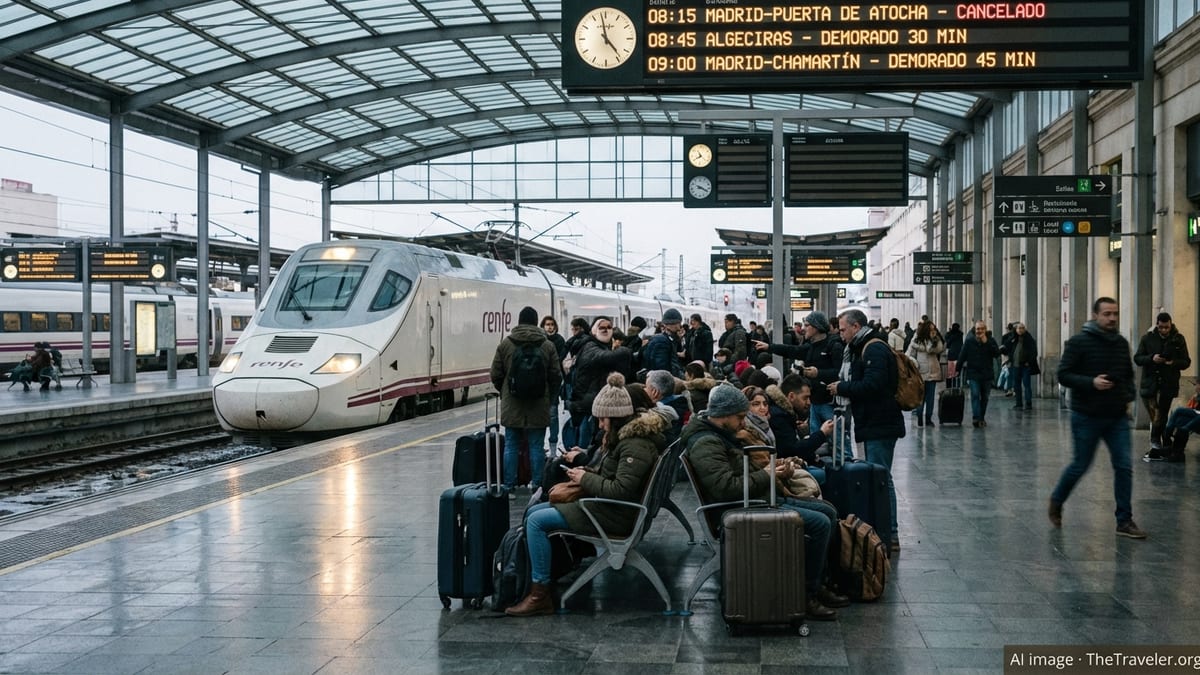
Collision on busy London commuter corridor
Publicly available information indicates the collision occurred on the Midland Main Line south of Bedford on the afternoon of June 19, 2026. The route carries intensive commuter and intercity traffic into London St Pancras, linking the capital with towns and cities across the East Midlands. Early reports describe a high level of emergency response activity at the scene, including specialist medical teams and rail incident units.
Rail tracking data and published coverage suggest both trains were traveling south towards London when they came into contact near open track, rather than at a station or junction. Initial accounts from passengers describe a sudden, violent impact that threw people forward inside the carriages, consistent with a low to moderate speed collision on a busy main line.
According to multiple news outlets, one person has been confirmed dead in connection with the incident, while an undetermined number of passengers have sustained injuries of varying severity. The precise circumstances of the fatality and the full injury toll had not been formally detailed in publicly released information by Friday evening.
The incident has been described as a major disruption on a route that carries thousands of commuters every weekday. Early evening travel on Friday is typically among the busiest periods on the line, heightening concern about the number of people potentially affected.
Services halted as emergency response unfolds
Rail operators on the Midland Main Line and connected services issued broad warnings about cancellations and delays following the collision. Real-time journey planners and operator statements showed trains held at stations north of the incident site and south of Bedford, with many services either terminated early or diverted where possible onto alternative routes.
Passengers on trains held behind the collision reported long waits on board as emergency teams secured access to the site and assessed the condition of the damaged units. Some accounts referenced limited movement along the line as responders worked between stranded trains, reflecting the logistical challenges of reaching an accident location on open track.
Publicly available information shows that replacement road transport and ticket acceptance on other operators were introduced on a rolling basis, but capacity constraints meant significant disruption for evening commuters. Travellers were advised to defer non-essential journeys on the affected corridor, with journey times extended substantially for those who had to travel.
Rail infrastructure maps indicate that any closure on this section of the Midland Main Line effectively blocks one of the principal north–south arteries into London St Pancras. Even a localized incident can therefore ripple across the wider timetable, affecting long-distance intercity services, airport links and local stopping trains.
British Transport Police and safety investigators on scene
British Transport Police described the collision as a serious incident and confirmed that one person had died. The force stated that officers were working alongside local police, fire and ambulance services as they carried out searches of the trains and surrounding area, secured the site and began gathering early evidence about what happened.
Publicly available statements indicate that the Rail Accident Investigation Branch has deployed inspectors to the scene. In keeping with established practice, investigators are expected to examine the condition of the rolling stock and track, signalling records, on-board data recorders and staff actions in the period leading up to the collision.
Published coverage suggests that, at this early stage, officials have not attributed the collision to any single cause. Modern mainline railways in Britain are designed with multiple layers of protection intended to prevent trains occupying the same section of track at the same time. Investigators are therefore likely to focus on how those protections operated, whether any technical failures or human factors were involved and how the sequence of events unfolded in the minutes before impact.
British Transport Police have also appealed in public channels for anyone on board the trains, or in the vicinity of the line, to share images, video or other information that could help establish a detailed picture of the incident. Such material typically supplements technical data and staff testimony in forming the initial timeline.
Passengers describe moment of impact
Accounts carried by national and local media describe scenes of shock and confusion inside the carriages immediately after the collision. Some passengers reported being thrown forward into seats or aisles, while others described broken glass, dislodged luggage and visible injuries among fellow travellers.
In several reports, passengers spoke of a sudden, explosive jolt followed by a rapid deceleration, with some initially unsure whether the train had hit an object on the track or another train. Low visibility through windows due to trackside vegetation and the angle of the carriages appears to have added to the uncertainty before public announcements clarified that a collision had taken place.
Photographs and video circulating on social media, referenced in news coverage, show emergency personnel working around the trains, with certain carriages visibly misaligned on the track but apparently upright. While such images provide an early visual record, investigators typically caution that they reveal only a fraction of the evidence needed to understand the dynamics of an impact and the performance of safety systems.
Passengers stranded on trains elsewhere on the route reported a calm but tense atmosphere as staff relayed limited information about the incident ahead. Many described crowded conditions and extended waits for updates on whether they would be moved back to stations or continue their journeys once the line could be partially reopened.
Spotlight on UK rail safety and resilience
The collision near Bedford comes against the backdrop of a generally strong safety record for Britain’s rail network. Major train-to-train collisions resulting in fatalities are relatively rare events, particularly on busy electrified main lines equipped with modern protection systems. Each incident nonetheless draws close scrutiny, as lessons from even low-frequency events are used to refine procedures and technology.
Rail analysts quoted in coverage of previous accidents have emphasized that today’s network relies on layered safeguards, including trackside signalling, automatic train protection and operating rules designed to prevent human error from escalating into serious collisions. Any failure of separation between two in-service passenger trains on a main line raises immediate questions about where in that chain a weakness may have occurred.
Beyond the technical investigation, the Bedford collision is likely to prompt renewed discussion about network resilience and passenger communication during major incidents. The concentration of traffic on a limited number of north–south corridors means that a single blockage can disrupt travel plans for tens of thousands of people, underscoring the importance of robust contingency planning and clear information channels.
For now, attention remains focused on the condition of those injured, the wellbeing of passengers and staff caught up in the event and the work of investigators to determine how two trains came to collide on one of the country’s most heavily used commuter routes.