


More news on this day
An India to United States long-haul service operated by an Air India Boeing 777 executed a precautionary U-turn over Asian airspace near China and returned safely to Delhi after a technical snag prompted the crew to abort the transpacific journey.
Get the latest news straight to your inbox!
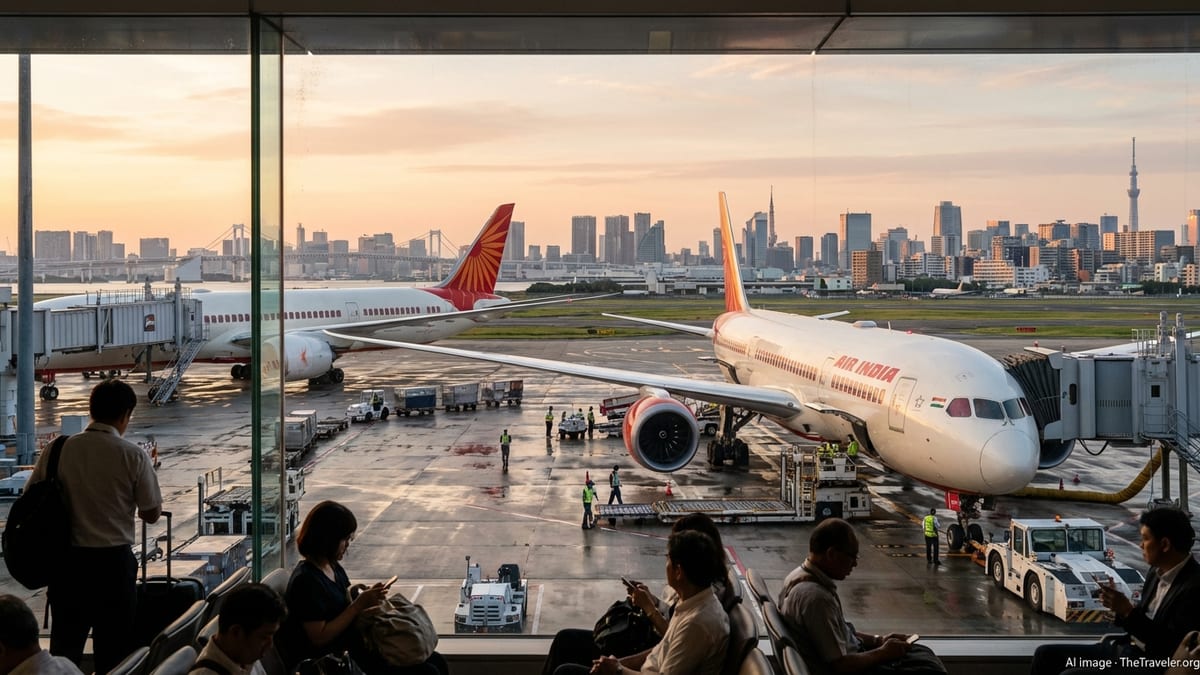
Long-Haul Journey Interrupted Over Asian Skies
Publicly available flight-tracking data and Indian media coverage indicate that Air India flight AI173, operating from Delhi to San Francisco with around 230 passengers on board, departed the Indian capital on May 27 and followed a polar-leaning trajectory that took it north of the Himalayas, transiting close to Chinese airspace on its way toward the North Pacific corridor.
Several outlets report that while cruising at altitude over Asia, the Boeing 777-200LR developed what has been described as a technical snag. In line with standard operating procedures for long-haul flights bound for the United States, the crew opted to discontinue the flight and return to the departure airport rather than continue across sparsely serviced oceanic sectors where diversion options are limited.
Data compiled from live tracking platforms shows the widebody aircraft remaining airborne for more than eight hours in total, including the outbound segment toward the vicinity of Chinese-controlled airspace and the subsequent return leg back to Delhi. Despite the disruption, reports note that the aircraft landed normally in the early hours, with no injuries reported among passengers or crew.
According to published coverage, the airline later confirmed that the return was made due to a technical issue and that the decision was taken in accordance with laid down safety procedures, a formulation that underscores how modern flight operations are designed to prioritize conservative choices when unexpected system behavior emerges far from home base.
What the Flight Path Reveals About India–US Routes
The aborted mission highlights the complex routing that now characterizes many non-stop India to United States services. Rather than following a simple great-circle arc over the central Pacific, eastbound and westbound flights are frequently optimized to take advantage of winds, airspace preferences, and available diversion airports, often routing north of the Himalayas and along the fringes of Chinese and Russian-controlled flight information regions.
In this instance, publicly available tracks show the Boeing 777 initially following a corridor used by several India–North America services before the anomaly was detected. Once the technical snag was identified, the crew requested a reversal and retraced much of the path back toward the subcontinent, effectively turning the ultra long-haul mission into an extended regional sortie within Asian airspace.
Aviation analysts note in commentary that polar and near-polar trajectories, which can bring flights relatively close to Chinese, Mongolian, or Russian sectors, give carriers fuel and time efficiencies on India–US sectors under normal conditions. At the same time, they increase the operational importance of robust contingency planning, since options to divert are more constrained once an aircraft commits to remote northern tracks leading into the North Pacific.
The AI173 episode also arrives at a moment when Air India and several global peers have been adjusting routings to navigate geopolitical airspace restrictions and evolving overflight permissions across Eurasia. The safe return of the flight demonstrates how operators can dynamically alter plans mid-journey when technical reliability, weather, or airspace factors change the original risk calculus.
Technical Snag and Standard Safety Protocols
Indian news reports have described the problem on board the Boeing 777 simply as a technical snag, without specifying the exact system affected. For long-range twinjets on transoceanic missions, such terminology can encompass a wide range of potential issues, from indications in the flight deck that require troubleshooting to system behavior that does not align with strict dispatch standards for extended operations.
In modern commercial aviation, such indications trigger a structured response. Pilots consult checklists, evaluate redundancy across systems, and weigh the remaining distance over remote terrain or oceanic segments against the availability of suitable diversion airports. When uncertainty remains, current industry practice strongly favors a conservative choice, especially before committing to long stretches of airspace with limited maintenance support.
According to publicly available information, Air India’s statement emphasized adherence to established procedures, signaling that the decision to perform a U-turn and return to Delhi was made within the framework of both manufacturer guidance and regulatory requirements for long-haul flights. For passengers, the result was a major disruption to schedules but also a demonstration of the “safety first” philosophy that governs extended twinjet operations between India and the United States.
Observers point out that the ability to complete a safe return flight of roughly eight hours after the snag was detected suggests that the situation, while operationally serious, did not escalate into a full-blown emergency. The decision to head back to a primary maintenance base where technical teams and spare parts are more readily available is widely seen as a pragmatic step when irregularities occur thousands of kilometers from destination.
Impact on Passengers and Wider Network
Travelers on AI173 faced a particularly taxing experience: more than eight hours in the air only to arrive back where their journey began. Coverage in Indian media and on social platforms describes passengers being disembarked in Delhi and then awaiting information on rebooking options, overnight accommodation, and revised connections onward to the United States.
For many long-haul travelers, especially those connecting from other Indian cities, such disruptions can cascade into missed onward flights, altered work schedules, and rearranged family plans. The incident therefore adds to the scrutiny already focused on India–US routes, where demand is strong and non-stop services are prized for reducing the stress of multiple connections.
Industry commentary suggests that the event may temporarily tighten capacity on the busy Delhi–San Francisco corridor as the affected aircraft undergoes inspection and any necessary rectification. With Air India already in the midst of a multi-year transformation program, including fleet refurbishments and network adjustments, each unplanned aircraft grounding can have knock-on effects on schedules across Europe, North America, and Asia.
Nonetheless, analysts generally note that technical turnbacks are an expected part of complex global operations and are more a measure of safety systems working as intended than a sign of exceptional risk on a particular route. For frequent flyers, such events often translate into inconvenience in the short term but, over the long term, contribute to aviation’s strong overall safety record.
What It Means for Future India–US Travelers
The AI173 U-turn over Asian airspace near China comes at a time of intense competition on India–US sectors, with both Indian and foreign carriers marketing ultra long-haul non-stops as premium, time-saving options for business and leisure travelers. Each highly publicized disruption can influence how passengers weigh the benefits of non-stop flights against the redundancy offered by one-stop itineraries through Europe or the Middle East.
Travel experts quoted in media discussions of recent disruptions have noted that, while long-haul turnbacks are rare relative to the total number of flights, they underscore the importance of flexible planning, comprehensive travel insurance, and realistic buffer times for critical onward connections. For travelers between India and the United States, especially those routing through West Coast hubs, this latest incident serves as a reminder that even the most direct journeys can face unexpected mid-route changes.
For Air India, the safe handling of the technical snag and the absence of injuries provide a positive element in an otherwise disruptive episode. The carrier is expected, based on previous practice in similar situations, to conduct a detailed technical review and incorporate any lessons learned into training and maintenance processes as it continues to expand its long-haul footprint.
As the airline pushes ahead with fleet modernization and network optimization, India–US travelers are likely to see continued emphasis on non-stop and near-non-stop options that skirt the edges of Chinese and other Asian airspace before crossing into the North Pacific routes. The AI173 event illustrates the operational complexities behind those seemingly seamless arcs on a route map and the readiness of flight crews to reverse course when systems demand extra caution.