


More news on this day
Escalating conflict and rolling airspace closures across the Middle East are inflicting severe financial pain on airlines worldwide, with Air India now joining Lufthansa, Air New Zealand, American, JetBlue, airBaltic, Jazeera Airways and others in cutting routes, warning on earnings and watching passengers migrate to foreign carriers offering more stable connections.
Get the latest news straight to your inbox!
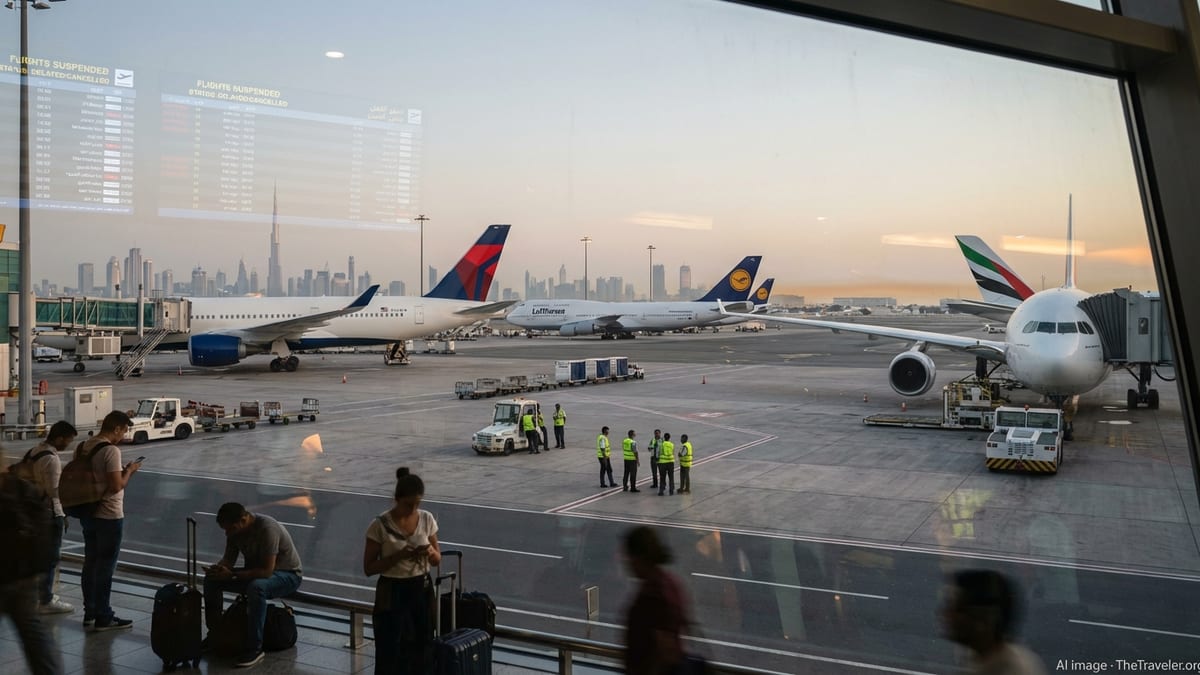
Air India’s Rerouting, Suspensions and Rising Fuel Bills
Air India has emerged as one of the most exposed Asian carriers as hostilities involving Iran, Israel and the United States repeatedly shut or constrain key overflight corridors. Publicly available information shows that since the latest phase of the conflict intensified in late February 2026, the airline has suspended multiple West Asia routes and Tel Aviv services while operating ad hoc repatriation flights to bring stranded passengers home. These disruptions come on top of temporary Tel Aviv suspensions and diversions first seen after missile exchanges in April 2024.
Reports indicate that the carrier has been forced to route long haul flights to Europe and North America along more southerly tracks that avoid Iranian and Iraqi airspace. These detours add up to two hours to some sectors, sharply increasing fuel burn and crew costs and eroding already thin margins. Air India’s leadership has publicly acknowledged that much of the financial impact of the conflict has yet to be fully reflected in its accounts, warning of rising operating costs and tighter aircraft utilisation in the quarters ahead.
Industry case studies on the current Middle East crisis suggest that each extended routing can add hundreds of thousands of dollars per widebody aircraft in lost revenue opportunity over time, once missed connections, reduced daily rotations and extra fuel are factored in. For an airline like Air India, which depends on high-density flows between India, Europe and North America, the compounding effect of longer routings is likely to be particularly acute.
At the same time, capacity cuts on popular West Asia corridors have opened space for rival carriers whose hubs sit outside immediate conflict zones. Travel agents in India report that passengers unable or unwilling to transit through the Gulf are increasingly booking with European and Southeast Asian airlines that can still offer one-stop connections between India and the West without passing close to active military zones.
Lufthansa and European Peers Trim Middle East and Reroute Asia
European groups were among the first to sharply curtail Middle East flying when missile and drone activity intensified over Iran and Israel in 2024, and they have deepened those cuts as the conflict spilled into 2026. Published schedules and industry reports show that Lufthansa Group has removed most Middle East destinations from sale through late 2026, citing security assessments and ongoing airspace restrictions that affect routes over Iran and parts of the Gulf.
The pullback is having a knock-on effect on Europe to Asia traffic. With traditional eastbound corridors over Iran and Iraq either closed or heavily constrained, Lufthansa and other European carriers are routing flights via Egypt, the eastern Mediterranean or Central Asia. Analysts estimate that these detours add one to two hours to typical Europe Asia sectors, stretching aircraft and crew resources and requiring more fuel at a time when jet prices remain volatile.
Lufthansa has already lowered earnings guidance more than once over the past two years, initially blaming strikes and slower capacity ramp up, and more recently including the operational and cost impact of the Middle East conflict. Research from ratings agencies and the airline’s own financial reports points to rising "irregularity" costs, a term that encompasses disruption from rerouting, cancellations and schedule changes that ripple through its network.
Other European players, from low cost operators to hybrid carriers, are also feeling the strain. Factbox style tallies compiled by international news agencies list multiple European airlines that have suspended Tel Aviv and Tehran flights at various points since 2024, while continuing to shoulder extra costs on remaining services that must dogleg around closed airspace.
Air New Zealand, American and JetBlue Flag Revenue Headwinds
The financial shock from Middle East tensions is not confined to carriers with hubs in the region. Air New Zealand, American Airlines and JetBlue have all cited geopolitical risk and fuel volatility tied to the conflict in recent market updates, illustrating how deeply intertwined global route economics have become.
Air New Zealand has already abandoned and then revised earnings guidance several times since 2024, initially highlighting higher jet fuel costs and weaker revenue on long haul routes. Investor presentations released in 2024 and 2025 show that surging fuel prices, attributed in part to Middle East instability, squeezed margins even as passenger demand returned after the pandemic. More recent commentary points to a more cautious approach to growth and a willingness to adjust its long haul network if fuel remains elevated.
American Airlines and JetBlue, while focused on the Americas, also face indirect fallout. JetBlue previously cut its annual revenue outlook after encountering pressure in key international markets, and analysts now note that a more expensive and disrupted global fuel and capacity environment leaves little room for error as the airline works to restore profitability. American, one of the largest transatlantic players, faces higher operating costs on Europe services that must dodge conflict airspace, even if it does not serve the Middle East directly at scale.
These carriers are also contending with competitive shifts. As Gulf and Levant hubs grapple with closures and reduced schedules, some transatlantic and transpacific flows are moving via alternate hubs in Europe or Asia. That realignment can be a mixed blessing, bolstering some city pairs while undermining others that previously relied on smooth connections through the Middle East.
Regional Players Like airBaltic and Jazeera Squeezed by Capacity Collapse
While global giants can absorb some shocks across diversified networks, smaller and mid sized airlines closely tied to Middle East flows have less room to maneuver. Publicly available traffic and financial analyses of the current Iran war suggest that major airports in the Gulf and surrounding region have seen operations reduced to roughly half of pre conflict levels, with tens of millions of passengers lost in just a few months.
Airlines such as Jazeera Airways, which depend heavily on point to point demand within the Gulf and to South Asia, have been forced to trim schedules sharply as airspace closures, curfews and security concerns reshape travel patterns. Revenue shortfalls at key regional airports, estimated in some studies at close to 1 billion dollars over a two month window, translate directly into lower throughput for home based carriers that rely on high aircraft utilisation and quick turnarounds.
European operators with limited but strategic exposure to the region, including airBaltic and others, have also felt the squeeze. Each closure of Iranian, Iraqi or nearby airspace adds distance and cost to eastbound services, eroding the economics of thinner routes. Some have quietly removed flights from booking systems or reduced frequencies, prioritising more resilient intra European or transatlantic markets instead.
The collapse in competition on surviving routes has paradoxically allowed some foreign carriers to capture higher yields. With several regional players grounded or constrained, passengers are turning to airlines that can still offer viable itineraries, even if that means longer journeys or higher fares. For lean operators like airBaltic, the challenge is to capture enough of that displaced demand without taking on excessive risk in a volatile airspace environment.
Passengers Shift to Alternative Hubs as Foreign Carriers Gain
For travelers, the most visible sign of the Middle East aviation crisis is a wave of cancellations, last minute reroutes and steep fare increases on formerly routine corridors linking Europe, Asia and Africa. Studies by aviation consultancies and financial firms examining the current conflict estimate that airspace closures and airport shutdowns in the region have disrupted thousands of daily flights, affecting up to 15 percent of global air traffic at peak periods.
As a result, passengers are increasingly gravitating toward carriers and hubs that can offer predictable operations away from active conflict zones. European majors with large home markets, Asian airlines routing via Central or Southeast Asia, and select North American carriers have captured a growing share of long haul traffic that once flowed through Middle Eastern hubs. In India, this has translated into more bookings on foreign airlines for Europe and North America journeys that previously relied on Gulf connections.
The shift has important revenue implications. Airlines that maintain access to alternative corridors can charge more for scarce seats while still growing their customer base, while those saddled with suspended routes and costly detours must fight to keep loyalty from eroding. Public financial data for 2024 through early 2026 show widening performance gaps between carriers with flexible network options and those locked into conflict exposed geographies.
For Air India and its peers, the coming months will test how quickly they can adapt. With Iran beginning to reopen some airspace as tentative ceasefires take hold, there are early signs of stabilisation. Yet the experience of the past two years underscores how vulnerable global aviation remains to regional conflict, and how rapidly revenue can evaporate when a critical crossroads of the world becomes a no fly zone.