


More news on this day
Travelers across Quebec’s far north are facing days of uncertainty after four Air Inuit flights serving Ivujivik, Akulivik and Salluit were cancelled, cutting off already fragile air links for passengers moving between some of Nunavik’s most remote communities.
Get the latest news straight to your inbox!
Remote Communities Feel the Impact of Sudden Cancellations
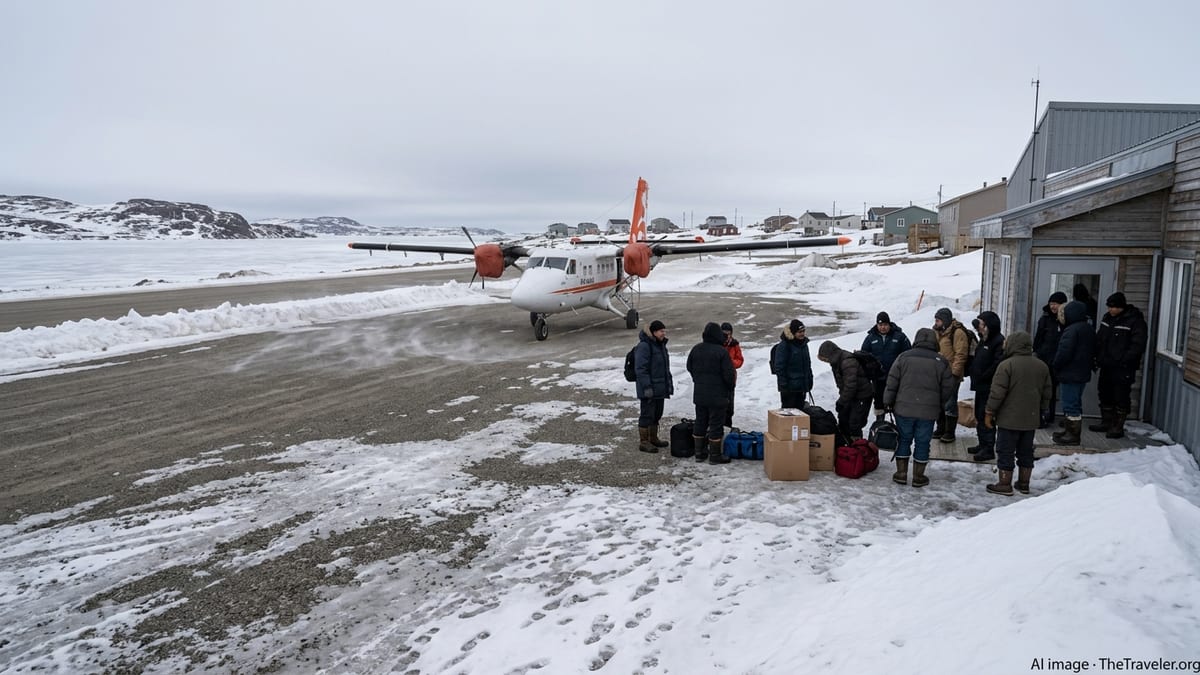
The cancellations have left passengers stranded at Ivujivik Airport, a tiny gravel airstrip that serves the northernmost village in Quebec. Publicly available flight-tracking data and schedule notices indicate that multiple regional services linking Ivujivik with Akulivik and Salluit were scrubbed in recent days, creating gaps on routes where aircraft may fly only a few times a week under the current winter–spring timetable.
Unlike larger southern hubs, the airports at Ivujivik, Akulivik and Salluit offer limited shelter, food options and ground transportation. For travellers relying on these flights to connect to medical appointments, work rotations or onward tickets through hubs such as Kuujjuaq or Montreal, a short-notice cancellation can mean missed connections and unplanned overnight stays with few local services available.
Ivujivik, Akulivik and Salluit together form part of a small network of Nunavik communities that depend heavily on Air Inuit for passenger travel, cargo and essential supplies. When several flights vanish from the schedule within a tight window, as current operational data suggest, residents say the impact is felt almost immediately in delayed mail, postponed visits and rescheduled medical travel.
Recent schedule bulletins for the period from early February through late April 2026 show a lean but regular pattern of flights among the three communities. Any run of cancellations therefore represents a significant portion of available capacity, effectively closing air access for an entire day or more for some routes.
Weather, Operations and Infrastructure Constraints
Reports from regional media and past advisories highlight how quickly flight plans in Nunavik can change due to shifting Arctic weather, limited runway infrastructure and tight fleet utilization. Strong winds, blowing snow and poor visibility frequently affect small coastal airports such as Ivujivik and Salluit, where gravel runways, basic navigation aids and surrounding terrain all add complexity to flight operations.
Air Inuit and other northern carriers have previously warned that even minor infrastructure work can ripple through their networks. Runway maintenance programs, such as resurfacing projects at other Nunavik airports in recent seasons, have periodically forced schedule adjustments, diversions and more indirect routings that leave little spare capacity to recover when conditions deteriorate unexpectedly.
In this context, a cluster of four cancellations across the Ivujivik, Akulivik and Salluit triangle suggests a blend of weather-related challenges and wider operational pressures. Where aircraft are used to shuttle among several small communities in a single duty day, one disruption can cascade into multiple scrubbed legs, particularly when flight crews are up against duty-time limits.
Publicly available information from airline and government reports also notes that many airport facilities in Nunavik are owned and managed by provincial or regional authorities rather than the airline itself. That arrangement can complicate rapid responses to infrastructure or equipment issues, leaving carriers with few options but to cancel flights when runway or apron conditions are judged unsuitable.
Essential Lifeline for Passengers and Cargo
For many Nunavik residents, Air Inuit is more than a travel choice; it is the primary lifeline for passenger movement and freight. Ivujivik and its neighbours lack road access to southern Quebec, and there are no practical marine alternatives for regular year-round passenger travel. As a result, every cancellation affects not only tourists or occasional visitors but also residents returning from medical treatment, students travelling to school, and workers commuting to and from rotational jobs.
Recent fare and policy changes by Air Inuit, including a capped fare program for eligible Nunavik beneficiaries and updated rules on no-show and change fees, underline the central role of the airline in the region’s mobility and affordability discussions. When flights do not operate as planned, those programs offer little immediate relief to stranded passengers who may still have to absorb costs for lodging, meals and rebooked connections in the south.
Local organizations have long highlighted how disruptions on small northern routes can quickly become a social issue. Families with urgent medical appointments in larger centres, elders travelling for specialized care, and residents flying out for funerals or community events can see their plans unravel when several days’ worth of capacity are affected by cancellations.
In addition, cargo transported on the same aircraft often includes groceries, medication and essential supplies timed to arrive with passenger flights. With four services cancelled around the same corridor, communities may face short-term shortages or delayed deliveries until replacement flights or additional cargo runs can be scheduled.
Rebooking Challenges and Limited Alternatives
Passengers caught up in the latest disruptions are likely to encounter crowded rebooking queues and limited seat availability in the days that follow. Current schedule files for February through April indicate that many of the affected routes operate with small turboprop aircraft and modest weekly frequencies, leaving little spare room once several departures have been removed.
Travellers connecting through Akulivik or Salluit to reach larger hubs such as Kuujjuaq or Montreal may also find that onward itineraries must be rebuilt from scratch. Even when airlines can protect customers on later flights, the ripple effects on hotel reservations, medical appointments and connecting tickets on other carriers can be significant, particularly for those who booked separate legs rather than through itineraries.
Public travel advisories and consumer experiences in other northern regions suggest that compensation frameworks are often limited when cancellations are tied to safety, weather or infrastructure issues. Passengers may receive schedule changes and rebooking options but remain responsible for incidental expenses such as accommodations or meals while they wait for the next available flight.
With few or no competing carriers on these specific routes and no road network, travellers have minimal alternatives other than waiting for services to resume. Some residents may turn to charter operators or community arrangements for urgent trips, but such options are costly and not widely accessible, reinforcing the sense of vulnerability when the scheduled network falters.
Spotlight on Reliability in Northern Air Travel
The disruption around Ivujivik, Akulivik and Salluit comes as airlines serving northern Canada face growing scrutiny over reliability and resilience. Recent years have seen other carriers restructure routes, transfer services and adjust timetables in response to financial pressures, changing ownership structures and rising operating costs in remote regions.
Industry observers note that even as new programs and fare caps aim to make travel more affordable for northern residents, the fundamental challenge of delivering consistent, year-round service into small Arctic airstrips remains. Extreme weather, long supply chains for spare parts, limited hangar space and a small pool of specialized crews all contribute to a system where a short burst of cancellations can leave communities feeling quickly isolated.
The latest wave of flight disruptions in Nunavik is therefore being watched closely by travellers and local organizations who see air connectivity as a critical component of health care, education and economic development. Each incident renews calls for continued investment in airport infrastructure, improved contingency planning and clear communication with passengers when cancellations occur.
For now, travelers through Ivujivik, Akulivik and Salluit are monitoring schedule updates and waiting for capacity to stabilize. The episode underlines how, across Canada’s Arctic and sub-Arctic regions, a handful of cancelled flights is enough to bring mobility to an abrupt halt, underscoring the fragile nature of air links that many residents depend on every day.