


More news on this day
A Ryanair flight from eastern France to Marrakech reportedly left 192 ticketed passengers stranded in the terminal after the aircraft departed empty following a contentious gate closure, sparking renewed scrutiny of budget airline boarding practices and passenger rights in Europe.
Get the latest news straight to your inbox!
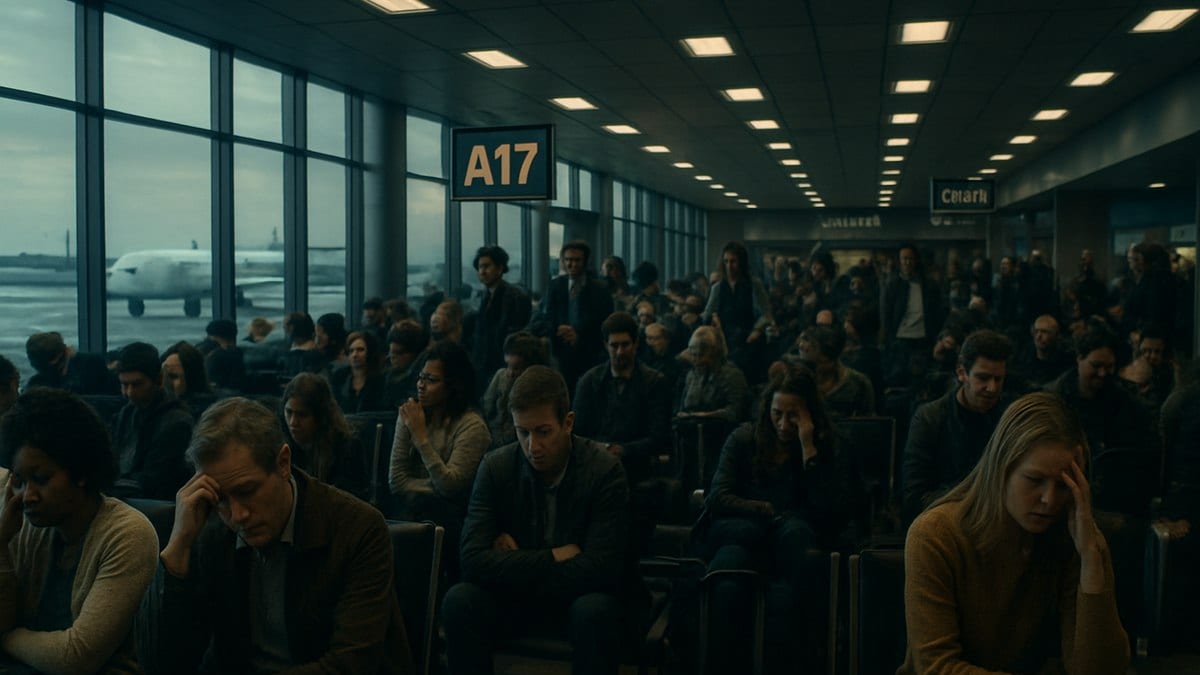
Empty Departure from Vatry Airport Raises Questions
According to published coverage from aviation and travel outlets, the incident occurred on 14 April at Vatry Airport in France’s Champagne region, where a Ryanair service to Marrakech was scheduled to depart. Reports indicate that 192 passengers with valid tickets were unable to board, while the aircraft later took off without any passengers on board.
Accounts in French and international media describe confusion at the boarding gate area, with travelers expecting to embark before being informed that the gate had closed and boarding was no longer possible. The flight subsequently left Vatry Airport empty, leaving passengers to seek assistance inside the terminal.
Publicly available information shows that the situation unfolded amid apparent coordination issues between ground handling, airport procedures, and the airline’s strict cut-off times. While the aircraft completed its scheduled journey, affected travelers were left behind with limited immediate alternatives and mounting frustration.
The unusual spectacle of a commercial flight departing without its booked passengers has drawn wide attention in France and across Europe, where Ryanair operates extensive low cost networks and often relies on smaller regional airports similar to Vatry.
Confusion at the Gate and Passenger Experiences
Media summaries and passenger testimonies shared with news outlets describe a buildup of travelers at or near the designated gate, expecting boarding to begin in line with the time printed on their passes. Some reports suggest that security and airport processes earlier in the journey may have contributed to delays in reaching the gate, although many passengers insist they were present in time to travel.
Coverage of the episode notes that once the gate was deemed closed, travelers were informed that no further boarding would take place, even though the aircraft remained on the ground. Observers have highlighted the contrast between the plane’s apparent readiness to accept passengers and the decision to proceed without them.
Images and descriptions circulating in local media portray families, solo travelers, and groups stranded in the small regional terminal, attempting to obtain information about rebooking, overnight accommodation, and potential compensation. Some passengers reportedly faced disruptions to onward connections and prepaid accommodation in Morocco, further amplifying the financial and emotional impact.
The situation at Vatry has also reignited broader discussion among frequent flyers about how boarding cut off times are communicated, how clearly gate staff explain final calls, and the extent to which passengers can rely on the timings displayed on their boarding passes and airport screens.
Ryanair Practices Under Renewed Scrutiny
Ryanair’s boarding and gate policies have come under repeated criticism in recent years, with multiple documented cases of passengers being refused boarding when they arrive after the stated gate closure time, even by a matter of minutes. Accounts collected on consumer platforms and in previous local news reports describe travelers missing flights where gates closed well before their expectations based on standard airport guidance.
Industry analyses often point to the airline’s tight aircraft turnaround model, which relies on minimizing time on the ground to keep fares low. This approach can encourage punctual departures but can also leave little flexibility when security queues, passport control bottlenecks, or communication issues delay passengers en route to the gate.
Recent reports about other Ryanair flights leaving travelers behind at European airports, including in Spain and the United Kingdom, have highlighted similar themes of abrupt gate closures and limited on the spot assistance. The Vatry episode, with an aircraft reportedly departing entirely empty, has become a particularly striking illustration of these tensions.
Aviation commentators note that regional airports often have smaller teams, fewer alternative flights, and more constrained infrastructure than major hubs, which can make irregular operations especially disruptive. When something goes wrong at such facilities, stranded passengers may have fewer options for same day rebooking or interline transfers to other carriers.
Passenger Rights and Compensation Under EU Rules
The incident has prompted renewed attention to the protections offered by European Union air passenger regulations, particularly Regulation EC 261/2004. Under those rules, travelers on flights departing from EU airports may be entitled to compensation, reimbursement, or re routing when they are denied boarding against their will, provided certain conditions are met and the disruption is not caused by extraordinary circumstances.
Consumer rights organizations and legal commentators emphasize that there is a distinction between passengers who voluntarily give up their seats and those who are refused carriage despite arriving in line with the airline’s published requirements. In cases of involuntary denied boarding, travelers may be eligible for fixed compensation amounts that vary based on flight distance, along with meals, refreshments, accommodation where necessary, and alternative transport.
Reports indicate that affected passengers from the Vatry flight are seeking clarity on whether their situation qualifies as involuntary denied boarding. Key issues include whether travelers were present at the gate within the required timeframe, how clearly boarding deadlines were communicated, and what steps were taken to mitigate the disruption once it became clear that a large group would be left behind.
Specialist travel compensation services have already begun explaining possible routes for passengers to pursue claims, often starting with written complaints to the airline followed by escalation to national enforcement bodies or small claims channels if initial responses are unsatisfactory.
Broader Debate Over Low Cost Travel and Airport Operations
The episode at Vatry Airport has fed into a wider debate over the balance between operational efficiency and customer care in the low cost airline sector. Analysts note that competitive fare structures and high aircraft utilization can sometimes sit uneasily alongside the expectations of leisure travelers, who may be less familiar with stringent gate deadlines and self service rebooking processes.
Across Europe, disruptions linked to strikes, air traffic control delays, and airport staffing shortages have already strained passenger confidence. Publicly available data on recent summers shows that France and other major markets have experienced repeated bottlenecks, heightening sensitivity to any incident in which travelers feel abandoned.
Airport management specialists argue that clear communication is a critical factor in preventing small schedule issues from escalating into headline making crises. When gate closure times, last call announcements, or re routing procedures are poorly understood, passengers may interpret standard policies as arbitrary or unfair, particularly when they end up stranded overnight.
The Vatry case is likely to be scrutinized in the coming weeks by consumer advocates, regulators, and the industry itself as part of ongoing efforts to improve how airlines and airports handle irregular operations. For travelers planning trips within Europe, the story serves as a fresh reminder to monitor gate information closely, build in extra time for security and border checks, and familiarize themselves with their rights when flights do not go as planned.