


More news on this day
Travelers at Hartsfield-Jackson Atlanta International Airport faced significant disruption as more than 240 flights were delayed and several canceled, unsettling domestic and international schedules for Delta Air Lines, Southwest, American Airlines, and other carriers on key routes to Los Angeles, Chicago, and beyond.
Get the latest news straight to your inbox!
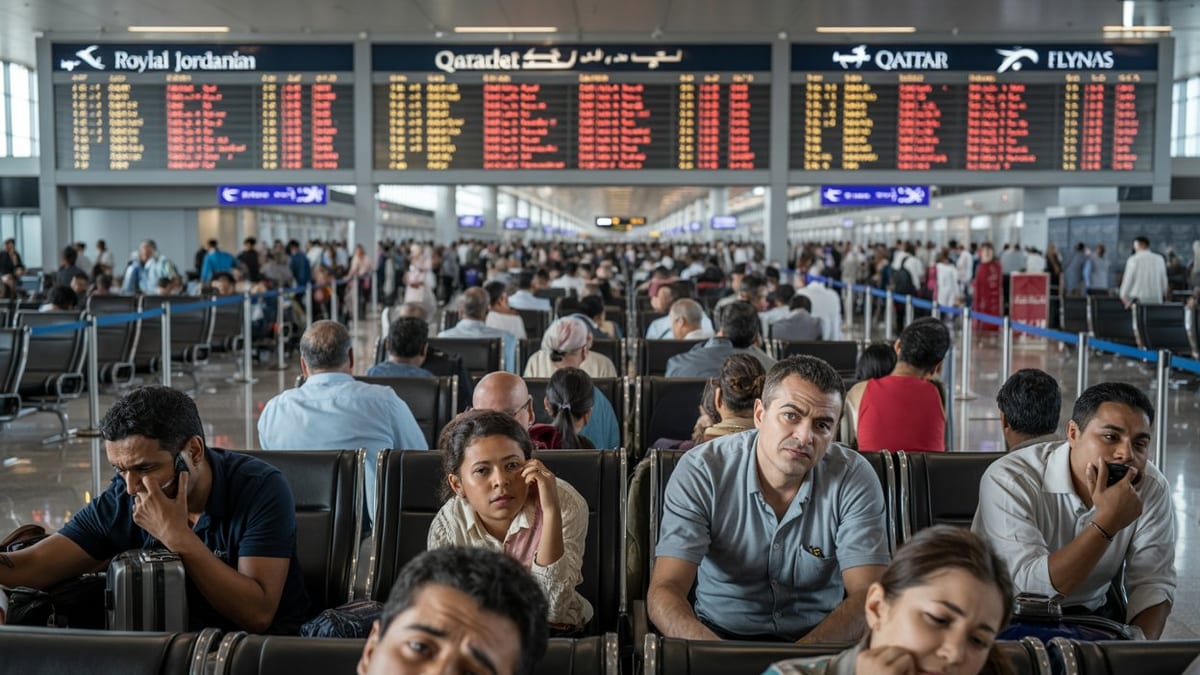
Flight Disruptions Mount at the World’s Busiest Airport
Flight-tracking data and aviation disruption analyses for April 2026 indicate that Atlanta’s Hartsfield-Jackson hub continues to experience pockets of operational strain, with a recent tally showing roughly 242 departures and arrivals delayed and four flights canceled over the course of a single day. While this disruption does not reach the scale seen during major winter storms or systemwide ground stops, the concentration of delays at such a large connecting hub has left thousands of passengers contending with missed connections, extended layovers, and crowded concourses.
The impact has been felt most acutely on heavy-traffic domestic corridors linking Atlanta with Los Angeles and Chicago, as well as on select international services using Atlanta as a primary gateway. Publicly available tracking boards show rolling delays of 30 to 90 minutes spreading through the afternoon and evening banks, compounding as aircraft and crew rotations fall behind schedule. Even a relatively small number of canceled flights has created knock-on effects as travelers scramble to rebook scarce seats.
Reports from travel analytics outlets describe the pattern as part of a broader season of uneven performance across major U.S. hubs, with Atlanta shifting between days of smooth operations and days of elevated disruption. In this instance, localized weather in parts of the Southeast, air traffic flow restrictions, and ongoing recovery from earlier weeks of security-related congestion have combined to place fresh pressure on the country’s busiest passenger airport.
Delta, Southwest, American and Others Juggle Tight Schedules
Delta Air Lines, whose primary hub operation is centered at Hartsfield-Jackson, has borne a substantial share of the delays, with dozens of domestic legs pushed back and several international departures out of their scheduled windows. In recent weeks the airline has already offered travel waivers for itineraries touching Atlanta in response to security bottlenecks and wider network stress, and the latest operational data suggests that its crews and aircraft remain tightly scheduled as the carrier works through residual backlogs.
Southwest and American Airlines, which both operate significant but smaller schedules at Atlanta compared with Delta, have also been affected. Delays on connecting itineraries routed via Chicago and other Midwestern hubs have reverberated into Atlanta’s operations, particularly on flights timed to feed onward services to the West Coast. Low cost and regional carriers with thinner schedules have had fewer options to reassign aircraft, leaving some passengers with limited same-day alternatives once their flights slipped beyond connection windows.
According to published coverage from aviation and consumer-travel outlets, airlines are generally offering standard reaccommodation options, including rebooking on later same-carrier flights and, in select cases, flexibility to move travel to a different date when seats are available. However, with many peak-time departures nearly full, some travelers report longer-than-expected waits before being able to depart Atlanta, especially on popular routes to Los Angeles.
Security Turbulence and Recent Improvements at TSA Checkpoints
The latest wave of schedule disruption follows a tumultuous period for security screening at Hartsfield-Jackson. In March and early April 2026, TSA staffing challenges linked to a prolonged federal funding dispute produced extraordinarily long lines at multiple U.S. airports, and Atlanta experienced some of the lengthiest waits in the country. Analyses of federal throughput data and local reporting show that for several days security waits surged from typical single-digit minutes to more than an hour, with some travelers missing their flights despite early arrival.
In response, airlines with a large Atlanta presence, notably Delta, introduced temporary travel waivers, allowing passengers to rebook trips without standard change fees if their itineraries involved Hartsfield-Jackson within specified dates. Those measures, combined with incremental staffing adjustments and operational changes at security checkpoints, have since contributed to a noticeable improvement in screening times. Recent local coverage indicates that on many days in mid-April, waits have fallen back to single-digit minutes at both domestic and international checkpoints.
Nonetheless, the memory of extended queues has influenced how travelers approach Atlanta’s airport this spring. Social media posts and community travel forums continue to advise arriving earlier than usual, particularly for morning and holiday-period departures. That behavioral shift adds more people into the terminal during peak windows, which can amplify the feeling of congestion when irregular operations, like the latest spike in delays and cancellations, ripple through the schedule.
Knock-on Effects for Domestic and International Connections
As the primary connecting hub for much of the southeastern United States, Atlanta’s operational health has outsized implications for travelers heading to major cities such as Los Angeles and Chicago. When departure banks from Atlanta are delayed, passengers arriving from smaller regional airports often miss their onward connections, especially on tightly timed itineraries that allow less than an hour to change planes. This can force travelers onto later flights from Atlanta to the West Coast or Midwest, which may themselves already be heavily booked.
For international passengers, even modest disruptions at Atlanta can complicate journeys in both directions. Delayed inbound flights from overseas may arrive too late for scheduled domestic connections, requiring overnight stays or rebookings on routing combinations that zigzag across other hubs. Conversely, outbound travelers heading from Atlanta to international destinations rely on predictable feeder traffic from across the United States; when those feeder flights are late or canceled, airlines must make decisions on whether to hold departures or leave with lighter loads, each option creating its own downstream challenges.
Published data and recent analyses of U.S. flight performance show that when one major hub experiences a concentrated burst of delays, the effect can propagate across the national network for many hours. In the current case, travelers departing from or heading to cities far from Atlanta may still experience indirect consequences as aircraft and crews reposition, crew duty limits are reached, and spare aircraft become scarce in certain markets.
What Travelers Can Expect in the Coming Days
Industry observers suggest that, barring a new weather system or additional operational constraint, the disruption level at Hartsfield-Jackson is likely to fluctuate but gradually stabilize as airlines work through the immediate backlog from the 242 delayed and four canceled flights. Schedule adjustments, including swapping in larger aircraft on certain high-demand routes and fine-tuning crew pairings, can help carriers recapture lost time if subsequent days remain free of major storms or air traffic control constraints.
Travel advisories from airlines and airport-focused travel guides continue to stress a few consistent recommendations for those flying via Atlanta in the near term. Passengers are urged to monitor their flight status frequently on airline apps, allow generous connection times when booking complex itineraries, and factor in potential crowding at key choke points such as security and boarding areas even when official wait-time tools indicate relatively smooth conditions.
While the latest episode at Hartsfield-Jackson has not escalated into a nationwide aviation crisis, it underscores how quickly operations at a dominant hub can shift from routine to strained. For travelers moving through Atlanta, the experience over recent weeks serves as a reminder that even when security lines shorten and storm systems move on, the residual effects on schedules can persist, and flexibility remains a valuable asset when planning journeys through one of the world’s busiest airports.