


More news on this day
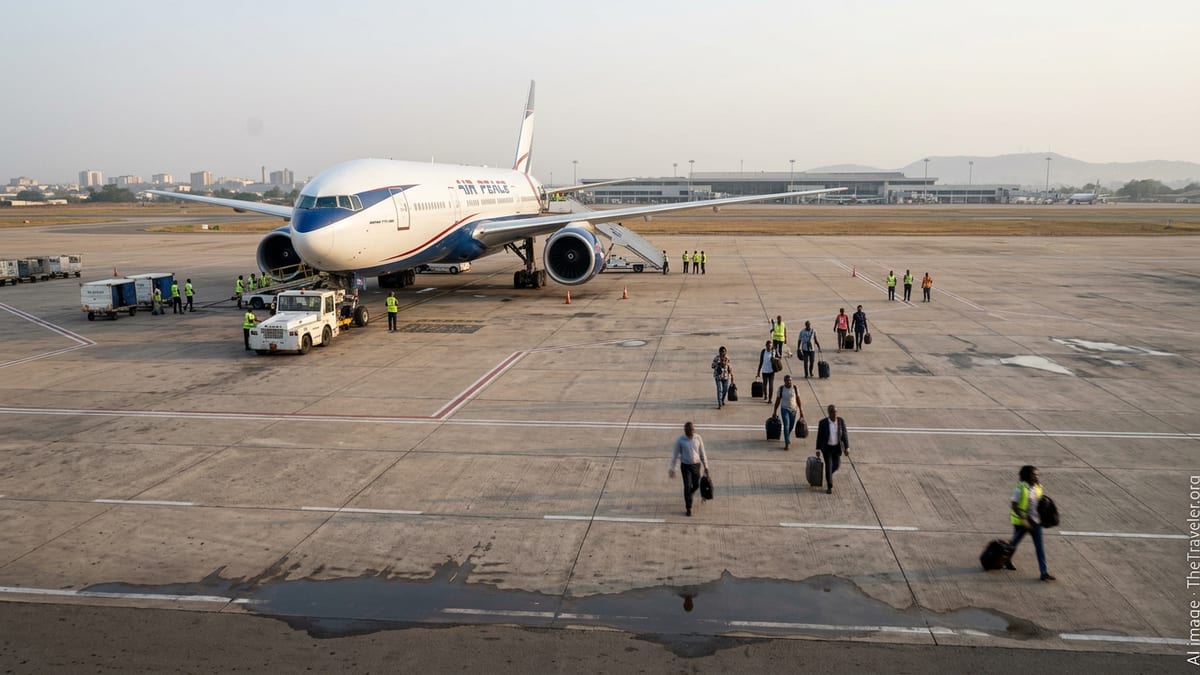
Nigeria’s biggest domestic carrier by flight volume, Air Peace, is disputing a recently circulated aviation scorecard that placed it among the country’s worst performers for punctuality in August 2026, saying the regulator’s calculations were distorted and that only about 15% of its flights were delayed.
Get the latest news straight to your inbox!
What the NCAA’s August scorecard showed
Published coverage indicates the Nigeria Civil Aviation Authority released a “Summary of Domestic Airline Disruption Operations” for August 2026 showing broad disruption across the local market. The data has been widely repeated across Nigerian business and aviation outlets after the authority publicized the figures on its official channels.
According to those reports, 15 carriers operated 7,961 domestic flights during August. The disruption summary attributed 4,765 delays and 36 cancellations to those operations, a topline picture often paraphrased as roughly six in 10 flights failing to depart on schedule.
In the same published coverage, Air Peace was listed with 1,864 domestic flights in the month and 1,330 delays, producing a 71.4% delay rate. United Nigeria Airlines was reported with a higher delay rate but fewer total flights, meaning Air Peace stood out for having the largest absolute number of delays.
Air Peace’s rebuttal: missing flights and “airline-caused” vs external delays
Air Peace’s response, as described by multiple outlets, challenges both the completeness of the operations count and the way delays are attributed. The airline’s central claim is that the authority’s dataset omitted more than 700 flights that it says were operated in August, which would materially change the denominator used to calculate its delay rate.
The carrier’s second argument focuses on cause. Published reporting on its statement indicates Air Peace says only about 15% of flights were delayed due to airline-controlled factors, while the remainder were linked to issues outside the airline’s direct control, such as airport constraints, weather, or airspace and infrastructure limitations.
The distinction is consequential for travelers. A single disruption can cascade across a network, with delays on early flights leading to late-arriving aircraft, crew rotations slipping, and gate congestion. When public reporting collapses all late departures into a single “delay rate” without breaking out causes, the resulting metric may describe the passenger experience but can also blur accountability.
Why delay statistics can look different depending on methodology
Aviation performance reporting depends heavily on definitions: what counts as “delayed,” what time threshold is used, and whether an airline’s schedule, turnaround buffers, and operational choices are treated as part of the causal chain. Even when a report uses a consistent definition, outcomes can vary if the dataset is incomplete or if flight counts differ across sources.
Published coverage of this dispute suggests airlines are pressing for more granular reporting that separates carrier-attributable delays from factors such as adverse weather, airport equipment outages, air traffic flow restrictions, or temporary operational limits at key airports. Without that split, a traveler gets a clear sense of how often flights depart late, but less clarity on why disruptions occur and what improvements are realistically within an individual airline’s control.
There is also a broader interpretive issue: high-frequency carriers may rack up more delays in total simply because they operate more flights. That can make the biggest operators look worse in absolute terms, even if a smaller carrier records a higher delay rate.
What it means for passengers booking domestic trips in Nigeria
The immediate takeaway for travelers is that disruption risk remains elevated across the domestic market, regardless of the exact share of delays attributable to airlines versus external conditions. For time-sensitive trips, published figures for August 2026 suggest travelers should plan with extra time buffers for same-day connections, airport transfers between cities, and events scheduled soon after arrival.
Passenger protection expectations are also part of the conversation. Publicly available summaries of Nigeria’s passenger-rights framework describe obligations for carriers to provide timely information about delays and, depending on length and circumstances, certain forms of assistance such as refreshments or accommodation. Travelers can benefit from saving receipts where permitted, keeping screenshots of schedule changes, and confirming rebooking and refund options in writing through the airline’s official customer channels.
For business travelers and tourists alike, the dispute underlines the value of checking an airline’s recent operational performance on heavily traveled city pairs, selecting earlier departures when possible, and leaving room for last-minute changes, especially during peak travel days or periods associated with weather disruption.
What comes next: scrutiny of reporting standards and operational pressure
Published coverage indicates the August 2026 figures have triggered a wider debate involving more than one carrier, with some airlines arguing the regulator’s report should be refined to reflect operational realities and to ensure flight counts and delay classifications are accurate.
For the regulator, the episode raises pressure to make underlying data, definitions, and calculation methods easier to audit, particularly if the summaries are influencing consumer decisions and public trust. For airlines, the dispute arrives at a moment when passengers are increasingly sensitive to reliability, and when reputational damage from punctuality metrics can carry real commercial consequences.
For travelers, the practical question remains unchanged: how likely is a specific flight to leave close to schedule, and what assistance is available if it does not. As the data debate continues, passengers may see a push toward more transparent reporting that separates total delays from airline-caused delays, while still preserving the passenger-centered view of how often flights actually depart late.