


More news on this day
A Lagos–London service operated by Nigerian carrier Air Peace was disrupted after a reported technical fault led to an air return and lengthy delays for passengers, according to recent reports from Nigerian and UK aviation coverage.
Get the latest news straight to your inbox!
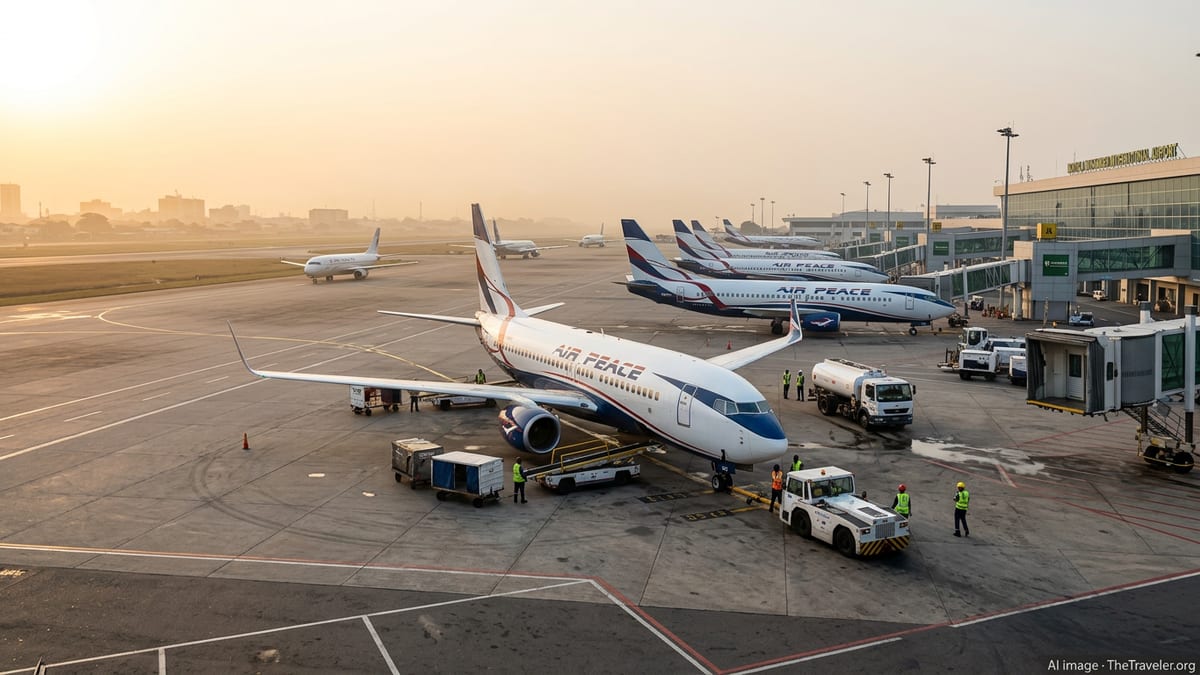
Technical Issue Forces Disruption on Lagos–London Route
Publicly available flight-tracking data and recent aviation reports indicate that an Air Peace service operating between Lagos and London experienced a technical irregularity shortly after departure, prompting the crew to discontinue the flight and return the aircraft to base. The disruption affected passengers booked on the Lagos–London sector of the airline’s relatively new transcontinental operation.
Accounts compiled in Nigerian media describe the incident as involving a fault detected during climb, which led to a precautionary decision not to proceed over water toward Europe. The aircraft subsequently returned to Lagos, where passengers were required to disembark while engineers assessed the jet.
Early social media posts from travelers referenced a “technical fault” and shared images of passengers in terminal waiting areas, with some claiming they received limited information in the initial hours after the diversion. These accounts helped propel the event into wider public view and drew further scrutiny of Air Peace’s performance on the high-profile Lagos–London corridor.
Air Peace had only recently expanded its London offering, positioning the Lagos–London link as a flagship long-haul service for Nigerian travelers. The technical disruption therefore arrived at a sensitive moment for the carrier’s international strategy, underscoring the operational pressures associated with competing against long-established global airlines.
Airline Points to Safety Protocols and Engineering Checks
According to published coverage of the incident, Air Peace’s management framed the disruption as the outcome of standard aviation safety procedures rather than any reluctance to operate the route. Reports indicate that the crew followed prescribed checklists once the technical issue was identified and opted for an air return so that comprehensive ground inspections could be carried out.
Subsequent statements reproduced in Nigerian business and aviation outlets suggest the airline emphasized that the aircraft could not be released back to service until engineers had concluded detailed diagnostics and any required rectification work. Those reports describe maintenance teams inspecting affected systems and cross-checking manufacturer procedures before a replacement aircraft was considered.
Aviation analysts quoted in independent commentary note that technical diversions and returns, though disruptive, are a routine part of global airline operations and often reflect the conservative safety margins built into commercial flying. In this case, the decision to halt the Lagos–London leg was viewed as consistent with international practice, even as it created significant inconvenience for travelers.
Industry observers also point out that the carrier’s Lagos–London flights are operated on extended-range sectors that require particularly strict adherence to reliability thresholds. Any unresolved cockpit alert or system anomaly on such routes typically triggers a no-go decision until engineers can establish a clear technical status for the aircraft.
Passenger Delays, Accommodation and Rebooking Efforts
Coverage from Nigerian newsrooms reports that passengers on the affected Lagos–London flight experienced delays stretching into many hours as the airline worked to determine whether the original aircraft could continue or whether a substitute jet was required. Some travelers described spending much of the day in the terminal while awaiting updates, with onward connections to Europe and North America disrupted.
Later reports indicate that Air Peace moved to provide hotel accommodation, meals and ground transport for those unable to depart the same day, while others were rebooked on subsequent flights. Public statements referenced in local media suggest the airline sought to prioritise families, elderly passengers and those with urgent onward connections when assigning seats on later services.
Travel and consumer-rights commentators highlighted that passengers departing from Nigeria toward the United Kingdom fall under differing compensation and assistance regimes depending on the point at which disruption occurs. While Nigerian regulations and the airline’s own conditions of carriage require “care and assistance” in the event of lengthy delays, compensation rules can vary compared with departures from airports in the UK or European Union.
The incident has reignited discussion among Nigerian travelers about the practical aspects of support when flights do not operate as planned. Online forums and travel groups have carried extensive debate about hotel standards, communication during delays and the speed at which airlines arrange rebooking on alternative services when long-haul sectors are disrupted.
Regulatory Attention and Reputation Stakes on a Key Route
In the weeks surrounding the Lagos–London disruption, the Nigerian Civil Aviation Authority has been reported to invite the airline to meetings over a cluster of operational issues, including technical returns and schedule reliability on its UK services. Publicly accessible regulatory communications describe a broader effort to ensure that Nigerian carriers maintain consistent safety and service standards on high-visibility international routes.
Analysts following African aviation note that London remains one of the most competitive and politically sensitive destinations for Nigerian airlines, with route access and reliability closely watched by regulators and passengers alike. For Air Peace, any high-profile disruption on the Lagos–London corridor carries reputational risk, given the route’s importance for business travelers, diaspora communities and connecting traffic.
Commentary in regional business publications has also stressed the strategic significance of sustaining a Nigerian-owned presence on UK routes. Reliable long-haul performance is seen as essential for diversifying the country’s aviation sector and reducing dependence on foreign carriers, making any extended disruption on key links subject to heightened public and political interest.
At the same time, market observers caution that isolated technical events should be weighed against overall safety performance and operational data, rather than viewed in isolation. The challenge for Air Peace, they argue, will be to stabilize schedules, minimize future disruptions and communicate transparently when irregularities occur, in order to sustain confidence on one of West Africa’s most scrutinized air corridors.
Wider Questions on Reliability in West African Long-Haul Travel
The disruption of the Lagos–London flight has fed into a broader conversation about reliability and resilience in West African long-haul aviation. Travel industry reporting regularly cites challenges that include limited spare aircraft capacity, supply-chain constraints for parts, and the steep costs of leasing backup widebody jets for contingency use.
Experts consulted in open-source commentary argue that carriers operating from the region often face tighter margins when maintaining redundant capacity, which can mean that a single technical event translates into prolonged delays compared with airlines that operate large fleets. In this context, Air Peace’s experience on the Lagos–London service is seen as emblematic of the structural pressures facing African long-haul operators.
Consumer advocates have responded by encouraging passengers to build greater flexibility into their itineraries, particularly when connecting beyond major hubs after a long-haul flight from West Africa. Recommendations shared in travel advisories include allowing longer layovers, ensuring travel insurance covers technical disruptions, and closely monitoring airline communications in the days leading up to departure.
As Air Peace continues to expand its international footprint, the handling of this Lagos–London incident is likely to serve as a case study in how regional airlines balance technical caution with customer experience. How effectively the carrier restores confidence on its London service may influence broader perceptions of West African airlines’ ability to compete on some of the world’s most demanding long-haul routes.