


More news on this day
Air travel in Argentina is facing renewed disruption as labor actions, air traffic management disputes and runway works converge to cancel and delay hundreds of flights at the country’s busiest gateways.
Get the latest news straight to your inbox!
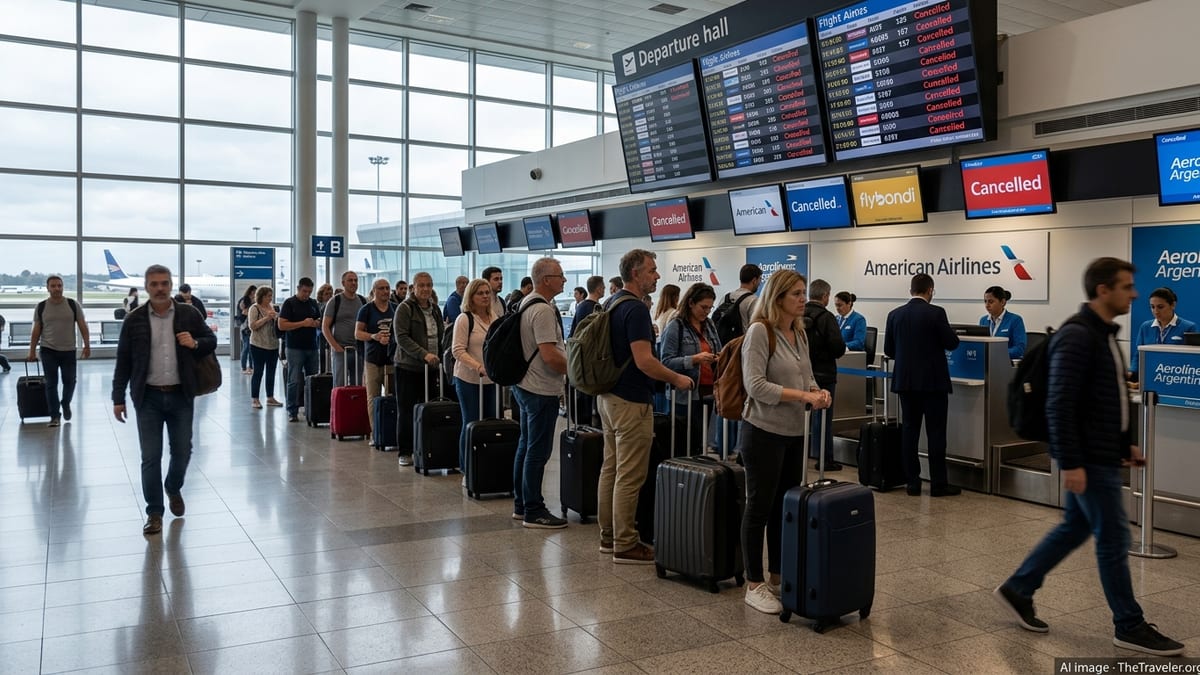
Strikes Leave Tens of Thousands of Passengers Stranded
Recent industrial action by aviation unions has produced some of the most severe disruption to Argentina’s flight schedule in years, particularly at Buenos Aires’ Aeroparque Jorge Newbery and Ezeiza International Airport. Published coverage from local outlets indicates that coordinated participation in a nationwide general strike has forced airlines to scrap large portions of their domestic and regional networks.
Reports from Infobae and other Argentine media describe a sharp impact on Aerolíneas Argentinas operations during a 24 hour stoppage linked to broader opposition to labor and economic reforms. The flag carrier alone cancelled around 255 flights on one strike day, leaving approximately 31,000 passengers without service and triggering lengthy queues at rebooking desks as travelers sought alternative options.
Industry data cited by the Cámara de Líneas Aéreas en Argentina suggests that when other carriers are included, more than 400 flights were removed from schedules during the protest period. Estimates in local economic coverage put the number of affected passengers above 64,000 as airlines including LATAM, JetSmart and Flybondi adjusted timetables, consolidated services or halted certain routes entirely.
Although many flights were rescheduled in advance, the sheer volume of changes created a ripple effect across Argentina’s domestic network. Travelers heading to Patagonia, the northwest and popular cross border destinations in neighboring countries encountered last minute cancellations, missed connections and unexpected overnight stays in Buenos Aires.
Air Traffic Conflicts Add New Layers of Uncertainty
Separate from airline and cabin crew actions, disputes involving Argentina’s air navigation and control services have introduced an additional layer of uncertainty for air travelers. Coverage in local business and transport media points to periodic work stoppages and schedule reductions by air traffic personnel in response to stalled negotiations with the state run Empresa Argentina de Navegación Aérea.
According to public statements and published timetables from unions representing controllers, measures have included limited hour strikes and targeted slowdowns during peak afternoon periods. One recent plan called for suspending or reducing services for three hour windows on selected days, threatening to disrupt dozens of arrivals and departures even when airlines were prepared to operate normally.
Subsequent reporting shows that some of these actions were suspended at short notice, with unions temporarily lifting stoppages for specific dates while warning that additional measures could follow. This stop start pattern has complicated planning for both carriers and passengers, as day to day flight reliability can shift quickly depending on the status of talks between workers and the navigation authority.
Travel advisers monitoring the situation note that while not every controller protest results in large scale cancellations, even partial reductions in airspace capacity can trigger knock on delays. Flights into congested Buenos Aires airspace are particularly vulnerable when sequencing and spacing procedures are altered, leading to holding patterns, diverted services or missed onward connections.
Runway Works at Ezeiza Reshape International Schedules
At the same time that labor tensions are affecting flight operations, infrastructure works at Ezeiza International Airport are changing how some airlines serve Argentina’s principal long haul gateway. Aviation specialist outlets report that LATAM Airlines will temporarily suspend its Buenos Aires to Miami route during a period of runway construction, opting instead to reroute passengers through regional hubs.
Coverage of the change indicates that LATAM plans to pause non stop service between Ezeiza and Miami while works on airport runways limit available operating windows. During this interval, travelers booked on the affected route are being offered rebookings via Santiago, São Paulo or Lima, maintaining connectivity to the United States but lengthening journey times and reducing direct capacity from Buenos Aires.
The suspension highlights how infrastructure upgrades, while aimed at improving long term airport performance, can generate short term disruption for international travelers. For Argentina, where long haul links to North America and Europe are already concentrated among a handful of carriers, the loss of a nonstop option can quickly translate into higher load factors and fewer choices on remaining services.
Industry analysts quoted in regional aviation coverage suggest that further schedule adjustments by other airlines are possible if construction phases change or if additional maintenance is scheduled on taxiways and aprons. Travelers planning trips later in the year are being encouraged by consumer advocates to verify routing details carefully, rather than assuming that historical non stop patterns will remain in place.
Knock On Effects Across the Southern Cone
The combined impact of strikes, controller disputes and airport works in Argentina is being felt across the wider Southern Cone, as disruptions in Buenos Aires reverberate through regional route networks. Reports from travel rights organizations and flight tracking services point to increased delays and occasional cancellations on cross border services linking Argentina with Chile, Brazil, Uruguay and Paraguay.
Carriers such as LATAM, Gol, Sky Airline and low cost operator Flybondi rely heavily on Argentine hubs to feed regional circuits. When domestic sectors into Buenos Aires are disrupted or slots at Ezeiza and Aeroparque become constrained, same day connections to Santiago, São Paulo, Montevideo or Asunción can be missed, leaving passengers stranded far from their final destinations.
Travel industry commentary notes that Argentina’s situation is unfolding against a backdrop of broader aviation challenges in South America, including volatile fuel costs and currency fluctuations. These factors can limit the ability of airlines to add backup capacity or rapidly deploy additional aircraft when labor related events or construction projects interrupt normal schedules.
For tourism dependent destinations within Argentina, from Bariloche to Iguazú, the risk is that repeated episodes of disruption may discourage regional visitors from planning short breaks that depend on tight weekend timetables. Hospitality associations referenced in local business reporting have already voiced concern about potential lost revenue during peak holiday and long weekend periods when strikes have coincided with heavy demand.
What Travelers Should Watch in the Weeks Ahead
Looking ahead, publicly available information from unions, airports and carriers suggests that the risk of further disruption in Argentina has not fully subsided. Labor organizations involved in earlier strikes have signaled that additional measures remain on the table if negotiations over wages and working conditions do not progress, while air navigation personnel continue to press their own demands.
Analysts following the sector recommend that travelers treat flight plans involving Buenos Aires with particular caution over the coming weeks. Flexible itineraries, longer connection windows and a readiness to accept rerouting via alternative hubs in Brazil or Chile may help mitigate the impact of any renewed disruption, especially for long haul journeys originating in North America or Europe.
Consumer advocates quoted in regional media encourage passengers to keep close track of airline schedule updates and to check reservation details repeatedly in the days before departure. In past stoppages, many Argentine carriers began adjusting timetables several days in advance, a pattern that allowed some travelers to change dates or routes before airports became congested.
For now, Argentina’s aviation sector is navigating a complex mix of structural upgrades and labor tensions that is reshaping the travel experience in one of South America’s busiest air markets. Whether the coming months bring a return to more predictable operations will depend heavily on the outcome of ongoing talks between workers, airport authorities and the airlines that connect the country to the region and the wider world.